
If you’ve ever felt hungry while trying to lose weight, you’re not alone. Many diets focus on eating less, which often leaves people unsatisfied and increases cravings. A smarter approach is choosing high volume low calorie foods that let you enjoy generous portions while keeping calorie intake under control. This strategy supports sustainable eating habits without making every meal feel restrictive.
The concept of volume eating has gained popularity because it prioritizes foods rich in water, fiber, and nutrients. By filling your plate with ingredients that offer fewer calories per bite, you can stay satisfied for longer while supporting your health goals. Throughout this guide, you’ll discover how high volume low calorie foods work, which options deserve a place in your kitchen, and how to build satisfying meals around them using volume eating and low energy density principles.
What Are High Volume Low Calorie Foods?
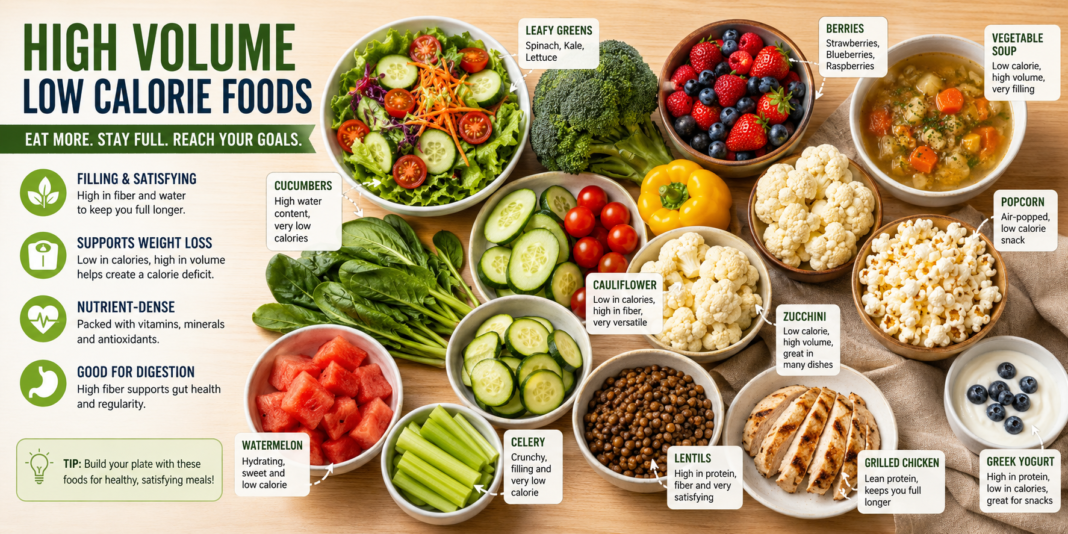
High volume low calorie foods are foods that provide a large serving size while containing relatively few calories. Most of these foods naturally contain plenty of water, fiber, or air, making them filling without significantly increasing your daily calorie intake. Vegetables, fruits, broth-based soups, and certain lean proteins are excellent examples because they support fullness through high fiber foods and nutrient-dense foods.
Instead of focusing solely on calorie counting, this eating style encourages choosing foods that maximize satisfaction. A bowl full of vegetables often contains fewer calories than a small serving of processed snacks, yet it leaves you feeling much fuller. This makes healthy weight loss more achievable while improving overall nutrition through whole foods.
Why Volume Eating Works
Your stomach responds not only to calories but also to the physical volume of food you consume. When meals contain more water and fiber, they stretch the stomach and trigger signals that communicate fullness to your brain. This natural process helps reduce hunger without requiring oversized calorie intake, making volume eating and portion control powerful tools for everyday eating.
Research consistently shows that foods with low energy density help people eat satisfying portions while consuming fewer calories overall. Rather than relying on willpower alone, you allow biology to work in your favor by filling your plate with foods that naturally promote satiety through low calorie vegetables and fiber-rich vegetables.
The Science Behind Low Energy Density
Energy density refers to the number of calories found in a specific weight of food. Foods rich in water and fiber generally contain fewer calories per gram, allowing you to eat larger portions without dramatically increasing calorie consumption. This principle explains why salads, fruits, and vegetable soups feel so filling despite being relatively light in calories, making low energy density and healthy lifestyle choices easier to maintain.
By contrast, highly processed foods often contain significant amounts of fat and sugar while offering very little physical volume. These calorie-dense foods can be eaten quickly without creating lasting fullness, increasing the likelihood of overeating. Replacing them with diet-friendly foods and healthy snacks creates a much more sustainable eating pattern.
Benefits of Choosing High Volume Low Calorie Foods
One of the biggest advantages of eating high volume low calorie foods is that you rarely feel deprived. Instead of reducing every meal to tiny portions, you can enjoy colorful plates filled with vegetables, fruits, lean proteins, and satisfying soups. This improves adherence because eating becomes enjoyable rather than restrictive through balanced diet practices and weight management strategies.
These foods also tend to provide vitamins, minerals, antioxidants, and fiber that processed alternatives often lack. Beyond weight loss, they support digestive health, stable energy levels, improved blood sugar control, and long-term wellness. Building meals around lean protein and whole foods creates lasting health benefits that extend well beyond calorie reduction.
Characteristics of the Best High Volume Low Calorie Foods
The most effective options usually share several important qualities. They contain high amounts of water, substantial dietary fiber, impressive nutrient density, and relatively few calories per serving. These characteristics allow them to promote fullness while supporting overall nutrition through hydrating foods and fiber-rich vegetables.
Another important feature is versatility. The best foods fit naturally into breakfasts, lunches, dinners, and snacks without requiring complicated recipes. Ingredients like leafy greens, berries, cucumbers, cauliflower, and broth-based soups make everyday meals healthier while encouraging meal prep ideas and low calorie recipes.
Comparison of Popular High Volume Low Calorie Foods
The following table compares some of the most filling foods that deliver impressive volume while keeping calories low.
| Food | Approximate Calories (100g) | Why It’s Filling | Best Uses |
| Cucumber | 15 | High water content | Salads, snacks |
| Lettuce | 15 | Very low energy density | Sandwiches, wraps |
| Celery | 16 | Fiber and water | Snacks, soups |
| Mushrooms | 22 | Meaty texture | Stir-fries |
| Zucchini | 17 | Large serving size | Roasting, noodles |
| Broccoli | 34 | High fiber | Side dishes |
| Cauliflower | 25 | Versatile and filling | Rice substitute |
| Watermelon | 30 | Hydrating | Snacks |
| Strawberries | 32 | Fiber and water | Breakfast bowls |
| Air-popped popcorn | 31 (per cup) | High volume | Healthy snack |
Vegetables That Fill Your Plate Without Filling Your Calorie Budget
Vegetables are the foundation of nearly every successful volume eating plan because they deliver impressive serving sizes for very few calories. Leafy greens, broccoli, cabbage, zucchini, cauliflower, cucumbers, tomatoes, peppers, and mushrooms all provide satisfying texture while supporting healthy eating habits and calorie deficit goals.
One practical strategy is making vegetables occupy at least half of your plate during lunch and dinner. This automatically reduces the calorie density of the entire meal while increasing fiber intake, making it easier to stay full between meals through low calorie vegetables and volume eating.
Fruits That Help Control Hunger
Many people avoid fruit because of its natural sugar content, but whole fruits remain some of the best high volume low calorie foods available. Apples, oranges, berries, watermelon, grapefruit, peaches, and melons provide fiber and water that slow digestion while delivering vitamins and antioxidants through nutrient-dense foods and healthy snacks.
Eating whole fruit instead of fruit juice also increases fullness because chewing and fiber both contribute to satiety. Pairing fruit with yogurt or a handful of nuts creates balanced snacks that support healthy weight loss while encouraging balanced diet habits.
“The goal isn’t simply to eat less—it’s to eat smarter by choosing foods that naturally satisfy hunger while nourishing your body.”
Lean Proteins That Increase Fullness
Protein has one of the strongest effects on satiety, making lean protein sources an essential part of volume eating. Chicken breast, turkey, white fish, shrimp, egg whites, tofu, and low-fat Greek yogurt provide satisfying nutrition without excessive calories, supporting lean protein intake and fat loss nutrition.
Combining protein with vegetables creates meals that are both filling and nutritionally complete. A grilled chicken salad or vegetable stir-fry with tofu offers plenty of food volume while keeping calories moderate through meal prep ideas and healthy lifestyle choices.
Whole Grains That Support Fullness
Whole grains can absolutely fit into a volume eating plan when portioned wisely. Oats, quinoa, brown rice, barley, and whole wheat farro provide complex carbohydrates, fiber, and essential nutrients that digest more slowly than refined grains. Including moderate portions alongside vegetables encourages healthy eating habits and improves weight management without excessive calories.
The key is balance rather than elimination. Instead of making grains the largest part of your plate, use them as a supporting ingredient while vegetables remain the primary focus. This approach increases meal satisfaction while supporting portion control and a sustainable balanced diet.
Legumes: Affordable and Filling Nutrition
Beans, lentils, peas, and chickpeas are among the most satisfying foods available because they combine plant protein with large amounts of dietary fiber. Their unique nutritional profile helps regulate appetite, stabilize blood sugar, and promote digestive health through high fiber foods and whole foods.
Legumes are also remarkably versatile. They work well in soups, salads, curries, grain bowls, and wraps, allowing you to prepare filling meals on almost any budget. Their combination of nutrients supports healthy weight loss while encouraging meal prep ideas for busy lifestyles.
Broth-Based Soups and Their Appetite Benefits
Broth-based soups are one of the simplest ways to increase meal volume without dramatically increasing calories. Because they contain significant amounts of water along with vegetables and lean proteins, they create fullness before the main meal even begins using low energy density foods and hydrating foods.
Many nutrition experts recommend starting lunch or dinner with vegetable soup because it naturally slows eating speed and reduces overall calorie intake. Homemade versions offer the greatest nutritional value while supporting low calorie recipes and long-term healthy lifestyle habits.
The Best Low-Calorie Snacks That Actually Satisfy
Healthy snacking doesn’t have to mean tiny portions that leave you hungry again after twenty minutes. Air-popped popcorn, cucumber slices, cherry tomatoes, carrots, celery, strawberries, and low-fat Greek yogurt all provide satisfying volume while fitting comfortably into a calorie-conscious eating plan through healthy snacks and volume eating.
Pairing vegetables with hummus or fruit with protein-rich yogurt creates balanced snacks that offer both immediate satisfaction and longer-lasting energy. This combination helps reduce cravings while supporting lean protein intake and maintaining a steady calorie deficit.
Foods You Should Limit Despite Small Portions
Many processed foods appear harmless because they come in small servings, but they’re often extremely calorie dense. Chips, pastries, candy, sugary cereals, fried foods, and sweetened beverages contain large amounts of calories without providing lasting fullness, making them poor choices for weight management and a balanced diet.
This doesn’t mean you must eliminate your favorite treats forever. Instead, enjoy them intentionally while allowing high volume low calorie foods to make up the majority of your meals. That balance creates a healthier relationship with food through healthy eating habits and smarter portion control.
Building a High-Volume Breakfast
Breakfast sets the tone for the rest of the day, so choosing filling foods early can reduce unnecessary snacking later. Vegetable omelets, oatmeal topped with berries, Greek yogurt with fresh fruit, and smoothies packed with spinach all deliver satisfying nutrition through lean protein and nutrient-dense foods.
Adding vegetables to breakfast may feel unusual at first, but spinach, mushrooms, peppers, and tomatoes blend naturally into eggs and wraps. These additions increase meal size while supporting fiber-rich vegetables and healthy weight loss goals.
Creating Filling Lunches
Lunch should provide enough nutrition to maintain energy throughout the afternoon without causing sluggishness. Large salads topped with grilled chicken, quinoa bowls filled with roasted vegetables, and vegetable soups paired with lean protein are excellent examples of meals centered around high volume low calorie foods, whole foods, and satisfying nutrition.
Instead of relying on refined breads or oversized restaurant portions, prepare lunches that prioritize vegetables first and protein second. This structure naturally lowers calorie density while encouraging meal prep ideas and long-term healthy lifestyle habits.
Satisfying Dinners Without Excess Calories
Dinner often becomes the highest-calorie meal of the day, but simple adjustments can dramatically improve its nutritional quality. Filling half your plate with roasted vegetables, adding grilled fish or chicken, and including a modest serving of whole grains creates satisfying meals using low calorie vegetables and lean protein.
Cooking methods also matter. Baking, grilling, steaming, roasting, and air frying preserve flavor while limiting unnecessary fats, making it easier to prepare low calorie recipes that support fat loss nutrition without sacrificing enjoyment.
Smart Meal Prep for Volume Eating
Meal preparation becomes much easier when you focus on foods that naturally create satisfying portions. Washing vegetables in advance, cooking lean proteins in batches, and preparing soups ahead of time makes healthy choices more convenient through meal prep ideas and healthy eating habits.
Keeping chopped vegetables, fruit, and protein-rich snacks readily available also reduces the temptation to reach for processed convenience foods. Consistency becomes far easier when your kitchen is stocked with diet-friendly foods and healthy snacks.
Common Mistakes People Make
One common mistake is assuming that every low-calorie food is automatically filling. Highly processed “diet” products often contain artificial ingredients that reduce calories without improving satiety, making whole foods and high fiber foods far more effective options.
Another mistake is avoiding healthy fats entirely. Small portions of foods like avocado, seeds, and nuts add flavor, nutrition, and satisfaction when paired with high volume low calorie foods while supporting a truly balanced diet rather than an overly restrictive eating plan.
How to Grocery Shop for High Volume Low Calorie Foods
Successful eating habits begin long before you step into the kitchen. A well-planned grocery trip makes it much easier to build meals around high volume low calorie foods instead of relying on processed convenience options. Prioritize the produce section first, then add lean proteins, whole grains, legumes, and low-fat dairy to create a balanced shopping cart filled with whole foods and nutrient-dense foods.
Reading nutrition labels can also help you compare products based on calories, fiber, and protein rather than marketing claims. Foods with shorter ingredient lists and higher nutritional value generally provide better long-term satisfaction while supporting healthy eating habits and weight management.
Practical Tips for Long-Term Success
Lasting results rarely come from extreme diets. Instead, focus on gradually increasing the amount of vegetables, fruits, and other filling foods on your plate while reducing highly processed, calorie-dense options. This sustainable strategy makes high volume low calorie foods a natural part of everyday life through volume eating and healthy lifestyle choices.
It’s equally important to pay attention to hunger and fullness cues rather than eating out of habit or boredom. Slowing down during meals, drinking enough water, and planning balanced snacks can improve consistency while reinforcing portion control and maintaining a healthy calorie deficit.
Myths About High Volume Low Calorie Foods
One of the biggest misconceptions is that eating more food automatically leads to weight gain. In reality, the total calorie content matters far more than the physical size of your meal. Large servings of vegetables, broth-based soups, and fruits can keep you comfortably full while promoting healthy weight loss through low energy density choices.
Another common myth is that volume eating lacks variety or flavor. In truth, herbs, spices, healthy cooking techniques, and colorful ingredients allow you to create satisfying meals that are both nutritious and enjoyable. Building recipes around low calorie vegetables and low calorie recipes proves that healthy eating never has to be boring.
Conclusion
Choosing high volume low calorie foods is one of the most effective ways to enjoy satisfying meals while supporting healthy weight management. By filling your plate with vegetables, fruits, lean proteins, legumes, broth-based soups, and other nutrient-rich options, you can naturally reduce calorie intake without constantly feeling hungry. This approach shifts the focus from restriction to abundance, making healthy eating far easier to maintain through healthy eating habits and whole foods.
The real strength of volume eating lies in its simplicity. Instead of chasing quick fixes or restrictive diet trends, you build meals that nourish your body, satisfy your appetite, and support long-term success. Small, consistent choices made every day often produce the greatest results, especially when supported by balanced diet principles and a sustainable healthy lifestyle.
Frequently Asked Questions
Are high volume low calorie foods good for weight loss?
Yes. High volume low calorie foods help you eat larger portions while consuming fewer calories, making it easier to stay full and maintain a calorie deficit through volume eating.
Which vegetables have the lowest calories?
Leafy greens, cucumbers, celery, lettuce, zucchini, mushrooms, cabbage, cauliflower, and broccoli are among the best low calorie vegetables because they provide plenty of volume along with fiber-rich vegetables that support fullness.
Can I eat fruit every day while following a volume eating plan?
Absolutely. Whole fruits such as berries, apples, oranges, grapefruit, and watermelon are excellent high volume low calorie foods that deliver vitamins, hydration, and high fiber foods while satisfying sweet cravings.
Do high volume low calorie foods keep you full longer?
Yes. Foods rich in water, fiber, and protein digest more slowly and increase feelings of fullness. Combining lean protein with nutrient-dense foods can help reduce hunger between meals.
What protein sources work best with volume eating?
Chicken breast, turkey, fish, shrimp, tofu, egg whites, cottage cheese, and Greek yogurt are excellent choices because they provide lean protein while complementing healthy weight loss goals.
Are popcorn and potatoes considered high volume low calorie foods?
Air-popped popcorn is one of the best snack options because it offers a large serving with relatively few calories. Plain boiled or baked potatoes can also fit into a volume eating plan when prepared without excessive butter or oil, supporting portion control and a balanced diet.
Can I build every meal around high volume low calorie foods?
Yes. Most meals can include vegetables, fruits, lean proteins, legumes, and whole grains to increase volume while keeping calories reasonable. Making high volume low calorie foods the foundation of your meals encourages healthy lifestyle habits and long-term success.
You May Also Read : Eyebrow Lamination Near Me