

Introduction
When it comes to cooking steak, few topics spark as much debate as the perfect level of doneness. Some people love a well-done steak with no trace of pink, while others believe a rare steak offers the most authentic flavor. Sitting comfortably between these two extremes is medium rare, a doneness level that has become the gold standard for chefs and steak lovers around the world.
Medium rare is often considered the ideal balance between tenderness, juiciness, and rich beef flavor. It allows the natural juices to stay inside the meat while creating a beautifully browned crust on the outside. This combination delivers a steak that is flavorful, moist, and satisfying in every bite.
Whether you’re grilling at home, ordering in a steakhouse, or simply curious about why medium rare is so popular, understanding this cooking level can completely change the way you enjoy beef. In this guide, we’ll explore everything you need to know about medium rare steak, from cooking temperatures to common mistakes and expert tips.
What Does Medium Rare Mean?
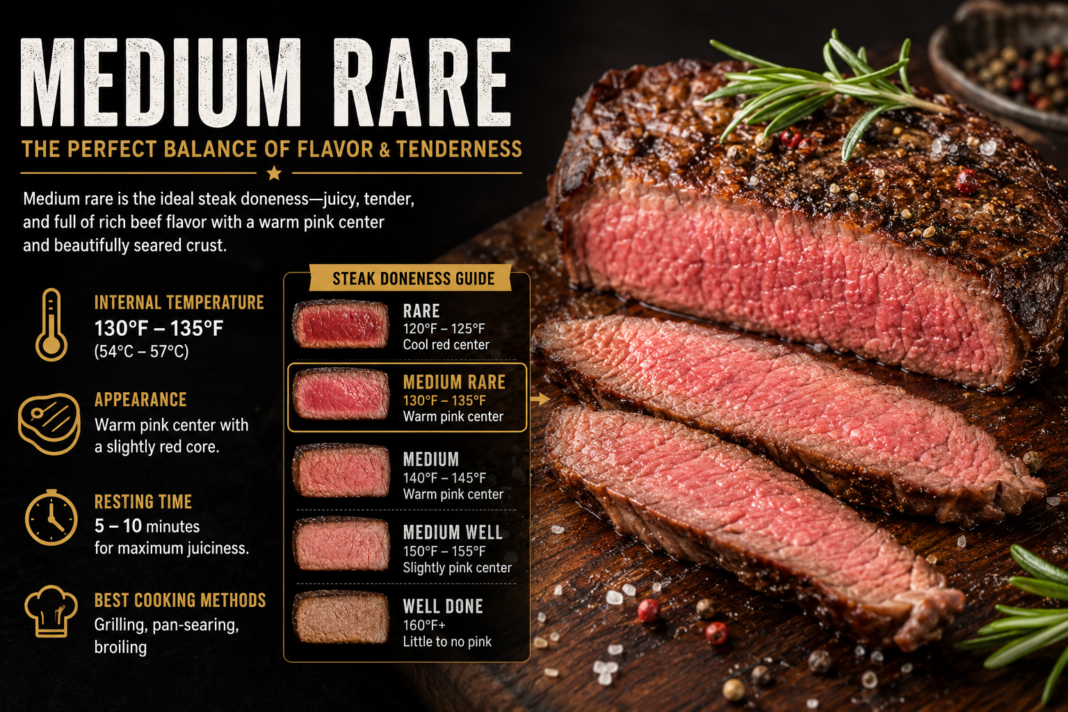
Medium rare refers to a specific level of steak doneness where the interior remains warm, juicy, and mostly pink with a slightly red center. The outside develops a flavorful crust through high-heat cooking, while the inside stays tender without becoming dry.
The ideal internal temperature for a medium rare steak is between 130°F and 135°F (54°C to 57°C). Once the steak reaches this range, it should be removed from the heat and allowed to rest for several minutes. During the resting period, the temperature continues to rise slightly, resulting in the perfect final doneness.
Many professional chefs recommend medium rare because it preserves the meat’s natural moisture. Cooking beyond this point causes the muscle fibers to tighten, squeezing out valuable juices that contribute to tenderness and flavor. That’s why medium rare often provides the most enjoyable eating experience for premium cuts of beef.
Why Medium Rare Is So Popular
One of the biggest reasons people choose medium rare is its exceptional tenderness. At this level of doneness, the meat remains soft and easy to chew because it hasn’t been exposed to excessive heat. Every bite feels juicy and rich rather than firm or dry.
Flavor is another major advantage. Beef contains natural fats and juices that melt during cooking, creating a deeper, more complex taste. Medium rare allows these juices to stay inside the steak instead of evaporating, making each bite incredibly satisfying.
Professional chefs also prefer medium rare because it showcases the true quality of the meat. High-end cuts like ribeye, filet mignon, New York strip, and sirloin are carefully selected for their marbling and texture. Cooking them to medium rare highlights these characteristics without masking them through overcooking.
The Best Cuts for Medium Rare
Not every steak is created equal, but several premium cuts truly shine when cooked medium rare. Ribeye is perhaps the most popular choice because its abundant marbling melts beautifully, creating incredible flavor and tenderness.
Filet mignon is another excellent option. Known for being one of the most tender cuts available, filet mignon develops a buttery texture when cooked to medium rare. Since it contains less fat than ribeye, precise cooking is especially important to prevent dryness.
New York strip, porterhouse, T-bone, and sirloin also perform exceptionally well at medium rare. These cuts retain enough moisture while developing a rich crust on the outside. Choosing quality beef and cooking it correctly allows each cut to express its unique flavor profile.
How to Cook a Medium Rare Steak
The first step toward achieving medium rare perfection is allowing the steak to reach room temperature before cooking. This promotes even cooking and reduces the chance of an overcooked exterior with an undercooked center. Season the steak generously with salt and freshly ground black pepper just before placing it on the heat.
Use a very hot grill, cast-iron skillet, or heavy stainless-steel pan. High heat creates the flavorful crust known as the Maillard reaction, which enhances both taste and appearance. Cook the steak for approximately three to five minutes per side, depending on its thickness.
The most reliable way to determine doneness is by using a digital meat thermometer. Remove the steak when it reaches about 130°F and let it rest for five to ten minutes. Resting allows the juices to redistribute throughout the meat, resulting in a more flavorful and tender steak.
Common Mistakes to Avoid
One of the biggest mistakes people make is relying solely on cooking time instead of checking the internal temperature. Every steak differs in thickness, meaning cooking times can vary significantly. A thermometer removes the guesswork and delivers consistent results.
Another common mistake is cutting into the steak immediately after cooking. While it may be tempting to check the center, doing so allows valuable juices to escape. Resting is an essential step that dramatically improves both texture and flavor.
Using low heat is another issue that many beginners encounter. Without sufficient heat, the steak may overcook before developing a proper crust. Starting with a hot cooking surface ensures a beautifully browned exterior while keeping the inside medium rare.
Is Medium Rare Safe to Eat?
Many people wonder whether medium rare steak is safe, and the answer is generally yes when the meat is properly handled and cooked. Whole cuts of beef primarily carry bacteria on the surface rather than deep inside the muscle. High-heat cooking effectively kills these surface bacteria.
Buying high-quality beef from a trusted source significantly reduces food safety concerns. Proper refrigeration, clean preparation surfaces, and safe cooking practices all contribute to a safe and enjoyable meal.
However, individuals with weakened immune systems, pregnant women, elderly adults, and young children may prefer steaks cooked to a higher internal temperature based on healthcare recommendations. Personal health considerations should always be taken into account when choosing steak doneness.
Medium Rare vs Other Doneness Levels
Rare steak is cooked to approximately 120°F to 125°F and has a cool, deep red center. While many steak enthusiasts enjoy rare beef, some people find it too soft or undercooked for their preference.
Medium steak reaches about 140°F to 145°F. At this stage, the center becomes light pink, and the meat begins losing some of its moisture. Although still flavorful, it isn’t quite as juicy as medium rare.
Medium well and well-done steaks continue to cook until very little or no pink remains. While these doneness levels appeal to some diners, they generally sacrifice tenderness and moisture. That’s why medium rare continues to be regarded as the ideal compromise between flavor, texture, and food safety.
Tips for Ordering Medium Rare at Restaurants
When dining at a steakhouse, don’t hesitate to specify that you would like your steak cooked medium rare. Most quality restaurants train their chefs to prepare steaks accurately according to customer preferences.
Keep in mind that slight variations exist between restaurants due to differences in equipment, steak thickness, and resting times. If you’re particular about doneness, politely mention that you prefer a warm pink center.
If your steak arrives slightly under or over your preference, reputable restaurants are usually happy to adjust it. Clear communication helps ensure you receive exactly the meal you were expecting.
Conclusion
Medium rare has earned its reputation as the preferred steak doneness for good reason. It offers an unbeatable combination of tenderness, juiciness, and deep beef flavor while allowing premium cuts to reach their full potential. The warm pink center and perfectly seared crust create an eating experience that satisfies both casual diners and experienced steak enthusiasts.
Mastering medium rare doesn’t require professional culinary training. With quality ingredients, a hot cooking surface, a reliable meat thermometer, and patience during the resting period, anyone can consistently prepare restaurant-quality steaks at home.
Whether you’re grilling for family, hosting friends, or treating yourself to a special dinner, choosing medium rare is one of the best ways to enjoy beef at its finest. Once you experience the perfect balance of texture and flavor, it’s easy to understand why so many chefs and steak lovers consider medium rare the ultimate standard for a perfectly cooked steak.
You May Also Read : Janitor AI