

Introduction
A weight scale is one of the simplest yet most valuable tools you can have at home. Whether you’re trying to lose weight, gain muscle, maintain a healthy lifestyle, or simply keep track of your overall health, a reliable weight scale makes monitoring your progress much easier. Many people think stepping on a scale is only about seeing a number, but it actually provides useful information that can help you make smarter decisions about your diet, exercise routine, and daily habits.
Modern weight scales have come a long way from traditional analog models. Today, you can find digital scales that measure not only body weight but also body fat percentage, muscle mass, water weight, bone density, and even BMI. These advanced features allow users to gain a deeper understanding of their overall health instead of focusing only on pounds or kilograms.
In this guide, we’ll explore everything you need to know about weight scales, including how they work, the different types available, tips for accurate measurements, common mistakes people make, and how to choose the best one for your needs.
What Is a Weight Scale?
A weight scale is a device designed to measure the weight or mass of a person or object. While the basic function has remained the same for decades, today’s weight scales offer significantly improved accuracy and convenience. They are commonly found in homes, gyms, hospitals, fitness centers, and medical clinics.
Traditional mechanical scales use springs to calculate weight. As pressure is applied, the spring compresses, causing a needle to indicate the measured weight. Although these scales are durable and don’t require batteries, they may lose accuracy over time if not properly maintained.
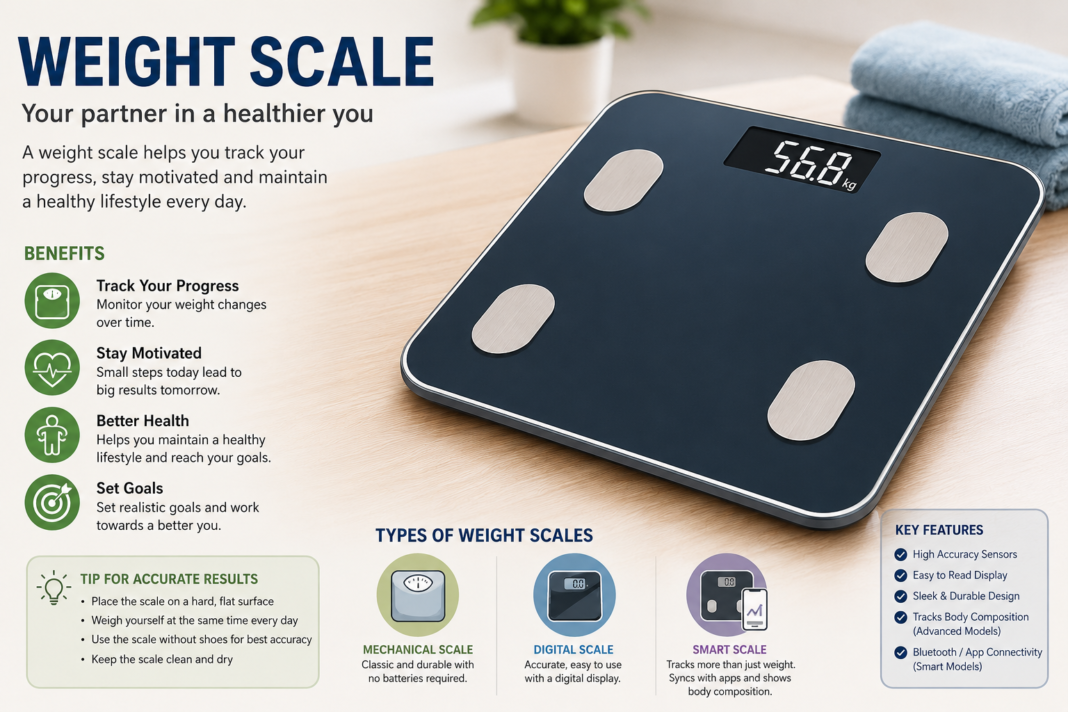
Digital weight scales use electronic sensors known as load cells. These sensors detect even slight changes in pressure and convert them into digital readings displayed on a screen. Because of their precision and ease of use, digital scales have become the preferred choice for most households.
Different Types of Weight Scales
There are several kinds of weight scales available, each designed for different purposes. Understanding the differences can help you choose the right one based on your lifestyle and health goals.
Digital weight scales are the most popular option today. They provide quick, highly accurate readings and often include additional health metrics. Many models also connect to smartphone apps, allowing users to track their progress over time automatically.
Mechanical weight scales remain popular among people who appreciate simplicity. Since they don’t rely on batteries or electronic components, they are dependable and easy to maintain. However, they may not offer the same level of precision as digital models.
Smart weight scales represent the newest generation of health technology. These devices sync with fitness apps through Bluetooth or Wi-Fi, storing historical data and creating detailed health reports. Some models can recognize multiple users automatically, making them perfect for families.
Why Owning a Weight Scale Is Important
A weight scale isn’t just for people trying to lose weight. It can serve as an excellent tool for anyone interested in maintaining a healthier lifestyle. Regular weight tracking helps identify gradual changes that might otherwise go unnoticed.
Monitoring your weight allows you to evaluate whether your current eating habits and exercise routine are producing the desired results. If your weight begins changing unexpectedly, it may encourage you to review your nutrition, activity level, or even consult a healthcare professional if necessary.
A weight scale also provides motivation. Seeing consistent progress, even if it’s gradual, can reinforce healthy habits. Likewise, noticing a temporary increase in weight can encourage you to make positive adjustments before the problem grows larger.
Features to Look for in a Weight Scale
Choosing the right weight scale involves more than selecting the least expensive model. Several features contribute to accuracy, convenience, and long-term value.
Accuracy should always be your top priority. High-quality digital scales typically provide measurements within a small margin of error. Reading customer reviews and selecting reputable brands can help ensure reliable performance.
A clear, easy-to-read display is another valuable feature. Large LCD screens with bright numbers make readings much easier, especially for older adults or individuals with vision difficulties.
Many advanced scales include body composition analysis. These models estimate body fat percentage, muscle mass, water percentage, bone mass, and metabolic age. While these readings may not be perfectly precise, they provide useful trends over time when measured consistently.
How to Get Accurate Weight Measurements
Owning a quality weight scale is only part of the equation. Proper usage is equally important if you want consistent and meaningful results.
Place your weight scale on a hard, level surface. Carpets and uneven flooring can interfere with sensor accuracy, causing inconsistent readings. Bathroom tiles, hardwood floors, or concrete surfaces are generally ideal.
Weigh yourself at the same time every day. Most experts recommend measuring your weight first thing in the morning after using the bathroom and before eating or drinking anything. This helps reduce natural fluctuations caused by meals, hydration, and daily activities.
Wear similar clothing or weigh yourself without clothing whenever possible. Heavy clothing, shoes, and accessories can significantly affect your measurements and make it more difficult to compare results over time.
Common Mistakes People Make When Using a Weight Scale
Many people become frustrated because they don’t see steady progress on their weight scale. Often, the problem isn’t the scale itself but unrealistic expectations or inconsistent measurement habits.
One common mistake is weighing yourself several times throughout the day. Body weight naturally changes due to food intake, hydration, and physical activity. These short-term fluctuations are completely normal and shouldn’t be interpreted as meaningful weight gain or loss.
Another mistake is becoming obsessed with daily changes. Healthy weight management is about long-term trends rather than individual measurements. Looking at weekly or monthly averages provides a much more accurate picture of your progress.
Ignoring body composition is another frequent error. Losing fat while gaining muscle may result in little change on the scale despite significant improvements in overall health and appearance. That’s why it’s important to combine weight measurements with other indicators such as clothing fit, energy levels, and physical performance.
Caring for Your Weight Scale
Proper maintenance helps ensure your weight scale remains accurate for many years. Fortunately, keeping a scale in good condition requires very little effort.
Clean the surface regularly using a soft cloth and mild cleaning solution. Avoid using excessive water or harsh chemicals that could damage electronic components or the display.
Replace batteries promptly when low-battery warnings appear. Weak batteries may produce inconsistent readings or cause the scale to malfunction unexpectedly.
Store your weight scale in a dry location away from excessive humidity or direct sunlight. Moisture can damage internal electronics over time, reducing the lifespan of the device.
How Smart Weight Scales Are Changing Personal Health
Technology has transformed the humble weight scale into a comprehensive health monitoring device. Smart scales now connect seamlessly with smartphones, wearable fitness trackers, and health applications, making long-term tracking easier than ever before.
Instead of manually recording measurements, users can instantly view graphs, progress charts, and health reports. Many apps provide personalized insights based on trends, helping users stay motivated and identify areas for improvement.
Some smart weight scales support multiple user profiles, making them ideal for families. The scale automatically recognizes who is standing on it and records measurements under the correct account without requiring manual selection.
Is a Weight Scale Enough to Measure Health?
Although a weight scale is an excellent monitoring tool, it shouldn’t be considered the only measure of good health. Body weight alone cannot fully describe your fitness level, nutritional status, or overall well-being.
Factors such as muscle mass, body fat percentage, blood pressure, cardiovascular fitness, sleep quality, stress management, and healthy eating habits all contribute to long-term health. Someone may weigh more due to increased muscle while actually being healthier than someone with a lower body weight.
For the best results, use your weight scale alongside regular physical activity, balanced nutrition, proper hydration, and routine medical checkups. Looking at the complete picture will always provide more meaningful insights than focusing on a single number.
Conclusion
A weight scale is much more than a bathroom accessory—it’s a practical tool that supports healthier living through regular self-monitoring. Whether you choose a traditional mechanical model, a modern digital scale, or a feature-rich smart scale, consistent use can help you stay informed about your body’s changes over time.
The key to success isn’t checking your weight obsessively but using the information wisely. Focus on long-term trends, maintain healthy habits, and remember that overall wellness extends far beyond a single number displayed on a screen. With the right weight scale and realistic expectations, you’ll have a valuable partner in your journey toward better health and fitness.
You May Also Read : Apple Watch Charger