
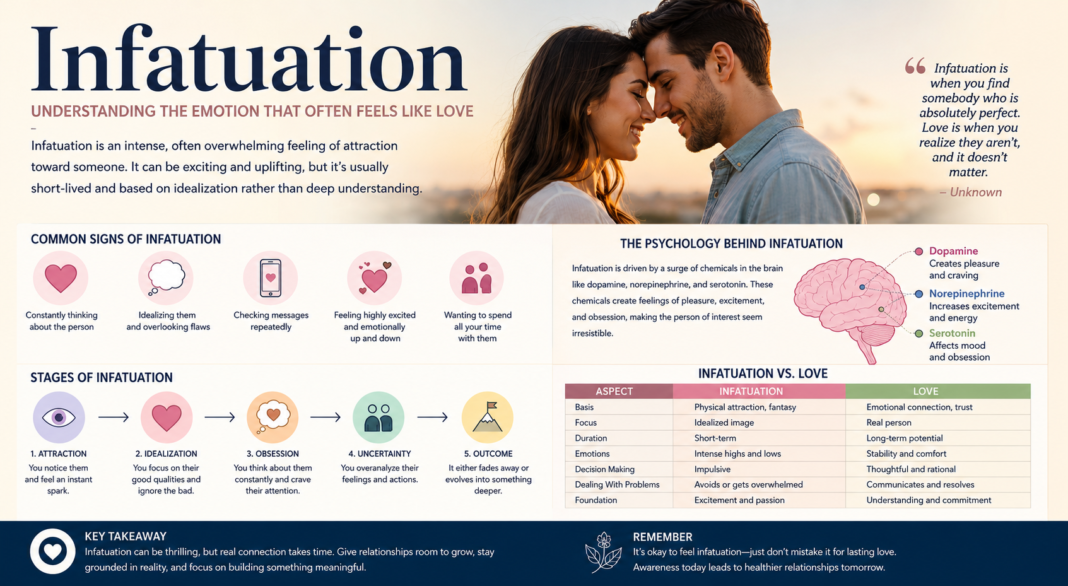

Infatuation is one of the most intense emotions a person can experience. It can make someone feel excited, energized, and deeply connected to another person within a surprisingly short period. Many people mistake infatuation for love because both emotions create strong feelings of attraction and emotional involvement. However, understanding infatuation is essential because it often follows a different path than genuine, long-term love.
At its core, infatuation is characterized by intense admiration, idealization, and emotional fascination. The experience can feel overwhelming, especially when accompanied by romantic attraction and emotional excitement. While infatuation is a normal part of human relationships, recognizing its signs and limitations can help individuals make healthier decisions in dating and partnerships.
What Is Infatuation?
Infatuation is an intense but often short-lived emotional and physical attraction toward another person. It usually develops quickly and is fueled by fascination, desire, and idealized perceptions rather than a deep understanding of someone’s character. Many people experience infatuation during the early stages of dating when physical chemistry and romantic interest are at their highest levels.
Unlike mature love, infatuation tends to focus on fantasies rather than realities. A person experiencing infatuation may overlook flaws, exaggerate positive qualities, and become emotionally invested before truly knowing the other person. These feelings are often reinforced by emotional attachment and relationship fantasy, creating a powerful emotional experience.
The Psychology Behind Infatuation
Psychologists often describe infatuation as a combination of biological, emotional, and cognitive processes. When people become infatuated, the brain releases chemicals such as dopamine and norepinephrine, which create feelings of pleasure, excitement, and anticipation. These responses contribute to brain chemistry and emotional stimulation that make infatuation feel addictive.
The psychological component of infatuation also involves selective attention. People tend to focus primarily on positive traits while minimizing potential concerns. This pattern of thinking is closely connected to idealized perception and cognitive bias, which can influence decision-making during the early stages of attraction.
Common Signs of Infatuation
One of the clearest signs of infatuation is constant thinking about another person. An individual may spend significant time imagining future scenarios, checking messages repeatedly, or seeking opportunities to interact. These behaviors are often linked to obsessive thoughts and romantic longing.
Another common sign is emotional intensity that seems disproportionate to the actual relationship. Strong feelings may develop despite limited interaction or knowledge of the other person. This emotional response frequently stems from intense attraction and emotional dependency, both of which can amplify infatuation.
How Infatuation Develops
Infatuation often begins with a strong first impression. Physical appearance, confidence, charisma, or shared interests can trigger immediate attraction. These initial responses are influenced by physical appeal and instant connection, creating a foundation for deeper emotional investment.
As interactions continue, the mind may begin filling informational gaps with positive assumptions. This process strengthens emotional attachment and can accelerate feelings of closeness. During this stage, personal fantasy and idealized expectations frequently shape perceptions more than objective reality.
Infatuation vs Love
One of the most important distinctions in relationships is the difference between infatuation and love. Infatuation is generally driven by excitement, novelty, and idealization, while love develops through trust, understanding, and shared experiences. The contrast between temporary passion and lasting commitment helps explain why these emotions often produce different outcomes.
Love tends to grow gradually as people learn about each other’s strengths and weaknesses. It remains stable even when challenges arise. Infatuation, by contrast, can fade when reality replaces fantasy. This distinction reflects the difference between emotional maturity and surface attraction.
Key Differences Between Infatuation and Love
| Aspect | Infatuation | Love |
| Development Speed | Rapid | Gradual |
| Focus | Idealized image | Real person |
| Emotional Pattern | Intense highs | Stable connection |
| Decision Making | Emotion-driven | Balanced and thoughtful |
| Longevity | Often temporary | Potentially long-term |
| Conflict Response | Easily disrupted | Works through challenges |
| Foundation | Attraction and fantasy | Trust and understanding |
The table illustrates how infatuation and love differ in both emotional depth and long-term sustainability. Understanding these distinctions can help people evaluate relationships more realistically while balancing relationship awareness and emotional intelligence.
As relationship expert Helen Fisher noted:
“Romantic attraction is one of the most powerful emotions on Earth.”
This observation highlights why infatuation feels so compelling. The combination of emotional intensity and psychological attraction can create experiences that seem unforgettable, even when they are temporary.
Why Infatuation Feels So Powerful
The intensity of infatuation often surprises people because it affects both emotions and physiology. Elevated dopamine levels create anticipation and reward responses that encourage repeated thoughts about the person of interest. These reactions are linked to reward pathways and emotional excitement that reinforce attraction.
In addition, uncertainty can increase emotional intensity. Not knowing exactly how another person feels may heighten curiosity and anticipation. This dynamic strengthens romantic anticipation and emotional investment, making infatuation feel even more significant.
The Stages of Infatuation
The first stage involves immediate attraction and curiosity. Individuals become interested in someone based on appearance, personality traits, or initial interactions. During this phase, initial attraction and emotional curiosity dominate the experience.
The second stage involves idealization and emotional immersion. Thoughts become more frequent, and the relationship may appear perfect despite limited evidence. This stage is shaped by romantic fantasy and idealized thinking, which often intensify emotional involvement.
Can Infatuation Turn Into Love?
Although infatuation and love are different, one can evolve into the other under the right circumstances. When two people continue building trust, communication, and mutual understanding, the initial excitement may mature into a deeper bond. This transformation relies on relationship growth and emotional connection rather than attraction alone.
However, not every infatuation develops into love. Sometimes the emotional intensity fades as individuals gain a clearer understanding of each other. In such cases, realistic expectations and personal awareness help people recognize whether the relationship has long-term potential.
Conclusion
Infatuation is a powerful emotional experience that can feel remarkably similar to love. Driven by attraction, idealization, and intense emotional responses, it often creates excitement and anticipation that capture a person’s attention completely. While infatuation can be enjoyable and meaningful, it differs from lasting love in depth, stability, and long-term commitment.
Understanding the nature of infatuation helps people approach relationships with greater clarity. By balancing emotion with perspective and combining attraction with genuine understanding, individuals can build healthier and more fulfilling connections based on relationship wisdom and emotional balance.
FAQ
What is infatuation?
Infatuation is an intense emotional and romantic attraction toward another person that is often driven by physical attraction and emotional excitement rather than deep understanding.
How long does infatuation usually last?
Infatuation can last from a few weeks to several months, depending on circumstances and individual experiences. Factors such as relationship dynamics and emotional involvement often influence its duration.
Is infatuation the same as love?
No, infatuation is different from love because it is usually based on idealization and attraction. Love develops through mutual trust and emotional intimacy over time.
Can infatuation become a healthy relationship?
Yes, infatuation can develop into a healthy relationship if both people build genuine understanding, communication, and trust. This growth depends on relationship commitment and emotional maturity.
Is infatuation normal?
Infatuation is a normal human experience and a common part of dating and attraction. It often emerges through romantic interest and personal fascination during the early stages of connection.
How can I tell if I am infatuated?
If you constantly think about someone, idealize them, and feel emotionally overwhelmed despite limited interaction, you may be experiencing infatuation. These signs are associated with obsessive attraction and relationship fantasy.
You May Also Read : How to Cook Pasta Perfectly Every Time