
Many people become curious about their shoulder structure when comparing their physique to others, shopping for clothing, or pursuing fitness goals. One of the most common questions that arises is: what are narrow clavicles?
The clavicles, commonly known as collarbones, play a major role in determining shoulder width and overall upper-body proportions. While shoulder appearance is influenced by multiple factors including muscle mass, posture, genetics, and skeletal structure, clavicle length remains one of the most important anatomical contributors.
Understanding what are narrow clavicles can help individuals better assess their body proportions, set realistic fitness expectations, improve posture, and choose clothing styles that enhance their natural frame. This guide explores the anatomy, causes, characteristics, myths, and practical implications of narrow clavicles in detail.
Understanding the Clavicle and Its Function
The clavicle is a long bone that connects the breastbone (sternum) to the shoulder blade (scapula). It acts as a structural support that positions the shoulder away from the chest, allowing the arm to move freely and efficiently.
Because the clavicle helps determine the distance between the shoulders, its length significantly influences how broad or narrow a person’s upper body appears. Even small differences in clavicle length can create noticeable variations in shoulder width and body proportions.
What Are Narrow Clavicles?
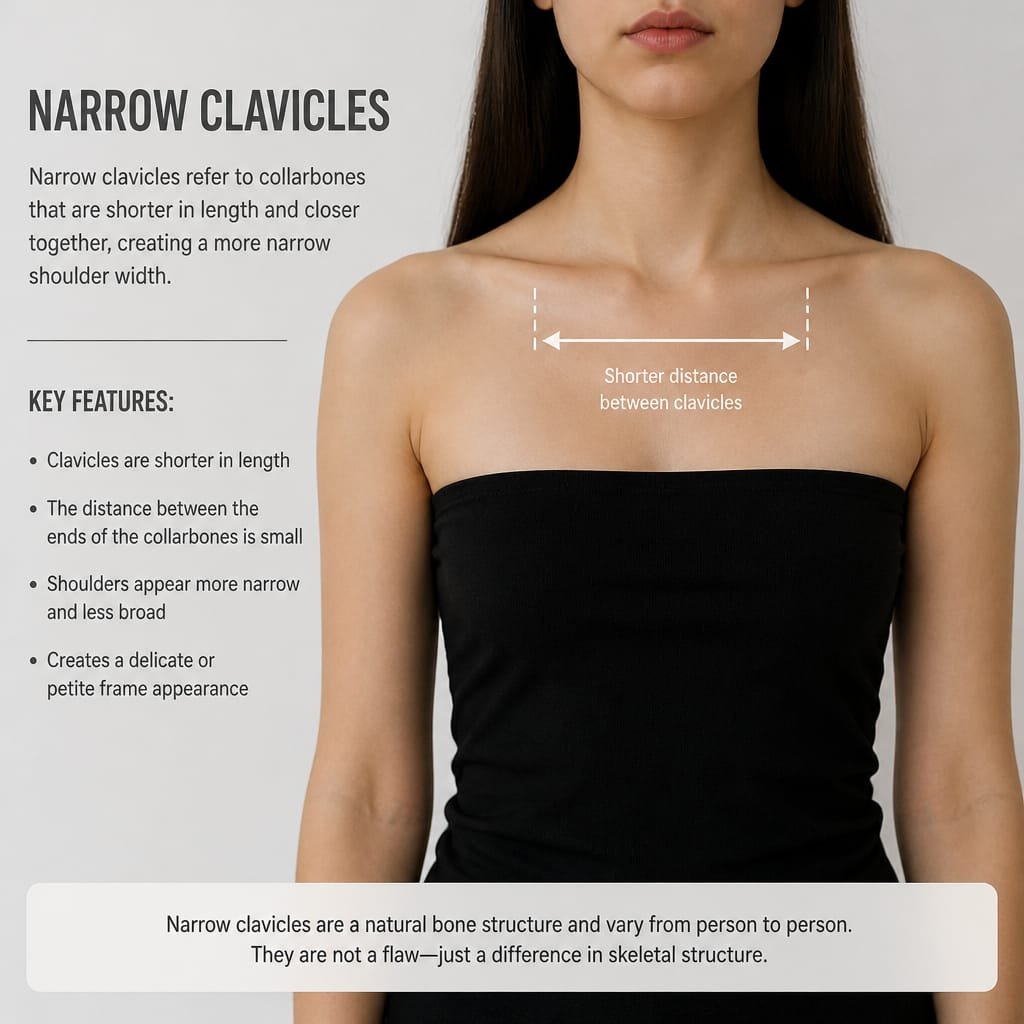
When people ask what are narrow clavicles, they are generally referring to collarbones that are shorter relative to overall body size, resulting in a narrower shoulder span. Narrow clavicles create a frame where the shoulders appear closer together than average.
This characteristic is a normal anatomical variation rather than a medical condition. Just as people naturally have different heights, limb lengths, and facial structures, clavicle length varies from person to person based largely on genetics.
The Anatomy Behind Shoulder Width
Shoulder width is not determined solely by muscle size. The underlying skeletal framework creates the foundation upon which muscles are built and displayed.
Individuals with longer clavicles often appear naturally broad-shouldered even before developing significant muscle mass. Conversely, people with shorter clavicles may maintain a narrower appearance despite strong muscular development.
How Genetics Influence Clavicle Length
Genetics play the primary role in determining skeletal dimensions, including clavicle length. During growth and development, inherited traits influence how bones form and mature.
For most individuals, clavicle proportions become established during adolescence and remain relatively stable throughout adulthood. This is why shoulder width often appears consistent even when body weight changes significantly.
Common Physical Characteristics of Narrow Clavicles
People with narrow clavicles often display several recognizable body features. These characteristics vary in degree and may not all be present in every individual.
Typical traits include a smaller shoulder span, a more compact upper body, a narrower shoulder-to-waist ratio, and a physique that may appear leaner or less broad compared with wider-framed individuals.
Narrow Clavicles vs Broad Clavicles
The differences between narrow and broad clavicles extend beyond appearance and influence overall body proportions.
Broad clavicles create a wider shoulder frame that often contributes to the classic V-taper appearance. Narrow clavicles create a more streamlined silhouette that can appear athletic, elegant, or compact depending on muscle development and body composition.
Comparison of Narrow and Broad Clavicles
| Feature | Narrow Clavicles | Broad Clavicles |
| Shoulder Width | Smaller shoulder span | Wider shoulder span |
| Upper Body Appearance | Compact and streamlined | Broad and expansive |
| V-Taper Potential | More challenging naturally | Easier to achieve visually |
| Clothing Fit | May require tailored shoulder fit | Often fills shoulder seams naturally |
| Muscle Development Appearance | Muscles appear denser | Muscles appear spread across wider frame |
| Genetic Influence | Strongly genetic | Strongly genetic |
| Athletic Potential | Not limited | Not limited |
How Narrow Clavicles Affect Body Shape
Body shape results from the interaction of skeletal structure, muscle mass, fat distribution, and posture. Narrow clavicles primarily influence the upper-body framework.
Individuals with narrow clavicles often have a less pronounced shoulder-to-waist contrast. However, strategic muscle development can still create impressive proportions and a balanced physique.
The Relationship Between Narrow Clavicles and the V-Taper
The V-taper is a physique aesthetic characterized by broad shoulders and a narrow waist. Because clavicle length influences shoulder width, it affects how easily this look can be achieved.
People with narrow clavicles can still develop a strong V-taper by focusing on lateral deltoids, upper back development, posture improvement, and waist management. The result may differ from someone with naturally broad clavicles, but it can still be highly aesthetic.
Fitness and Bodybuilding Considerations
In bodybuilding and physique sports, skeletal structure is often discussed because it influences visual proportions. Narrow clavicles may present unique challenges when attempting to maximize upper-body width.
Fortunately, muscle growth can dramatically alter appearance. Well-developed shoulders, lats, and upper-back muscles can significantly enhance perceived width regardless of clavicle length.
Can Exercise Change Clavicle Length?
One of the most common misconceptions surrounding what are narrow clavicles is the belief that specific exercises can lengthen collarbones.
Adult clavicle length cannot be altered through exercise. Bones stop growing after skeletal maturity, meaning workouts can strengthen surrounding muscles but cannot permanently increase clavicle length.
Building Wider-Looking Shoulders Naturally
Although skeletal dimensions remain fixed, strategic training can create the illusion of greater shoulder width. This is a common approach among athletes and physique competitors.
Exercises targeting the lateral deltoids, rear deltoids, trapezius, and latissimus dorsi help expand the visual width of the upper body and improve overall proportions.
The Importance of Posture
Poor posture can make shoulders appear narrower than they actually are. Rounded shoulders and forward head positioning often reduce perceived upper-body width.
Improving posture through mobility work, strengthening exercises, and ergonomic habits can create a more open chest position that enhances overall shoulder appearance.
Narrow Clavicles in Men
For men, shoulder width is often associated with traditional perceptions of strength and athleticism. As a result, men with narrow clavicles may become particularly aware of their frame.
However, many successful athletes, actors, and fitness enthusiasts possess relatively narrow clavicles. Muscle development, confidence, and body composition often have a greater impact on appearance than skeletal proportions alone.
Narrow Clavicles in Women
Women with narrow clavicles often have a graceful and balanced upper-body appearance. This structure can contribute to elegant silhouettes and versatile clothing options.
Fashion designers frequently create garments intended to complement narrower shoulder frames, highlighting how beauty standards encompass a wide variety of body structures.
Clothing Strategies for Narrow Clavicles
Fashion can significantly influence how shoulder width is perceived. Certain styles create the visual impression of broader shoulders and greater upper-body balance.
Structured jackets, shoulder detailing, layered garments, and well-fitted tops can enhance shoulder presence without appearing exaggerated or unnatural.
Fashion Choices That May Enhance Width
Horizontal design elements naturally draw the eye outward. This visual effect can make the shoulders appear wider and create stronger proportions.
Examples include boat necklines, structured blazers, shoulder embellishments, and garments with strategic seam placement that emphasize the upper body.
Sports Performance and Narrow Clavicles
Having narrow clavicles does not inherently limit athletic performance. Athletic success depends on factors such as strength, skill, endurance, coordination, mobility, and training quality.
Elite performers exist across virtually every skeletal body type. In many sports, technique and conditioning matter far more than shoulder width alone.
Advantages Associated With Narrow Clavicles
While discussions often focus on broad shoulders as desirable, narrow clavicles can offer unique aesthetic and practical advantages.
Some individuals find that a compact frame supports efficient movement patterns, streamlined appearance, easier clothing alterations, and a naturally balanced silhouette.
Common Myths About Narrow Clavicles
Many myths surround shoulder width and clavicle structure. These misconceptions can create unrealistic expectations and unnecessary frustration.
The most common myths include beliefs that clavicles can be significantly lengthened through exercise, that narrow clavicles prevent athletic success, or that they automatically result in an unattractive physique.
The Psychological Impact of Body Proportions
Body image concerns often arise when people compare themselves to idealized images online. Shoulder width is one of many physical traits that can become a source of self-consciousness.
Understanding natural anatomical diversity helps promote healthier expectations. Every skeletal structure comes with unique strengths, characteristics, and aesthetic possibilities.
Measuring Shoulder Width and Clavicle Proportions
People researching what are narrow clavicles often want to know whether their own clavicles are considered narrow. Precise evaluation usually requires comparing skeletal proportions rather than relying on appearance alone.
Factors such as muscle mass, body fat percentage, posture, and torso width can influence visual assessments, making casual comparisons somewhat unreliable.
Medical Conditions and Clavicle Structure
In most cases, narrow clavicles simply represent a normal genetic variation. They are not associated with disease or dysfunction.
Rare developmental conditions can affect clavicle formation, but these are typically accompanied by other symptoms and require professional medical evaluation rather than self-assessment.
How Body Composition Changes Perception
Body fat distribution and muscle mass can dramatically influence shoulder appearance. Two individuals with identical clavicle lengths may look very different depending on their physique.
This is one reason why visual impressions can be misleading. The skeletal frame provides the foundation, but soft tissue largely determines what observers actually see.
Why Social Media Creates Misconceptions
Modern social media often highlights physiques with exceptionally broad shoulders, creating a distorted perception of what is normal.
Camera angles, lighting, posing, photo editing, and selective presentation can exaggerate shoulder width, making average skeletal structures appear inadequate when they are actually completely normal.
Expert Perspective on Skeletal Diversity
An important principle in anatomy and fitness is that skeletal diversity is natural and unavoidable. Human bodies exist across a wide spectrum of proportions.
As the saying goes, “Genetics loads the gun, but lifestyle pulls the trigger.” While bone structure influences appearance, training, nutrition, posture, and confidence often determine how that structure is ultimately expressed.
Long-Term Fitness Goals for Individuals With Narrow Clavicles
People with narrow clavicles benefit most from setting goals based on personal progress rather than comparisons. Strength gains, muscle growth, mobility improvements, and overall health remain achievable regardless of skeletal structure.
A realistic approach focuses on maximizing one’s unique frame rather than attempting to replicate someone else’s proportions, leading to better results and greater satisfaction.
Conclusion
Understanding what are narrow clavicles begins with recognizing that clavicle length is simply one aspect of human anatomy. Narrow clavicles refer to collarbones that create a relatively smaller shoulder span, influencing upper-body proportions and overall appearance.
While genetics largely determine clavicle length, many factors influence how shoulder width is perceived. Muscle development, posture, body composition, clothing choices, and confidence all contribute significantly to appearance. Rather than viewing narrow clavicles as a limitation, it is more productive to understand them as a natural variation within the broad spectrum of human body structures. With the right knowledge and expectations, individuals can build a strong, balanced, and aesthetically pleasing physique regardless of their skeletal frame.
FAQ
What are narrow clavicles exactly?
What are narrow clavicles refers to collarbones that are shorter relative to body size, resulting in a narrower shoulder span and a more compact upper-body frame.
Are narrow clavicles genetic?
Yes. Clavicle length is primarily determined by genetics and develops during growth, making skeletal shoulder width largely hereditary.
Can exercise make narrow clavicles wider?
Exercise cannot lengthen bones after skeletal maturity. However, strength training can build shoulder and back muscles that create a wider appearance.
Do narrow clavicles affect strength?
No. Narrow clavicles do not automatically reduce strength. Strength depends on muscle development, training quality, technique, and overall conditioning.
Are narrow clavicles unattractive?
Attractiveness is highly subjective. Many people with narrow clavicles have balanced, athletic, and aesthetically appealing physiques.
How can I tell if I have narrow clavicles?
Assessing clavicle width involves examining shoulder proportions relative to body size. Because posture, muscle mass, and body composition affect appearance, professional evaluation provides the most accurate assessment.
Can people with narrow clavicles build a V-taper?
Yes. Even with narrow clavicles, developing the shoulders, upper back, and lats while maintaining a lean waist can create a strong and visually impressive V-taper.
Are narrow clavicles a medical problem?
In the vast majority of cases, narrow clavicles are simply a normal anatomical variation and not a medical concern.
You May Also Read : Good Speed Dating Questions