
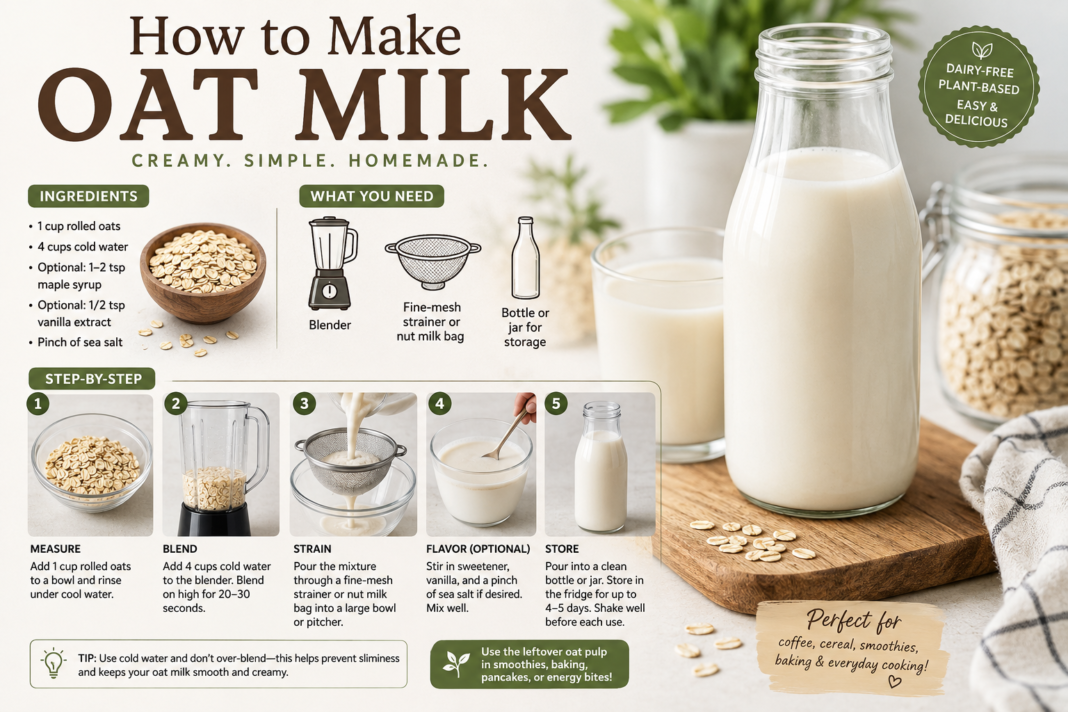

Oat milk has become one of the most popular dairy-free alternatives in recent years, and for good reason. It is creamy, affordable, environmentally friendly, and remarkably easy to prepare at home. Whether you’re looking to reduce dairy consumption, save money, or simply enjoy a fresh plant-based beverage, learning how to make oat milk can transform your kitchen routine.
Unlike many homemade nut milks that require soaking overnight, oat milk can be prepared in minutes using ingredients most people already have in their pantry. With the right technique, you can create a smooth, flavorful drink that works beautifully in coffee, smoothies, cereal, baking, and everyday cooking.
Why Oat Milk Has Become So Popular
Oat milk offers a naturally mild flavor that appeals to a wide range of tastes. Unlike some plant-based alternatives that can taste strongly of nuts or soybeans, oats create a neutral, slightly sweet beverage that blends seamlessly into many recipes.
Another major factor behind its popularity is sustainability. Oats generally require less water and fewer agricultural resources than many other milk alternatives, making oat milk an attractive choice for environmentally conscious consumers seeking practical dietary changes.
Understanding What Oat Milk Is
At its core, oat milk is simply a mixture of oats and water that has been blended and strained. The blending process extracts flavor, starches, and soluble fiber from the oats, creating a creamy liquid that resembles traditional dairy milk.
Commercial versions often contain oils, stabilizers, vitamins, minerals, and emulsifiers to improve texture and shelf life. Homemade versions are typically simpler, giving you full control over ingredients, sweetness, and consistency.
Essential Ingredients for Homemade Oat Milk
One of the greatest advantages of learning how to make oat milk is the remarkably short ingredient list. Most recipes require only rolled oats and water, making it one of the most accessible homemade beverages available.
Optional additions include vanilla extract, maple syrup, dates, cinnamon, sea salt, or cocoa powder. These ingredients allow you to customize flavor profiles while maintaining the fresh, wholesome character of homemade oat milk.
Choosing the Best Oats for Oat Milk
Rolled oats are generally considered the best option because they blend easily and produce a smooth texture. They strike an ideal balance between convenience, consistency, and flavor.
Steel-cut oats can work but often require additional processing and may create a less desirable texture. Instant oats are usable in a pinch, though they can sometimes contribute to a slightly slimier result due to their increased processing.
Basic Equipment You’ll Need
Making oat milk requires only a few common kitchen tools. A blender is essential because it breaks down the oats and combines them with water efficiently.
You’ll also need a fine-mesh strainer, nut milk bag, cheesecloth, or clean kitchen towel. These tools separate the liquid from the oat pulp and help create a smoother final product.
The Classic Oat Milk Recipe
The most common formula uses one cup of rolled oats and four cups of cold water. This ratio creates a balanced consistency suitable for drinking, cereal, coffee, and general kitchen use.
Simply blend the ingredients briefly, strain the mixture, and refrigerate. The entire process often takes less than ten minutes, making it one of the quickest homemade milk alternatives available.
Step-by-Step Instructions for Perfect Results
When exploring how to make oat milk, technique matters more than ingredient complexity. Begin by rinsing rolled oats under cool water to remove excess surface starch before blending.
Blend oats and cold water for approximately 20 to 30 seconds, then immediately strain. Avoid over-blending, as excessive processing releases additional starches that can create a gummy texture.
Oat Milk Ingredient Comparison Table
| Ingredient Option | Effect on Flavor | Effect on Texture | Best Use |
| Rolled Oats | Mild and balanced | Smooth and creamy | Everyday oat milk |
| Steel-Cut Oats | Earthier taste | Slightly grainier | Specialty recipes |
| Instant Oats | Mild sweetness | Can become slimy | Quick preparation |
| Maple Syrup | Natural sweetness | No major change | Drinking and coffee |
| Dates | Rich sweetness | Slight thickness | Smoothies |
| Vanilla Extract | Warm aroma | No texture change | Breakfast beverages |
| Sea Salt | Enhances flavor | No texture change | General use |
| Coconut Oil | Neutral flavor | Extra creaminess | Coffee and lattes |
How to Prevent Slimy Oat Milk
The most common complaint about homemade oat milk is sliminess. Fortunately, this issue is usually caused by technique rather than ingredients.
Using very cold water, blending briefly, and avoiding heat during preparation are the most effective solutions. Excessive blending releases starches that create a thick, gelatinous consistency many people find unpleasant.
Why Cold Water Matters
Temperature plays a surprisingly important role when making oat milk. Warm water activates starches more aggressively, increasing the likelihood of undesirable thickness.
Cold water helps maintain a cleaner texture while preserving the fresh flavor profile that makes homemade oat milk so enjoyable and versatile.
Getting a Creamier Texture
Many people want homemade oat milk to mimic premium coffee-shop varieties. Increasing the oat-to-water ratio slightly can create a richer consistency without significantly affecting flavor.
Adding a small amount of neutral oil can also improve mouthfeel. This technique is commonly used in commercial products to achieve the creamy texture consumers associate with barista-style oat milk.
Sweetening Homemade Oat Milk Naturally
One advantage of mastering how to make oat milk is complete control over sweetness. Natural sweeteners can be adjusted according to personal preference and dietary goals.
Dates, maple syrup, honey, and agave syrup are common options. Some people even find that oats provide enough natural sweetness on their own, eliminating the need for additional ingredients.
Flavor Variations to Try
Vanilla oat milk remains one of the most popular homemade variations because it complements coffee, cereal, and baked goods exceptionally well. A small amount of pure vanilla extract can dramatically enhance flavor.
Chocolate, cinnamon, pumpkin spice, and berry-infused versions are also popular. These variations allow homemade oat milk to become a versatile ingredient rather than simply a dairy substitute.
Using Oat Milk in Coffee
Coffee enthusiasts often wonder whether homemade oat milk performs as well as store-bought barista blends. While it may not foam identically, it still works beautifully in many coffee preparations.
A slightly richer recipe with reduced water content tends to produce better results in lattes, cappuccinos, and iced coffee beverages where creaminess matters most.
Cooking and Baking With Oat Milk
Homemade oat milk functions similarly to dairy milk in many recipes. Pancakes, muffins, sauces, soups, and baked goods often turn out excellent when oat milk is substituted directly.
Because homemade versions lack stabilizers, occasional recipe adjustments may be necessary. However, most everyday cooking applications require little or no modification.
Nutritional Benefits of Oat Milk
Oats naturally contain fiber, particularly beta-glucan, which has been widely studied for its role in supporting heart health and healthy cholesterol levels. Homemade oat milk can provide some of these benefits, although straining removes a portion of the fiber.
It also contains carbohydrates, small amounts of protein, and various micronutrients naturally present in oats. Nutritional values vary depending on preparation methods and ingredient ratios.
Homemade vs Store-Bought Oat Milk
Store-bought products offer convenience, consistency, and often additional vitamin fortification. Many consumers appreciate their predictable texture and extended shelf life.
Homemade oat milk excels in affordability, freshness, ingredient transparency, and customization. Learning how to make oat milk allows you to avoid additives while tailoring flavor and texture to your exact preferences.
Cost Savings of Making Your Own
A package of rolled oats can produce multiple batches of oat milk at a fraction of the cost of premium commercial brands. For households that consume plant-based milk regularly, savings can become substantial over time.
Beyond direct financial benefits, homemade production also reduces packaging waste and transportation impacts associated with commercially manufactured beverages.
Common Mistakes Beginners Make
Many first-time makers blend oats too long, expecting a smoother product. Ironically, this often creates the slimy texture they are trying to avoid.
Another frequent mistake is squeezing the strained oat pulp excessively. While it may seem logical to extract every drop, over-squeezing releases additional starches that negatively affect texture.
Storing Homemade Oat Milk Properly
Fresh oat milk should be stored in an airtight container inside the refrigerator. Glass bottles and jars are particularly popular because they preserve flavor and are easy to clean.
Most homemade batches remain fresh for approximately three to five days. Separation is completely normal and can usually be corrected by shaking before use.
Can You Freeze Oat Milk?
Freezing is possible, although texture changes may occur after thawing. The milk may separate more noticeably and require vigorous mixing before use.
Frozen oat milk tends to perform best in smoothies, baking recipes, and cooked dishes where minor texture differences are less noticeable.
What to Do With Leftover Oat Pulp
Discarding oat pulp is unnecessary because it remains useful in many recipes. It can be added to muffins, pancakes, granola, cookies, or energy bites.
Many home cooks also incorporate leftover pulp into smoothies, oatmeal, and homemade bread dough, maximizing value while reducing food waste.
Making Barista-Style Oat Milk
Barista-style versions prioritize creaminess, foamability, and coffee compatibility. Achieving similar results at home often involves using slightly more oats and occasionally incorporating a small amount of oil.
Consistency testing is valuable because individual preferences vary. Some coffee drinkers prefer richer formulations, while others favor lighter, more neutral versions.
Is Homemade Oat Milk Healthy?
For many people, homemade oat milk can be a nutritious addition to a balanced diet. Its simplicity allows consumers to avoid excess sugars and unnecessary additives commonly found in flavored commercial beverages.
As with any food, overall dietary context matters. Homemade oat milk works best as part of a varied eating pattern that includes diverse nutrient sources.
The Environmental Advantages of Oats
Oats are often praised for their relatively efficient resource requirements compared with many agricultural products. They generally require less water than several alternative crops used for milk substitutes.
This environmental profile has contributed significantly to oat milk’s growing popularity among consumers interested in sustainable food choices and reduced ecological impact.
Expert Perspective on Homemade Oat Milk
As culinary professionals often emphasize, simplicity frequently produces the best results. The quality of ingredients and proper technique matter more than complicated recipes.
“The best homemade foods are often the simplest ones made consistently and thoughtfully.”
This principle applies perfectly to oat milk, where mastering a few fundamentals leads to reliable, high-quality results.
Trends Driving Oat Milk’s Continued Growth
Plant-based eating continues to expand globally, and oat milk occupies a unique position within this movement. Its balanced flavor, accessibility, and versatility appeal to both dedicated plant-based consumers and occasional users.
Innovation continues as home cooks experiment with flavor profiles, coffee applications, and culinary uses, ensuring that oat milk remains a dynamic and evolving category.
Conclusion
Learning how to make oat milk is one of the simplest and most rewarding kitchen skills for anyone interested in plant-based alternatives. With just oats, water, and a blender, you can create a fresh, customizable beverage that supports countless culinary applications.
The key to success lies in understanding technique. Use cold water, blend briefly, strain carefully, and experiment with ingredient ratios until you find your ideal consistency. Once you master how to make oat milk, you’ll enjoy a cost-effective, delicious, and versatile staple that fits seamlessly into everyday life.
FAQ
How long does homemade oat milk last?
When stored properly in the refrigerator, homemade oat milk generally stays fresh for three to five days. Shake well before serving because natural separation is normal.
Can I make oat milk without a nut milk bag?
Yes. When learning how to make oat milk, a fine-mesh strainer, cheesecloth, or clean kitchen towel can work effectively as alternatives.
Why is my oat milk slimy?
The most common causes are over-blending, warm water, or excessive squeezing during straining. Following proper techniques helps prevent this issue.
Can oat milk be used in coffee?
Absolutely. Homemade oat milk works well in coffee, especially when prepared with a slightly richer oat-to-water ratio for added creaminess.
What type of oats are best for oat milk?
Rolled oats are generally considered the best choice because they provide an ideal balance of flavor, texture, affordability, and ease of preparation.
Is homemade oat milk cheaper than store-bought?
Yes. One reason many people learn how to make oat milk is the significant cost savings compared with purchasing commercial plant-based milk regularly.
Can I sweeten oat milk naturally?
Yes. Dates, maple syrup, honey, and other natural sweeteners can be added to homemade oat milk according to your taste preferences.
What can I do with leftover oat pulp?
Leftover pulp can be incorporated into baked goods, smoothies, oatmeal, pancakes, granola, and various other recipes to reduce waste and add fiber.
You May Also Read : FTAsiaStock Technology