
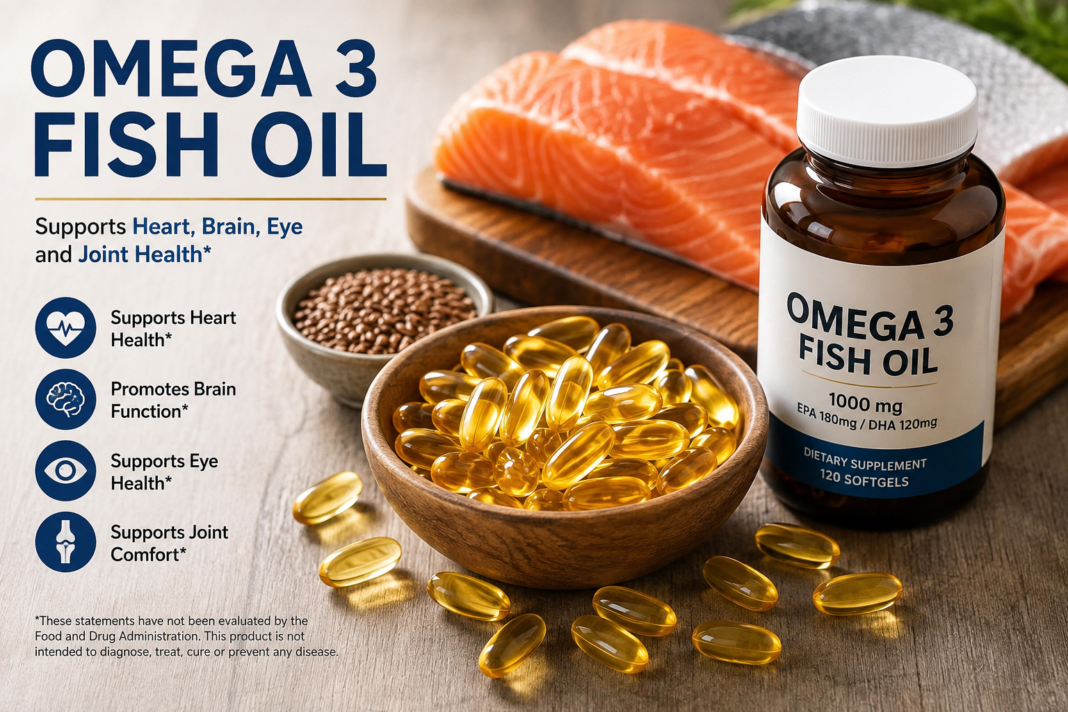

Omega 3 fish oil is one of the most widely used dietary supplements, but understanding what it actually provides is more important than simply choosing a bottle from a store shelf. Fish oil is a concentrated source of marine omega-3 fatty acids, primarily EPA (eicosapentaenoic acid) and DHA (docosahexaenoic acid). These fats play important roles in normal heart, brain, eye, and cellular function.
People commonly take omega 3 fish oil to increase their intake of EPA and DHA, particularly when they do not regularly eat oily fish. However, supplements are not a replacement for a balanced diet, and the potential benefits can depend on the dose, product, health goal, and individual circumstances.
What Is Omega 3 Fish Oil?
Fish oil comes from oily fish such as salmon, sardines, mackerel, herring, and anchovies. It contains omega-3 fatty acids, with EPA and DHA being the primary forms associated with marine foods.
Another omega-3 is ALA (alpha-linolenic acid), which is found mainly in plant foods such as flaxseeds, chia seeds, and walnuts. The body can convert some ALA into EPA and DHA, but the conversion is limited.
EPA vs. DHA
EPA and DHA have different biological roles.
EPA is frequently studied in relation to triglycerides, cardiovascular health, and inflammatory processes.
DHA is an important structural component of the brain and retina and is particularly relevant to normal neurological and visual function.
When evaluating a fish oil supplement, consumers should therefore look beyond the total amount of fish oil and check how much EPA and DHA it actually provides.
What Are the Potential Benefits of Omega 3 Fish Oil?
Research on omega-3 fatty acids is extensive, but the evidence is not equally strong for every claimed benefit. A responsible approach is to distinguish established effects from areas where research remains mixed.
May Help Lower Triglycerides
One of the better-established effects of EPA and DHA is their ability to reduce blood triglyceride levels.
People with significantly elevated triglycerides may sometimes receive prescription omega-3 products as part of medical treatment. These products are different from ordinary dietary supplements and should be used according to professional guidance.
If you have high triglycerides, taking a standard fish oil supplement without medical advice is not necessarily an appropriate substitute for a prescribed treatment plan.
Supports Normal Heart Function
Omega-3 fatty acids are important components of a heart-healthy dietary pattern. Eating seafood as part of a balanced diet has been associated with cardiovascular benefits.
However, it would be inaccurate to claim that fish oil supplements automatically prevent heart disease. Research on cardiovascular outcomes has produced different results depending on the population, formulation, dose, and outcome being studied.
Supports Brain and Eye Health
DHA is abundant in the brain and retina, making adequate omega-3 intake important for normal neurological and visual function.
That does not mean taking extra fish oil will necessarily improve memory or eyesight in a healthy person. Evidence for using omega-3 supplements to prevent or treat specific cognitive and eye conditions varies.
May Support Joint Health
Omega-3 fatty acids are involved in pathways related to inflammation, which is why fish oil has been studied for joint discomfort and inflammatory conditions.
Some studies have found potential benefits in specific populations, but fish oil should not be considered a replacement for prescribed treatment.
Fish Oil vs. Eating Fish
For many people, getting omega-3s from food is a practical first step. Fatty fish provides EPA and DHA along with protein, vitamins, minerals, and other nutrients that supplements may not contain.
| Feature | Fatty Fish | Omega 3 Fish Oil |
| EPA and DHA | Naturally occurring | Concentrated in supplement |
| Protein | Yes | No |
| Other nutrients | Several, depending on fish | Depends on product |
| Convenience | Requires preparation | Convenient |
| Portion control | Based on food serving | Based on labeled dose |
| Mercury considerations | Vary by fish species | Depends on product quality |
Good dietary sources include salmon, sardines, trout, herring, and mackerel. Choosing a variety of lower-mercury seafood can help increase omega-3 intake while supporting an overall nutritious diet.
How Much Omega 3 Fish Oil Should You Take?
There is no single fish oil dosage that is appropriate for everyone.
The amount you need depends on why you are taking the supplement, how much omega-3 you already get from food, the EPA and DHA concentration of the product, and your individual health situation.
A particularly important point is that 1,000 mg of fish oil does not necessarily provide 1,000 mg of EPA and DHA.
For example, a hypothetical capsule might contain:
- Total fish oil: 1,000 mg
- EPA: 180 mg
- DHA: 120 mg
- Other fats: 700 mg
In this example, the meaningful EPA plus DHA content is 300 mg, not 1,000 mg.
For general supplementation, follow the product’s directions and avoid assuming that a higher dose is automatically better. Higher-dose omega-3 therapy for conditions such as very high triglycerides should be discussed with a healthcare professional.
How to Choose a Quality Fish Oil Supplement
Reading the supplement label carefully can help you make a more informed choice.
Check EPA and DHA Content
Look for the actual amounts of EPA and DHA per serving. Comparing these numbers is more useful than comparing the total fish oil listed prominently on the front of a package.
Check the Serving Size
A product may advertise a particular EPA and DHA amount based on two or three capsules rather than one. Always check how many capsules constitute one serving.
Consider Quality Testing
Quality can vary among dietary supplements. Where available, independent or third-party testing can provide additional information about purity, potency, and contaminants.
Check Expiration and Storage Instructions
Fish oil is susceptible to oxidation. Keep the product according to the manufacturer’s storage instructions and avoid excessive heat or prolonged exposure to light.
An unusual odor alone should not be treated as a precise test of product quality, but major changes in smell, taste, packaging, or appearance are reasonable reasons to check the product information or contact the manufacturer.
Fish Oil, Krill Oil, and Algal Oil: What’s the Difference?
Fish oil isn’t the only source of supplemental omega-3.
Fish oil generally provides EPA and DHA derived from fish.
Krill oil comes from small marine crustaceans and provides EPA and DHA along with other components such as phospholipids.
Algal oil is derived from algae and can provide DHA, with some products also supplying EPA. It is a common option for people looking for a non-fish source of marine omega-3.
There is no universal supplement that is best for everyone. Dietary preferences, allergies, EPA/DHA content, product quality, and individual needs should all be considered.
What Are the Side Effects of Fish Oil?
Omega 3 fish oil is generally well tolerated when used appropriately, but some people experience mild digestive or taste-related effects.
Potential side effects include:
- Fishy aftertaste or burps
- Bad breath
- Heartburn
- Nausea
- Diarrhea
- Headache
Taking fish oil with food may make it easier for some people to tolerate.
Can Fish Oil Interact With Medication?
People taking medications that affect blood clotting should speak with a healthcare professional before using higher-dose omega-3 supplements.
Anyone taking several medications, preparing for a procedure, or managing a cardiovascular condition should discuss supplementation with their healthcare provider.
Some research has also raised questions about atrial fibrillation with certain higher-dose omega-3 supplementation, particularly in people with cardiovascular risk factors. This is another reason not to assume that more fish oil is always better.
Prescription Omega-3 vs. Regular Fish Oil
Prescription omega-3 products and over-the-counter fish oil supplements should not be treated as interchangeable.
Prescription products are standardized medicines intended for specific medical uses, while dietary supplements can vary considerably in formulation and EPA/DHA concentration.
If a healthcare professional recommends prescription omega-3 therapy for high triglycerides, substituting an ordinary supplement without discussing it with them may result in a different dose or formulation than intended.
When Is the Best Time to Take Fish Oil?
There is no universally superior time of day for taking fish oil.
Consistency is generally more practical than focusing on a specific hour. Many people take fish oil with a meal because doing so may improve tolerance and make the supplement easier to remember.
Always follow the instructions on your particular product, especially if the recommended serving is divided throughout the day.
How Long Does Fish Oil Take to Work?
The answer depends on what you expect the supplement to accomplish.
For measurable outcomes such as triglyceride levels, changes are not immediate and depend on the dose, product, diet, and individual response.
For general nutritional supplementation, people may not notice an obvious sensation or immediate effect. Omega-3 supplements should not be judged solely by whether you “feel” them working.
If you are taking fish oil for a specific medical reason, your healthcare professional can determine whether follow-up testing is appropriate.
Practical Example: Comparing Two Fish Oil Labels
Imagine you are choosing between two supplements.
Product A: 1,000 mg fish oil per serving, providing 300 mg EPA + DHA.
Product B: 1,000 mg fish oil per serving, providing 700 mg EPA + DHA.
Although both products contain the same total amount of fish oil, Product B supplies considerably more EPA and DHA per serving.
This illustrates why looking beyond the large number on the front of the bottle is essential.
Who Should Talk to a Healthcare Professional First?
Consider professional guidance before starting or significantly increasing omega-3 supplementation if you:
- Take anticoagulant or antiplatelet medication
- Have very high triglycerides
- Have a cardiovascular condition
- Are pregnant or breastfeeding
- Have a fish or seafood allergy
- Are preparing for a medical procedure
- Take several medications or supplements
- Are considering a high-dose omega-3 product
A healthcare professional can help determine whether supplementation is appropriate and whether a particular dose or formulation makes sense.
Conclusion
Omega 3 fish oil can be a convenient way to obtain EPA and DHA, but choosing a supplement requires more than looking at the number of milligrams on the front of the bottle. The purpose of supplementation, EPA and DHA content, product quality, dietary intake, medications, and individual health needs all matter.
For many people, eating oily fish as part of a balanced diet is an excellent way to obtain omega-3 fatty acids. When a supplement is appropriate, compare products based on their actual EPA and DHA content and use higher doses only with appropriate professional guidance.
Frequently Asked Questions
Is omega 3 fish oil good for you?
Omega 3 fish oil provides EPA and DHA, which have important biological roles. It may be useful for people who need additional omega-3 intake, but benefits depend on diet, dose, health status, and the reason for supplementation.
Is it safe to take fish oil every day?
Many people use fish oil daily without serious problems, but the appropriate amount varies. Follow the product directions and discuss higher doses with a healthcare professional, particularly if you take medication or have a medical condition.
What is the difference between omega-3 and fish oil?
Omega-3 refers to a family of fatty acids, including EPA, DHA, and ALA. Fish oil is a source of marine omega-3s, primarily EPA and DHA.
Does fish oil lower triglycerides?
EPA and DHA can lower triglyceride levels, particularly at appropriate therapeutic doses. People with significantly elevated triglycerides should discuss treatment with a healthcare professional because prescription omega-3 products differ from standard supplements.
Is fish oil better than eating fish?
Not necessarily. Fish provides EPA and DHA along with protein and other nutrients. Supplements can be convenient for people who do not regularly consume seafood, but they should complement—not automatically replace—a nutritious diet.
What are the main side effects of fish oil?
Common effects can include fishy burps, bad breath, heartburn, nausea, diarrhea, and headache. Taking it with food may improve tolerance for some people.
What should I look for when buying fish oil?
Check the actual EPA and DHA amounts, serving size, expiration date, storage instructions, and available quality or third-party testing information. Do not assume that a higher total fish oil number means a higher EPA/DHA concentration.