
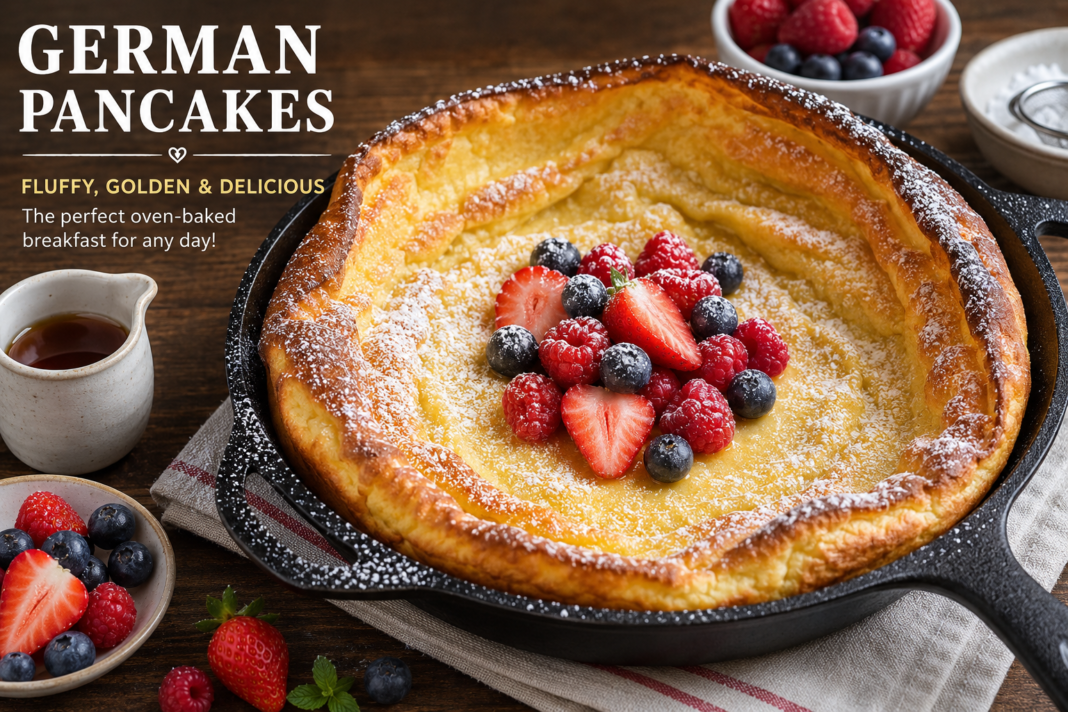

German pancakes are one of the easiest yet most impressive breakfast dishes you can prepare at home. Unlike traditional stovetop pancakes, these oven-baked delights rise dramatically during baking before settling into a soft, custard-like center with crisp golden edges. Their unique texture and beautiful presentation make them a favorite for weekend breakfasts, holiday brunches, and family gatherings.
Whether you’re new to baking or an experienced home cook, mastering german pancakes is surprisingly simple. Using only a handful of pantry staples, you can create a light, airy breakfast that’s ready in under 30 minutes. Throughout this guide, you’ll learn everything from ingredients and techniques to serving ideas, troubleshooting tips, and creative variations. Every section includes practical advice to help you achieve bakery-quality results in your own kitchen.
What Are German Pancakes?
German pancakes are large oven-baked pancakes made from a simple mixture of eggs and milk, blended with flour and butter. As the batter bakes in a hot oven, steam causes it to puff dramatically, creating tall golden edges and a soft, custard-like center. Although they are sometimes called a Dutch baby or oven pancake, the preparation style remains similar and has become a breakfast favorite worldwide.
Unlike traditional pancakes that require flipping on a skillet, german pancakes bake entirely in one pan. The result is a crispy exterior surrounding a tender middle that pairs perfectly with sweet or savory toppings. Their simplicity, impressive appearance, and quick preparation have made them a popular breakfast recipe for busy families, weekend brunches, and holiday mornings.
Why German Pancakes Are So Popular
One of the biggest reasons people love german pancakes is their incredible texture. The edges become beautifully golden brown and crisp while the center stays soft and airy. This unique contrast creates a satisfying bite that feels much more elegant than ordinary pancakes, despite requiring very little effort.
Another advantage is their versatility. You can serve them with maple syrup, fresh fruit, powdered sugar, whipped cream, or even savory ingredients like cheese and herbs. Because they bake in one dish instead of multiple batches, they’re an excellent choice for feeding families without spending the entire morning standing over a stove.
Ingredients You’ll Need
The beauty of german pancakes lies in their short ingredient list. Most kitchens already have everything required, making this recipe both affordable and convenient. Fresh eggs, all-purpose flour, whole milk, butter, vanilla extract, and a small amount of salt work together to create the perfect batter.
Quality ingredients make a noticeable difference. Fresh butter provides rich flavor, while room-temperature ingredients help the batter blend smoothly and rise evenly. Adding a splash of vanilla extract enhances the aroma without overpowering the delicate taste of the finished pancake.
Ingredient Breakdown
| Ingredient | Purpose | Helpful Tip |
| Eggs | Creates structure and lift | Use room-temperature eggs |
| Flour | Provides body | Sift for smoother batter |
| Milk | Produces a silky batter | Whole milk gives richer flavor |
| Butter | Adds richness and crispy edges | Melt in the hot baking dish |
| Vanilla Extract | Enhances flavor | Pure vanilla is recommended |
| Salt | Balances sweetness | Use fine salt for even mixing |
How to Make German Pancakes
Start by preheating your oven to a high temperature while placing butter in your baking dish. The hot cast iron skillet or baking pan melts the butter completely, creating the ideal surface for the batter. Meanwhile, blend together the batter ingredients until smooth and free of lumps.
Pour the batter directly into the hot butter and immediately return the pan to the oven. Avoid opening the oven door while baking because sudden temperature changes can prevent the pancake from reaching its full height. Within about 20 minutes, you’ll see beautifully puffed edges and a lightly browned center.
Expert Tips for Perfect Results
Always blend the batter thoroughly to incorporate air, which helps the pancake rise higher during baking. Using room-temperature eggs and milk also encourages better expansion, while a properly heated pan gives the edges their signature crispness.
Resist the temptation to overmix after blending or frequently check the oven during baking. Consistent heat allows steam to build naturally inside the oven pancake, creating the dramatic puff that makes german pancakes so distinctive. Once removed from the oven, expect the pancake to deflate slightly—this is completely normal and part of its classic appearance.
“Simple ingredients often produce the most memorable meals when technique is respected.”
Delicious Topping Ideas
One reason german pancakes remain a breakfast favorite is the endless variety of toppings you can enjoy. A light dusting of powdered sugar, fresh strawberries, blueberries, raspberries, or sliced bananas creates a classic combination that’s both colorful and refreshing.
For a richer breakfast, drizzle warm maple syrup over the pancake or add whipped cream, lemon curd, fruit preserves, caramel sauce, or toasted nuts. During autumn, cinnamon apples and pumpkin spice toppings transform this simple recipe into a comforting seasonal treat.
Sweet and Savory Variations
One of the greatest advantages of german pancakes is their versatility. While many people enjoy them as a sweet breakfast with fruit and syrup, they can easily become a savory meal by adding cheese, herbs, or cooked vegetables. Ingredients like cheddar cheese and fresh herbs create a flavorful twist that’s perfect for brunch or even a light dinner.
Sweet versions are equally exciting. Try topping your pancake with fresh berries, cinnamon sugar, Nutella, sliced peaches, or caramelized apples for a dessert-inspired breakfast. Seasonal fruits allow you to enjoy a different version throughout the year while keeping the recipe fresh and exciting.
Common Mistakes to Avoid
Many first-time bakers wonder why their german pancakes don’t rise as expected. The most common reason is using cold ingredients, which reduce the amount of steam produced during baking. Room-temperature eggs and whole milk help the batter expand more effectively and create the signature puffed edges.
Another mistake is opening the oven door too early. Every time heat escapes, the pancake can lose valuable lift before it finishes baking. Using a properly preheated cast iron skillet and allowing the pancake to bake undisturbed ensures the best texture and appearance.
Nutritional Overview
Although german pancakes feel indulgent, they can fit into a balanced breakfast when served with nutritious toppings. Pairing them with fresh fruit and Greek yogurt adds vitamins, protein, and natural sweetness without relying solely on syrup.
You can also make small adjustments to suit different dietary preferences. Using lower-fat milk, reducing added sugar in toppings, or serving with nuts instead of whipped cream creates a more balanced meal while preserving the delicious texture of the pancake.
German Pancakes vs Traditional Pancakes
Many people compare german pancakes with classic American pancakes, but they offer very different eating experiences. Traditional pancakes are cooked individually on a griddle and have a fluffy, cake-like texture. German pancakes, on the other hand, bake in the oven and develop crisp edges with a soft custard center thanks to the steam created during cooking.
Another major difference is convenience. Instead of standing over the stove flipping multiple pancakes, you simply pour the batter into a hot pan and let the oven do the work. This makes them an ideal family breakfast when serving several people at once.
| Feature | German Pancakes | Traditional Pancakes |
| Cooking Method | Oven baked | Stovetop |
| Texture | Crispy edges, custard center | Soft and fluffy |
| Cooking Time | Single bake | Multiple batches |
| Best Served | Family-style | Individual servings |
| Presentation | Dramatic puffed appearance | Flat stacked pancakes |
Serving Suggestions
Serve german pancakes immediately after removing them from the oven to enjoy their dramatic rise before they naturally settle. Garnish with powdered sugar and a squeeze of fresh lemon juice for a classic European-inspired presentation that’s simple yet elegant.
For larger brunch gatherings, pair them with crispy bacon, breakfast sausage, scrambled eggs, or a fresh fruit salad. Coffee, tea, fresh orange juice, or hot chocolate complete the meal and create a memorable breakfast spread for family and guests alike.
How to Store and Reheat
If you have leftovers, allow your german pancakes to cool completely before storing them in an airtight container. They remain fresh in the refrigerator for several days and can also be frozen for longer storage. Separating slices with parchment paper helps prevent sticking.
To reheat, place slices in a preheated oven or air fryer until warmed through. While a microwave works in a pinch, reheating in the oven helps restore some of the crisp texture around the edges. Add fresh maple syrup or fresh berries after reheating for the best flavor.
Why This Recipe Never Goes Out of Style
Breakfast trends come and go, but german pancakes continue to remain popular because they combine simplicity with impressive results. With only a few everyday ingredients, anyone can prepare a restaurant-quality breakfast that looks spectacular and tastes even better. Their balance of crisp edges and soft interior appeals to both children and adults.
As more people search for easy homemade recipes, this classic oven pancake continues to gain popularity across social media and food blogs. Whether you’re preparing a holiday brunch, a cozy weekend breakfast, or introducing someone to this timeless recipe for the first time, german pancakes deliver dependable results with very little effort.
Conclusion
German pancakes prove that extraordinary breakfasts don’t require complicated recipes or expensive ingredients. Their dramatic rise, buttery flavor, and tender texture make them one of the most rewarding dishes you can prepare in your own kitchen. With endless topping possibilities and straightforward preparation, they’re suitable for everyday breakfasts as well as special occasions.
By following the tips and techniques in this guide, you’ll consistently create beautifully puffed pancakes with crisp edges and a delicate center. Experiment with different fruits, syrups, spices, and savory additions to make the recipe your own, and you’ll quickly discover why german pancakes have remained a beloved breakfast favorite for generations.
FAQs
What makes german pancakes different from regular pancakes?
Unlike traditional pancakes cooked on a griddle, german pancakes bake in the oven, creating dramatic puffed edges and a soft custard-like center. The combination of steam and hot butter gives them their unique texture.
Are german pancakes the same as a Dutch baby?
Yes. Many people use the terms german pancakes and Dutch baby interchangeably. Both describe a large oven pancake made from eggs, milk, flour, and butter.
Why didn’t my german pancakes rise?
Cold ingredients, an oven that isn’t fully preheated, or opening the oven door during baking can all prevent german pancakes from rising properly. Using room-temperature eggs and a hot baking dish usually solves the problem.
Can I make german pancakes ahead of time?
Yes. While german pancakes taste best fresh from the oven, leftovers can be refrigerated and reheated. Store them in an airtight container and warm them in the oven for the best texture.
What are the best toppings for german pancakes?
Popular toppings include powdered sugar, maple syrup, fresh berries, whipped cream, caramelized apples, lemon juice, cinnamon sugar, and toasted nuts. These toppings complement the light texture without overpowering the flavor.
Can I make german pancakes gluten-free?
Absolutely. Replace all-purpose flour with a quality gluten-free flour blend designed for baking. Pair it with whole milk and fresh eggs for a similar texture and flavor.
You May Also Read : Brunch Menu Ideas