
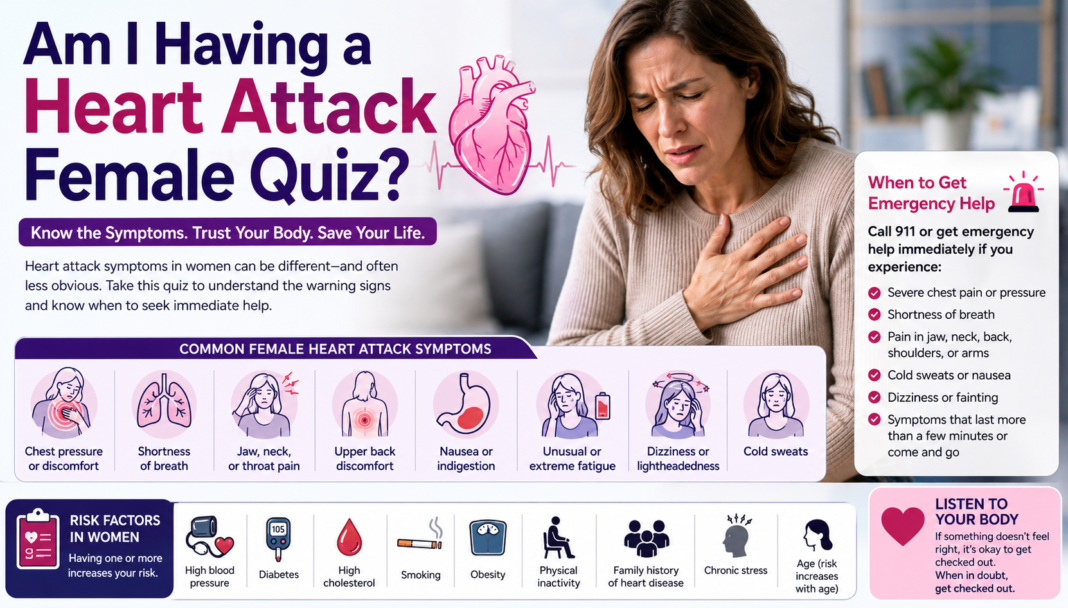

Many women experiencing a heart attack do not have the dramatic chest-clutching symptoms often shown in movies. Instead, symptoms can be subtle, confusing, and easy to mistake for stress, indigestion, anxiety, or fatigue. That is why searches for an am i having a heart attack female quiz have become increasingly common among women looking for answers.
While no online quiz can diagnose a heart attack, understanding common warning signs can help you recognize when symptoms require urgent medical attention. This guide explores female heart attack symptoms, risk factors, symptom patterns, emergency warning signs, and how self-assessment tools should be used responsibly.
Understanding Why Female Heart Attack Symptoms Can Be Different
Heart attacks occur when blood flow to part of the heart becomes blocked, preventing oxygen from reaching heart muscle tissue. Although the underlying medical event is the same for men and women, symptom presentation often differs significantly.
Women are more likely to experience less obvious symptoms such as unusual fatigue, nausea, dizziness, shortness of breath, jaw pain, neck discomfort, or upper back pressure. Because these symptoms may not immediately suggest a cardiac emergency, treatment is sometimes delayed, increasing health risks.
What an Am I Having a Heart Attack Female Quiz Can and Cannot Do
An am i having a heart attack female quiz is designed to help identify symptom patterns associated with cardiac events. These quizzes typically ask questions about chest discomfort, breathing difficulties, pain location, medical history, and symptom duration.
However, quizzes cannot replace emergency medical evaluation. If symptoms are severe, sudden, worsening, or concerning, immediate medical attention is always more important than completing any online assessment. Heart attacks require rapid diagnosis through clinical examination, electrocardiograms, blood tests, and imaging.
Quick Female Heart Attack Symptom Self-Assessment
The following self-check can help identify warning signs often associated with female heart attacks. It is educational and should never be used as a diagnosis.
| Symptom | Common in Women | Requires Immediate Medical Attention |
| Chest pressure or tightness | Yes | Yes |
| Shortness of breath | Yes | Yes |
| Pain in jaw, neck, or throat | Yes | Yes |
| Upper back discomfort | Yes | Yes |
| Unexplained nausea | Yes | Often |
| Sudden dizziness | Yes | Yes |
| Cold sweats | Yes | Yes |
| Extreme fatigue | Very common | Often |
| Arm pain, especially left arm | Yes | Yes |
| Fainting or near-fainting | Less common | Yes |
If you answer “yes” to several of these symptoms simultaneously, particularly alongside chest discomfort or breathing problems, emergency evaluation is warranted.
Common Female Heart Attack Symptoms Often Overlooked
One of the most misunderstood aspects of heart disease is how differently symptoms may appear in women. Many women report feeling “off” rather than experiencing unmistakable chest pain.
Symptoms can include overwhelming exhaustion, sleep disturbances, anxiety-like sensations, indigestion, nausea, shoulder discomfort, jaw pain, and unexplained weakness. These warning signs may develop gradually over hours, days, or even weeks before a major cardiac event.
Chest Pain Is Still Important but May Feel Different
Although many people believe women rarely experience chest pain during a heart attack, this is not entirely accurate. Chest discomfort remains one of the most common symptoms among women.
The difference is often how the sensation is described. Rather than sharp pain, women frequently report pressure, squeezing, fullness, heaviness, burning, or an uncomfortable tightness in the center of the chest.
Recognizing Shortness of Breath and Breathing Changes
Shortness of breath can occur with or without chest pain during a heart attack. Some women notice difficulty catching their breath during routine activities that normally feel effortless.
Others describe a sudden inability to take a deep breath, accompanied by weakness, dizziness, or chest pressure. When breathing difficulties appear unexpectedly and persist, medical evaluation should not be delayed.
Jaw, Neck, Shoulder, and Back Pain Warning Signs
Pain associated with a heart attack does not always remain in the chest. The heart shares nerve pathways with several other areas of the body, causing referred pain.
Women may experience aching, pressure, burning, or discomfort in the jaw, neck, shoulders, upper back, or arms. These symptoms may seem unrelated to the heart, which contributes to delayed recognition.
Why Fatigue Can Be a Significant Red Flag
Extreme fatigue is among the most frequently reported symptoms by women before a heart attack. This is not ordinary tiredness after a busy day.
Many women describe profound exhaustion that interferes with daily tasks. Activities such as climbing stairs, carrying groceries, or getting dressed may suddenly feel unusually difficult despite no obvious explanation.
Digestive Symptoms That Can Mimic Other Conditions
Heart attacks are sometimes mistaken for gastrointestinal problems because symptoms can overlap. Nausea, indigestion, stomach pressure, bloating, and vomiting may occur during a cardiac event.
This overlap is one reason an am i having a heart attack female quiz often includes questions related to digestive symptoms. When gastrointestinal complaints occur alongside other cardiac warning signs, they deserve careful attention.
Risk Factors That Increase Heart Attack Risk in Women
Heart attacks rarely occur without underlying risk factors. Understanding these factors helps place symptoms into context and improves awareness of personal cardiovascular risk.
Major risk factors include high blood pressure, diabetes, smoking, obesity, high cholesterol, physical inactivity, family history of heart disease, chronic stress, and advancing age. Women with multiple risk factors should be especially alert to unusual symptoms.
Younger Women Can Have Heart Attacks Too
A common misconception is that heart attacks only affect older adults. While risk generally increases with age, younger women are not immune.
Certain conditions such as diabetes, autoimmune disorders, smoking, pregnancy-related complications, high blood pressure, and genetic predisposition can increase cardiovascular risk in younger populations. Symptoms should never be dismissed solely because of age.
How Anxiety and Heart Attacks Can Feel Similar
Panic attacks and heart attacks can share several symptoms, including chest discomfort, shortness of breath, sweating, dizziness, and nausea. This similarity often creates confusion.
The critical distinction is that heart attacks involve reduced blood flow to heart muscle, while panic attacks originate from the body’s stress response. Because the symptoms overlap, medical evaluation is necessary whenever uncertainty exists.
Signs That Require Immediate Emergency Attention
Certain symptoms should trigger immediate emergency action rather than further online research. These include severe chest pressure, crushing chest pain, fainting, difficulty breathing, or symptoms that rapidly worsen.
Emergency care is also necessary when symptoms last more than several minutes, recur repeatedly, or are accompanied by sweating, nausea, weakness, or pain radiating to the arm, jaw, neck, or back.
What Happens During Heart Attack Evaluation
Many people hesitate to seek care because they fear embarrassment if symptoms turn out to be something else. In reality, healthcare professionals prefer evaluating symptoms early rather than after complications develop.
Emergency assessment typically includes an electrocardiogram, blood testing for cardiac enzymes, physical examination, monitoring, and additional imaging if necessary. These tests help determine whether a heart attack or another condition is responsible.
Why Early Treatment Improves Outcomes
Heart muscle begins suffering damage when oxygen delivery is interrupted. The longer treatment is delayed, the greater the potential for permanent injury.
Prompt medical intervention can restore blood flow, reduce complications, preserve heart function, and significantly improve survival rates. Minutes matter during a suspected cardiac emergency.
Using Online Symptom Quizzes Responsibly
An am i having a heart attack female quiz can serve as an educational tool that encourages awareness of symptoms women often overlook. It can also help users identify patterns that warrant professional evaluation.
The safest approach is to view any quiz as a starting point rather than a final answer. Persistent, severe, or concerning symptoms always deserve medical attention regardless of quiz results.
Common Misconceptions About Female Heart Attacks
Many people believe women always have “silent” heart attacks or never experience chest pain. In reality, chest discomfort remains common, though accompanying symptoms may differ from traditional expectations.
Another misconception is that healthy-looking women cannot have heart disease. Cardiovascular disease affects women across many ages, body types, and lifestyles, making symptom awareness essential for everyone.
The Importance of Listening to Your Body
Women frequently prioritize family responsibilities, work obligations, and caregiving roles ahead of personal health concerns. As a result, symptoms may be minimized or ignored.
Paying attention to unusual changes, especially those involving fatigue, breathing, chest discomfort, dizziness, or pain patterns, can lead to earlier medical evaluation and potentially lifesaving treatment.
Expert Perspective on Heart Attack Awareness
As many cardiologists emphasize, symptom recognition remains one of the most important tools in preventing severe outcomes from heart disease.
“When in doubt, get checked out.”
This simple message captures a critical reality: seeking medical evaluation for possible heart attack symptoms is far safer than assuming symptoms are harmless.
Conclusion
Searching for an am i having a heart attack female quiz often reflects a desire for reassurance during a frightening moment. While symptom quizzes can increase awareness, they cannot diagnose or rule out a heart attack.
Women frequently experience symptoms that differ from classic expectations, including fatigue, nausea, shortness of breath, jaw pain, back discomfort, and unexplained weakness. Understanding these warning signs can help you respond quickly when symptoms occur. If there is any concern that you may be experiencing a heart attack, seeking immediate medical care is always the safest decision.
FAQ
Can an am i having a heart attack female quiz diagnose a heart attack?
No. An am i having a heart attack female quiz can identify symptom patterns, but only medical professionals can diagnose a heart attack through clinical testing.
What are the most common female heart attack symptoms?
Women commonly experience chest pressure, shortness of breath, fatigue, nausea, jaw pain, neck pain, upper back discomfort, dizziness, and sweating.
Can a heart attack occur without chest pain?
Yes. Some women experience a heart attack with little or no chest pain, making awareness of other symptoms especially important.
How long should heart attack symptoms last before seeking help?
Any concerning symptoms should be evaluated immediately. Do not wait for symptoms to persist if they are severe, worsening, or accompanied by breathing difficulties.
Is anxiety or stress easily confused with a heart attack?
Yes. Anxiety and panic attacks can mimic several cardiac symptoms. When uncertainty exists, professional medical evaluation is the safest option.
Should younger women use an am i having a heart attack female quiz?
Younger women may use an am i having a heart attack female quiz for educational awareness, but age should never be used to dismiss potentially serious symptoms.
What should I do if a quiz suggests a possible heart attack?
If an am i having a heart attack female quiz indicates concerning symptoms, especially alongside chest pressure, shortness of breath, or radiating pain, seek immediate medical attention rather than relying on online information alone.
You may Also Read : OtterSec Lawsuit