
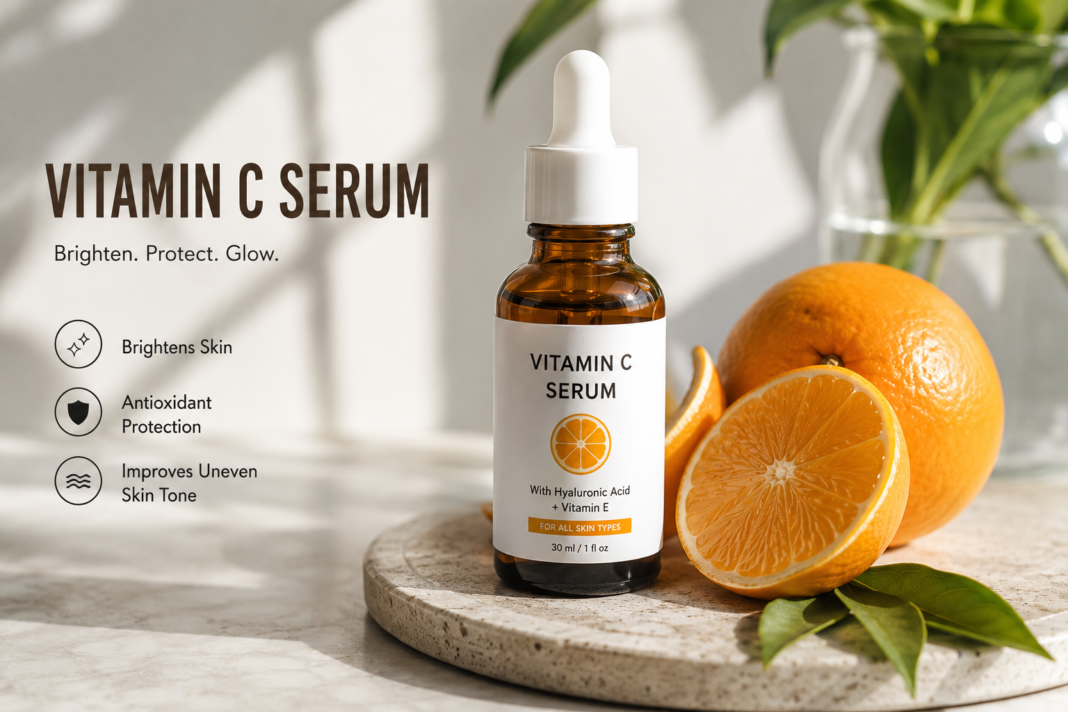

If you want brighter-looking skin, a more even complexion, and an antioxidant step in your skincare routine, vitamin C serum is worth considering. But choosing one is not as simple as picking the highest percentage on the label.
Vitamin C comes in several forms, and each has different characteristics when it comes to stability, potency, and skin tolerance. The way a serum is formulated, packaged, stored, and combined with other ingredients can also affect how useful it is.
Research supports several potential benefits of topical vitamin C, including antioxidant protection, support for collagen production, and improvement in the appearance of pigmentation and photoaged skin. However, results depend heavily on the formulation and consistent use.
Here’s what you need to know before adding vitamin C serum to your routine.
What Is Vitamin C Serum?
Vitamin C serum is a skincare product formulated with vitamin C or a vitamin C derivative for topical application. Unlike vitamin C obtained through food or supplements, a topical formula is designed to deliver the ingredient directly to the skin.
The best-known form is L-ascorbic acid, the active form of vitamin C that has been extensively studied in topical skincare. It is an antioxidant that can help counter oxidative stress caused by environmental factors such as ultraviolet radiation.
Vitamin C also plays an important role in collagen synthesis. In skincare, this makes it particularly interesting for people concerned about dullness, uneven tone, fine lines, and visible signs of photoaging.
However, vitamin C is relatively unstable, especially in its pure L-ascorbic acid form. Exposure to oxygen, light, heat, and unsuitable formulation conditions can reduce its stability. This is why the serum’s formulation and packaging matter just as much as the percentage printed on the bottle.
What Does Vitamin C Serum Do for Your Skin?
Helps Brighten Dull-Looking Skin
One of the most popular reasons people use vitamin C serum is to improve the appearance of dull or tired-looking skin.
Consistent use may help create a more radiant and even-looking complexion. Rather than producing an overnight transformation, vitamin C is better viewed as a long-term addition to a well-rounded skincare routine.
Helps Improve the Appearance of Dark Spots
Vitamin C has properties that can influence melanin production, which is one reason topical vitamin C is studied for uneven pigmentation and discoloration. Clinical research has found potential benefits for pigmentation associated with melasma and photoaging, although results vary between formulations.
If dark spots are your main concern, vitamin C works best as part of a broader routine that includes daily sun protection.
Supports Collagen Production
Vitamin C is involved in collagen synthesis, an important process for maintaining the skin’s structural support.
Research on topical vitamin C suggests potential benefits for photoaged skin, including improvements in the appearance of wrinkles and skin texture.
Provides Antioxidant Protection
Free radicals generated by environmental stressors can contribute to oxidative damage in the skin. Vitamin C acts as an antioxidant, helping support the skin’s defenses against this type of stress.
This antioxidant role is one reason vitamin C and sunscreen are often paired in morning skincare routines.
May Help Improve the Appearance of Sun-Damaged Skin
Topical vitamin C has demonstrated photoprotective properties in research, but this does not mean it can replace sunscreen.
Think of vitamin C as a supportive antioxidant step rather than a substitute for broad-spectrum sunscreen.
Types of Vitamin C in Serums
Not every vitamin C serum contains the same form of vitamin C. This distinction is important because stability and skin penetration can differ considerably between ingredients.
L-Ascorbic Acid
L-ascorbic acid is the most extensively studied topical form of vitamin C. It can be effective, but it is also relatively unstable and generally requires careful formulation.
Research has found that acidic formulations and concentrations around 10% to 20% are commonly used in topical products. Higher concentrations do not necessarily provide better results and may increase irritation for some people.
Sodium Ascorbyl Phosphate
This is a more stable vitamin C derivative that is often used in formulations designed to be gentler than pure L-ascorbic acid.
Magnesium Ascorbyl Phosphate
Another vitamin C derivative, magnesium ascorbyl phosphate is valued for its stability and is often found in products aimed at people who prefer a gentler formulation.
Ascorbyl Glucoside
Ascorbyl glucoside is a stable derivative used in many cosmetic formulations. It can be an appealing option for people who want vitamin C benefits without necessarily using a highly acidic L-ascorbic acid serum.
Tetrahexyldecyl Ascorbate
This oil-soluble derivative is used in a variety of modern skincare formulations. Its formulation characteristics make it attractive for products designed around stability and skin compatibility.
Research reviews have identified multiple vitamin C derivatives developed specifically to improve stability, absorption, or formulation performance, although evidence is not equally strong for every derivative.
Vitamin C Form Comparison
| Vitamin C form | Stability | Common appeal |
| L-Ascorbic Acid | Lower | Well-studied, potent formulations |
| Sodium Ascorbyl Phosphate | Higher | Gentler formulations |
| Magnesium Ascorbyl Phosphate | Higher | Sensitive-skin formulas |
| Ascorbyl Glucoside | Higher | Stable, beginner-friendly formulas |
| Tetrahexyldecyl Ascorbate | High | Modern, oil-soluble formulations |
The important point is that the highest concentration or most complicated ingredient name isn’t automatically the best choice.
What Percentage of Vitamin C Serum Is Best?
There is no single concentration that is ideal for everyone.
L-ascorbic acid products are commonly formulated around 10% to 20%. Research suggests that increasing concentration beyond about 20% does not necessarily improve biological significance and may increase irritation.
If you’re new to active skincare ingredients, starting with a lower-strength formula can make it easier to assess your skin’s tolerance.
People with sensitive skin may also prefer a gentler vitamin C derivative rather than immediately choosing a high-strength L-ascorbic acid serum.
In other words, formulation quality matters more than chasing the biggest number on the label.
How to Choose the Right Vitamin C Serum
When shopping for a vitamin C serum, consider these factors:
1. The form of vitamin C: Decide whether you want L-ascorbic acid or a derivative.
2. Concentration: More isn’t automatically better.
3. Packaging: Vitamin C can be sensitive to light and oxygen, so protective packaging is important.
4. Supporting ingredients: Vitamin E and ferulic acid are commonly used alongside vitamin C in antioxidant formulations.
5. Your skin type: Sensitive skin may require a gentler approach.
6. Stability: Look for a product from a reputable manufacturer with clear ingredient and storage information.
7. Your existing routine: If you already use several strong actives, adding another potent ingredient may increase irritation.
Best Vitamin C Serum Approach for Different Skin Types
For Sensitive Skin
Choose a lower-strength formula or a stable derivative and introduce it gradually. If you experience persistent burning, redness, or irritation, stop using the product.
For Oily Skin
A lightweight, fast-absorbing serum may feel more comfortable than a rich formula. Look at the complete formulation rather than vitamin C concentration alone.
For Dry Skin
Consider pairing vitamin C with hydrating ingredients and a moisturizer. Vitamin C does not need to be your only active ingredient.
For Acne-Prone Skin
A gentle formula may be preferable, especially if your routine already contains exfoliating acids or other acne-focused ingredients.
Vitamin C may also be useful when uneven pigmentation remains after breakouts, but persistent acne should be addressed with evidence-based acne treatments rather than relying on vitamin C alone.
For Mature Skin
Vitamin C can fit well into an anti-aging routine because of its antioxidant activity and role in collagen synthesis. Research supports potential improvements in photoaged skin, although noticeable changes generally require consistent use over time.
How to Use Vitamin C Serum
For a simple morning routine, use:
Cleanser → vitamin C serum → moisturizer → sunscreen
Apply the serum to clean, dry skin according to the product’s instructions, then follow with moisturizer if needed.
Start slowly if you’re new to vitamin C. Using it every other day initially can help you determine how your skin responds before increasing frequency.
Most importantly, don’t judge a product after just a few applications. Skincare results generally require consistency.
Should You Use Vitamin C Serum in the Morning or at Night?
Vitamin C is commonly used in the morning because of its antioxidant properties and its complementary role alongside sunscreen.
That doesn’t mean nighttime use is automatically wrong. The best timing depends on the product and the rest of your routine.
If you use vitamin C in the morning, finish with sunscreen. Vitamin C provides antioxidant support, but it does not replace sunscreen.
Can You Use Vitamin C With Other Skincare Ingredients?
Vitamin C and Vitamin E
These antioxidants are commonly combined in topical formulations and have complementary antioxidant properties.
Vitamin C and Ferulic Acid
Ferulic acid is often included in antioxidant formulations containing vitamin C because it can help support formulation stability.
Vitamin C and Hyaluronic Acid
These ingredients can generally fit comfortably into the same routine. Hyaluronic acid focuses on hydration, while vitamin C provides antioxidant and other skincare benefits.
Vitamin C and Niacinamide
These ingredients can generally be used together. If your skin is sensitive, introduce products one at a time rather than adding several new actives simultaneously.
Vitamin C and Retinol
Both can be valuable skincare ingredients, but using multiple actives can increase irritation. If your skin is sensitive, consider using them at different times of day or on alternating days.
Vitamin C and Exfoliating Acids
AHAs and BHAs can also increase irritation when combined with other potent actives. If your routine becomes uncomfortable, simplify it rather than adding more products.
Vitamin C Serum Side Effects
Vitamin C serum is generally well tolerated, but some people can experience:
- redness
- dryness
- tingling
- stinging
- itching
- irritation
Higher concentrations can be more irritating for sensitive skin.
If you’re prone to reactions, patch test a new product and introduce it gradually.
Persistent burning, swelling, severe redness, or a worsening skin reaction is a reason to discontinue the product and seek professional medical advice.
Can Vitamin C Serum Cause Breakouts?
Vitamin C itself is not automatically a cause of acne.
However, a particular serum may not suit your skin because of its overall formulation, texture, or other ingredients. Irritation can also make skin look worse.
If you notice persistent breakouts after starting a new product, stop using it and evaluate whether another product in your routine may be contributing to the problem.
How Do You Know If Your Vitamin C Serum Has Oxidized?
Oxidation is one of the biggest practical concerns with vitamin C skincare.
L-ascorbic acid is particularly vulnerable to environmental conditions. Exposure to oxygen, light, and heat can contribute to degradation and changes in the product’s appearance.
A noticeable darkening or color change can be a warning sign that the product has oxidized.
How to Store Vitamin C Serum
Keep the bottle:
- tightly closed
- away from direct sunlight
- away from excessive heat
- in accordance with the manufacturer’s storage instructions
Avoid leaving the bottle open while applying your skincare routine.
If the product has significantly changed color, smell, or texture, check the manufacturer’s guidance before continuing to use it.
How Long Does Vitamin C Serum Take to Work?
Don’t expect dramatic changes overnight.
Research on topical vitamin C has found benefits for photoaging and pigmentation, but studies vary considerably in formulation, concentration, duration, and outcome measurements. A systematic review of topical vitamin C for melasma and photoaging concluded that longer-term use may be needed for noticeable changes.
Your results can depend on:
- the type of vitamin C
- concentration
- formulation stability
- frequency of use
- your skin condition
- sun exposure
- whether you consistently use sunscreen
The best approach is to take baseline photos in consistent lighting and compare your skin over several weeks rather than checking for changes every day.
7 Common Vitamin C Serum Mistakes to Avoid
1. Choosing the highest percentage
A stronger product isn’t automatically a better product.
2. Starting too many actives at once
If you add vitamin C, retinol, exfoliating acids, and other actives simultaneously, it becomes difficult to identify what’s irritating your skin.
3. Skipping sunscreen
Vitamin C is not a replacement for daily sun protection.
4. Ignoring oxidation
Proper storage matters, especially with unstable vitamin C formulations.
5. Expecting overnight results
Give your skincare routine enough time to produce measurable changes.
6. Assuming every vitamin C derivative works identically
Different derivatives have different stability and evidence profiles.
7. Choosing marketing claims over formulation quality
Look beyond phrases such as “maximum strength” or “instant glow.” Check the actual ingredient list, formulation, packaging, and concentration.
Conclusion
Vitamin C serum can be a useful addition to a skincare routine focused on brightness, uneven tone, antioxidant protection, and visible signs of photoaging. Research supports several potential benefits, but the quality of the formulation matters enormously.
Instead of automatically choosing the strongest product, consider the form of vitamin C, concentration, stability, packaging, skin type, and the other active ingredients in your routine.
Start gradually, store your serum properly, use sunscreen consistently, and give the routine enough time to work. A well-formulated product used consistently is generally a better strategy than chasing the highest percentage.
FAQs
Is vitamin C serum good for daily use?
Many people can use vitamin C daily, but frequency should depend on the formulation and your skin’s tolerance. Sensitive skin may benefit from starting every other day.
What percentage of vitamin C serum is best?
For L-ascorbic acid, products around 10% to 20% are commonly used. Higher concentrations aren’t necessarily more effective and may be more irritating.
Should I use vitamin C serum in the morning or at night?
Morning use is popular because vitamin C provides antioxidant support alongside sunscreen. However, it can also be incorporated into a nighttime routine depending on your products.
Can I use vitamin C serum with niacinamide?
Generally, yes. The combination can be used in the same routine, although people with sensitive skin should introduce products gradually.
Can I use vitamin C with retinol?
Yes, but combining several active ingredients can increase irritation. Consider separating them between morning and evening or using them on alternate days if your skin is sensitive.
How long does vitamin C serum take to work?
Visible improvements can take several weeks or longer. Studies of pigmentation and photoaging suggest that consistent, longer-term use may be needed for noticeable results.
How do I know if my vitamin C serum has oxidized?
A significant change in color, particularly darkening, can indicate oxidation. Follow the manufacturer’s storage and replacement recommendations if you notice a substantial change.