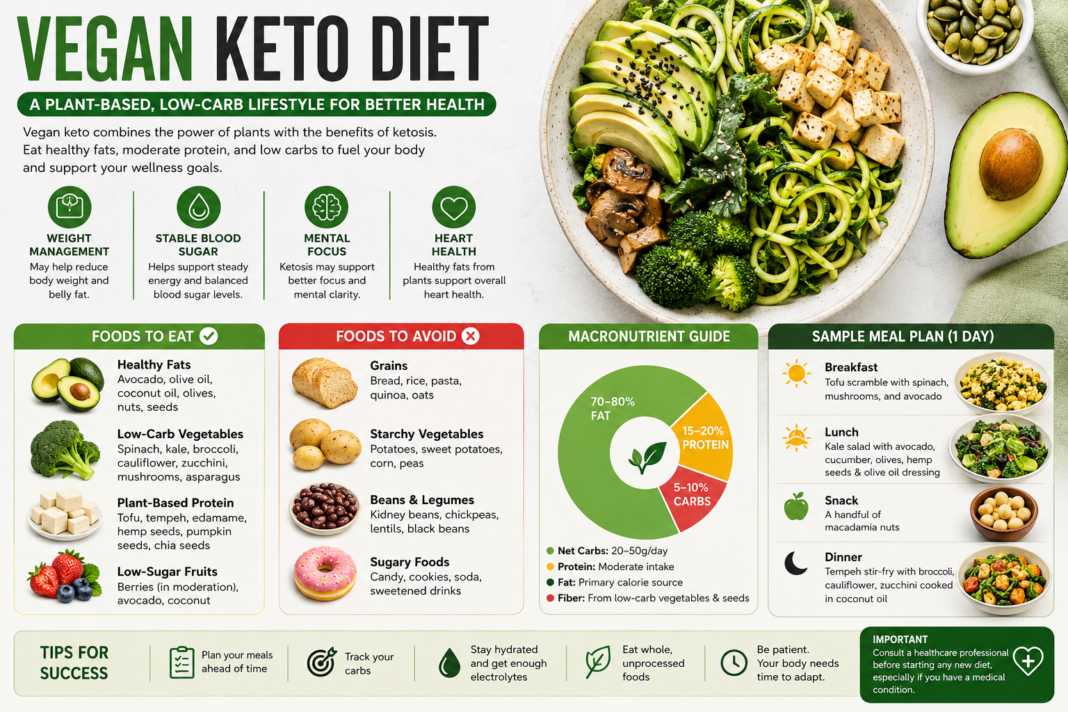

If you’re looking for a way to combine the benefits of a plant-based lifestyle with a low-carb eating approach, the vegan keto diet may be worth exploring. This eating plan focuses on healthy fats, moderate plant-based protein, and very low carbohydrate intake to encourage your body to enter ketosis—a metabolic state where fat becomes the primary fuel source.
While vegan keto can support weight management and improve metabolic health for some people, it also requires careful planning to avoid nutrient deficiencies. This guide explains how the diet works, what to eat, what to avoid, and practical tips to help you succeed.
What Is a Vegan Keto Diet?
A vegan keto diet combines two popular eating styles:
- Vegan diet: Excludes all animal products, including meat, dairy, eggs, and honey.
- Ketogenic diet: Limits carbohydrates while increasing healthy fat intake to promote ketosis.
Most people following a vegan keto diet aim to consume around 20–50 grams of net carbohydrates per day, while getting most of their calories from healthy fats and moderate amounts of plant-based protein.
How Ketosis Works
Normally, your body uses carbohydrates as its main energy source. When carb intake is significantly reduced, the liver converts fat into ketones, which become an alternative fuel for the brain and body.
This metabolic state is known as ketosis.
Benefits of a Vegan Keto Diet
When followed correctly, vegan keto may provide several potential benefits.
Supports Weight Management
A low-carb diet can help reduce appetite and promote fat burning, making it easier for some people to maintain a calorie deficit.
Helps Stabilize Blood Sugar
Reducing refined carbohydrates may help minimize blood sugar spikes and improve insulin sensitivity in certain individuals.
Encourages Healthy Fat Intake
Foods such as avocados, olives, nuts, and seeds provide heart-healthy fats that also increase meal satisfaction.
May Improve Mental Focus
Some people report better concentration and more consistent energy levels after adapting to ketosis.
Expert Tip: Results vary from person to person. Individuals with medical conditions should consult a healthcare professional before making significant dietary changes.
Vegan Keto vs. Traditional Keto
| Feature | Vegan Keto | Traditional Keto |
| Animal Products | No | Yes |
| Protein Sources | Tofu, tempeh, hemp seeds | Meat, eggs, fish |
| Healthy Fats | Avocado, coconut, olive oil | Butter, cheese, animal fats |
| Carbohydrate Intake | Very Low | Very Low |
| Ketosis | Yes | Yes |
Both diets aim to achieve ketosis, but vegan keto relies entirely on plant-based foods.
Foods to Eat on a Vegan Keto Diet
Choosing nutrient-dense foods is essential for maintaining balanced nutrition.
Healthy Fats
- Avocados
- Olive oil
- Coconut oil
- MCT oil
- Olives
Plant-Based Protein
- Tofu
- Tempeh
- Edamame
- Hemp seeds
- Pumpkin seeds
- Chia seeds
Low-Carb Vegetables
- Spinach
- Kale
- Broccoli
- Cauliflower
- Zucchini
- Mushrooms
- Cucumber
- Asparagus
Nuts and Seeds
- Almonds
- Walnuts
- Pecans
- Macadamia nuts
- Flaxseeds
Low-Sugar Fruits
- Berries (in moderation)
- Avocado
- Coconut
Foods to Avoid
To stay in ketosis, limit foods high in carbohydrates.
Avoid:
- Bread
- Rice
- Pasta
- Potatoes
- Corn
- Most beans and lentils
- Bananas
- Grapes
- Sugary beverages
- Candy
- Processed snacks
Reading nutrition labels carefully can help identify hidden sugars and excess carbohydrates.
Vegan Keto Macronutrient Guide
Although individual needs vary, a common starting point includes:
| Macronutrient | General Recommendation |
| Net Carbs | 20–50 g/day |
| Protein | Moderate intake |
| Fat | Primary calorie source |
| Fiber | Prioritize low-carb vegetables and seeds |
Tracking meals with a nutrition app can make it easier to stay within your carbohydrate target.
Sample One-Day Vegan Keto Meal Plan
Breakfast
Tofu scramble cooked in olive oil with spinach and mushrooms.
Lunch
Mixed greens topped with avocado, hemp seeds, cucumber, olives, and olive oil dressing.
Snack
A handful of macadamia nuts.
Dinner
Tempeh stir-fry with broccoli, cauliflower, zucchini, and coconut oil.
This simple meal plan provides healthy fats, fiber, and plant protein while keeping carbohydrates low.
Common Challenges and Solutions
Starting vegan keto isn’t always easy. Here are common obstacles and practical solutions.
Keto Flu
Some people experience fatigue, headaches, or irritability during the first week.
Solution: Drink plenty of water and maintain adequate electrolyte intake.
Low Energy
Not eating enough healthy fats can leave you feeling tired.
Solution: Include avocado, nuts, seeds, and quality oils in every meal.
Constipation
Low fiber intake may affect digestion.
Solution: Eat more leafy greens, chia seeds, flaxseeds, and drink enough water.
Hidden Carbs
Packaged vegan foods often contain added starches or sugars.
Solution: Focus on whole foods and always check ingredient labels.
Essential Nutrients to Watch
Since vegan keto restricts many foods, paying attention to key nutrients is important.
Consider discussing these with a healthcare professional:
- Vitamin B12
- Vitamin D
- Iron
- Zinc
- Calcium
- Omega-3 fatty acids
- Magnesium
Careful meal planning can reduce the risk of nutrient deficiencies.
Tips for Long-Term Success
Following a vegan keto lifestyle becomes easier with preparation.
- Plan meals for the week.
- Buy frozen vegetables to save money.
- Keep healthy snacks available.
- Batch cook tofu and vegetables.
- Track carbohydrate intake.
- Stay hydrated.
- Be patient during the adaptation period.
Small, consistent habits often lead to better long-term results than drastic changes.
Conclusion
The vegan keto diet combines plant-based nutrition with a low-carbohydrate approach that encourages the body to use fat as its primary energy source. When planned carefully, it can support weight management, stable energy, and improved metabolic health. Success depends on choosing nutrient-rich foods, maintaining balanced macronutrients, and paying attention to essential vitamins and minerals. Whether you’re just starting or refining your eating habits, a well-planned vegan keto lifestyle can be both satisfying and sustainable.
Frequently Asked Questions
1. Is vegan keto good for weight loss?
Many people find vegan keto helpful for weight management because it may reduce hunger and encourage fat burning when paired with an appropriate calorie intake.
2. Can I eat tofu on a vegan keto diet?
Yes. Tofu is one of the best plant-based protein sources for vegan keto because it is naturally low in carbohydrates.
3. Are beans allowed on vegan keto?
Most beans are relatively high in carbohydrates, so they are generally limited or avoided on a strict vegan keto diet.
4. What fruits can I eat on vegan keto?
Low-sugar fruits like avocados, coconut, and small portions of berries are usually the best choices.
5. How long does it take to enter ketosis?
Many people enter ketosis within two to seven days, depending on carbohydrate intake, activity level, and individual metabolism.
6. Do I need supplements on a vegan keto diet?
Some individuals may benefit from supplements such as vitamin B12, vitamin D, or omega-3s, but personal needs vary. Consult a healthcare professional for individualized advice.