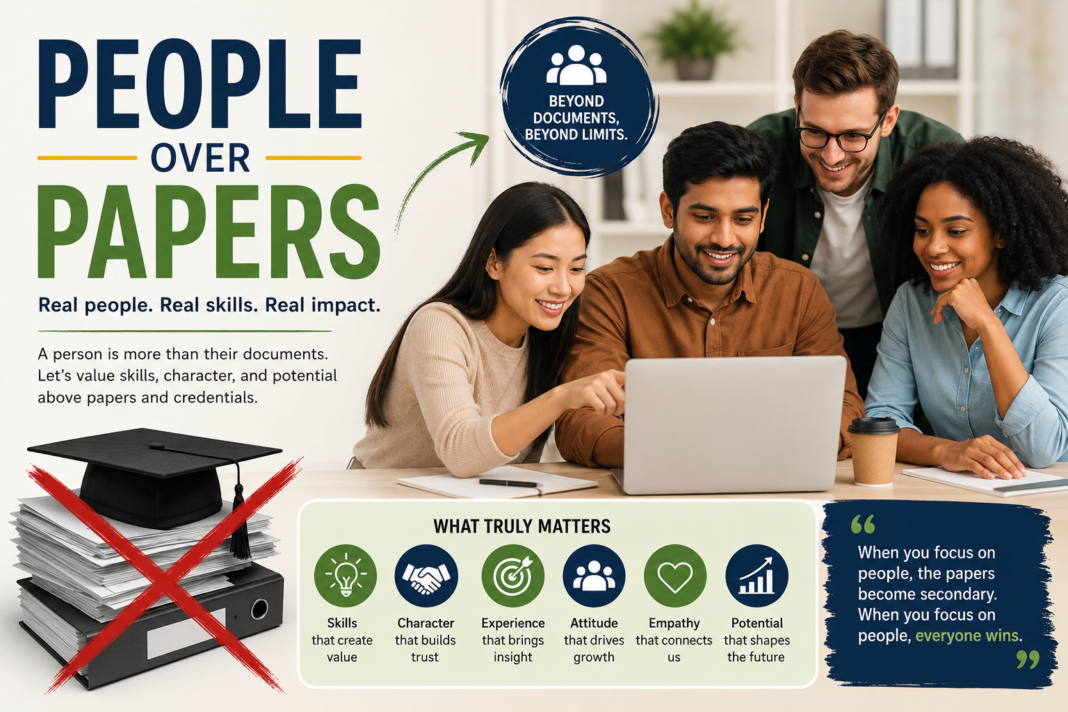

The phrase “people over papers” is becoming popular. It means valuing people’s skills, experience and character over their certificates or documents. While papers like degrees and diplomas are important they shouldn’t be the thing that matters.
Many employers are realizing that a piece of paper doesn’t always show how well someone will do in life. Some talented people don’t have traditional qualifications but they’re great at their jobs. On the other hand some people with impressive credentials struggle with practical problems, teamwork or communication.
This way of thinking is encouraging organizations to focus on people, not paperwork. It promotes fairness, inclusivity and opportunities based on what people can do.
What Does “People Over Papers” Mean?
“People over papers” means prioritizing people’s qualities, experience and skills over documents. It doesn’t mean education or certifications are useless. It means we should evaluate people based on their potential.
For example two people apply for a job. One has a degree but little experience while the other has years of experience but fewer qualifications. A people-over-papers approach encourages employers to consider both
This philosophy applies to leadership volunteer work, entrepreneurship and community involvement. Qualities like empathy, honesty and adaptability are often more important than papers.
Why Skills Matter More Than Certificates
The modern workplace is changing fast. Skills that are valuable today may become outdated soon. Continuous learning is more important than a degree earned years ago.
Employers want people who can solve problems, communicate, collaborate and adapt to challenges. These abilities often develop through experience, not classroom instruction.
Many successful people built their careers through experience, not traditional education. Online courses, freelance work and personal projects are alternatives for developing expertise.
The Role of Character in Long-Term Success
skills can help someone get hired but character determines long-term success. Traits like integrity, accountability and emotional intelligence influence workplace relationships and growth.
Employees who are dependable, honest and willing to learn become team members. Employers report that attitude and work ethic play roles in employee retention and career advancement.
A people-over-papers approach encourages organizations to evaluate these qualities during interviews and team interactions.
How Businesses Benefit from Putting People
Companies that prioritize people over papers create diverse and innovative teams. Hiring based on talent rather than credentials opens opportunities for people from different backgrounds.
This diversity brings perspectives that improve creativity and problem-solving. Employees with life experiences contribute ideas that can’t be learned from textbooks. Focusing on people improves employee satisfaction and loyalty. When workers feel valued for their contributions they become more engaged and motivated.
Education Still Matters—but It Is Not Everything
Supporting people over papers doesn’t mean rejecting education. Universities and colleges provide knowledge and structured learning opportunities. Formal education remains essential in professions like medicine, engineering and law. However many careers recognize learning paths. Employers appreciate self-taught professionals, online learners and practical experience.
The goal is not to replace education but to acknowledge that learning happens in different ways.
People Over Papers in Modern Hiring
Recruitment practices have evolved. Many organizations use skills assessments, practical assignments and portfolio reviews relying on academic qualifications. Technology companies have been among the first to embrace skills-based hiring. Developers demonstrate coding ability through projects or technical assessments. This hiring model benefits both employers and job seekers. Companies gain access to a talent pool while capable individuals receive opportunities regardless of educational background.
Challenges of Ignoring Papers
Although valuing people is important, dismissing qualifications can create challenges. Educational credentials verify knowledge and professional standards. The ideal approach balances both perspectives. Organizations should recognize credentials while appreciating experience, character and demonstrated ability.
Creating a Future That Values Human Potential
As workplaces evolve, success will depend on adaptability, creativity and lifelong learning. Governments, businesses and educational institutions should create systems that recognize pathways to achievement. Employers can remove unnecessary degree requirements. Educational institutions can focus on learning and project-based education. Individuals can continue developing skills through learning and real-world practice. Communities benefit when opportunities become more accessible. People from backgrounds gain fair chances to contribute their talents.
Conclusion
The philosophy of people over papers reminds us that every individual is more than their certificates or documents. While education and credentials are valuable they shouldn’t be the thing that matters. Experience, character, resilience and continuous learning have an impact on long-term success. Employers who recognize these qualities build teams. Individuals who focus on developing skills become better prepared for changing careers and industries. The future belongs to organizations and communities that value both knowledge and humanity. By placing people we create a fairer, more innovative and more inclusive world.
Frequently Asked Questions (FAQs)
1. What does “people over papers” mean?
“People over papers” is the idea of valuing a person’s skills, experience, character, and potential more than their formal qualifications or documents. It encourages judging individuals based on what they can do rather than solely on the certificates they hold.
2. Is the people-over-papers approach against education?
No. This philosophy does not reject education. Instead, it promotes balancing formal qualifications with practical experience, soft skills, and real-world achievements when evaluating someone’s abilities.
3. Why are employers focusing more on skills than degrees?
Many employers have found that practical skills, problem-solving abilities, communication, and adaptability often predict job performance better than academic credentials alone. As industries evolve quickly, hands-on experience has become increasingly valuable.
4. Which industries commonly follow the people-over-papers approach?
Industries such as technology, digital marketing, graphic design, content writing, sales, customer service, entrepreneurship, and many creative fields often prioritize skills and portfolios over traditional degrees.
5. Are degrees still important in today’s job market?
Yes. Degrees remain essential for many professions, including medicine, law, engineering, architecture, and nursing, where specialized knowledge and legal certification are required. However, many other careers now accept alternative paths to gaining expertise.
6. How can I prove my skills without a college degree?
You can showcase your abilities through a strong portfolio, certifications, freelance projects, internships, personal projects, client testimonials, volunteer work, and practical experience. Demonstrating real results can often make a strong impression on employers.
7. What are the benefits of a people-over-papers hiring strategy?
This approach helps organizations access a wider talent pool, improve workplace diversity, encourage innovation, reduce hiring bias, and identify candidates with strong practical abilities and growth potential.
8. Can experience replace formal education?
In many careers, relevant experience can successfully replace formal education, especially when candidates can demonstrate measurable achievements and job-related skills. However, some regulated professions still require official qualifications.
9. What are the challenges of relying only on the people-over-papers philosophy?
Ignoring qualifications completely may make it harder to verify foundational knowledge or professional standards. A balanced hiring process that considers both credentials and real-world abilities generally produces the best results.
10. Why is the people-over-papers mindset becoming more popular?
The rise of online learning, remote work, digital careers, and skills-based hiring has shown that talented individuals can succeed through multiple learning paths. As a result, many organizations now recognize that potential, experience, and character are just as important as formal credentials.
You May Also Read : Fix Your Air Conditioner Near You