
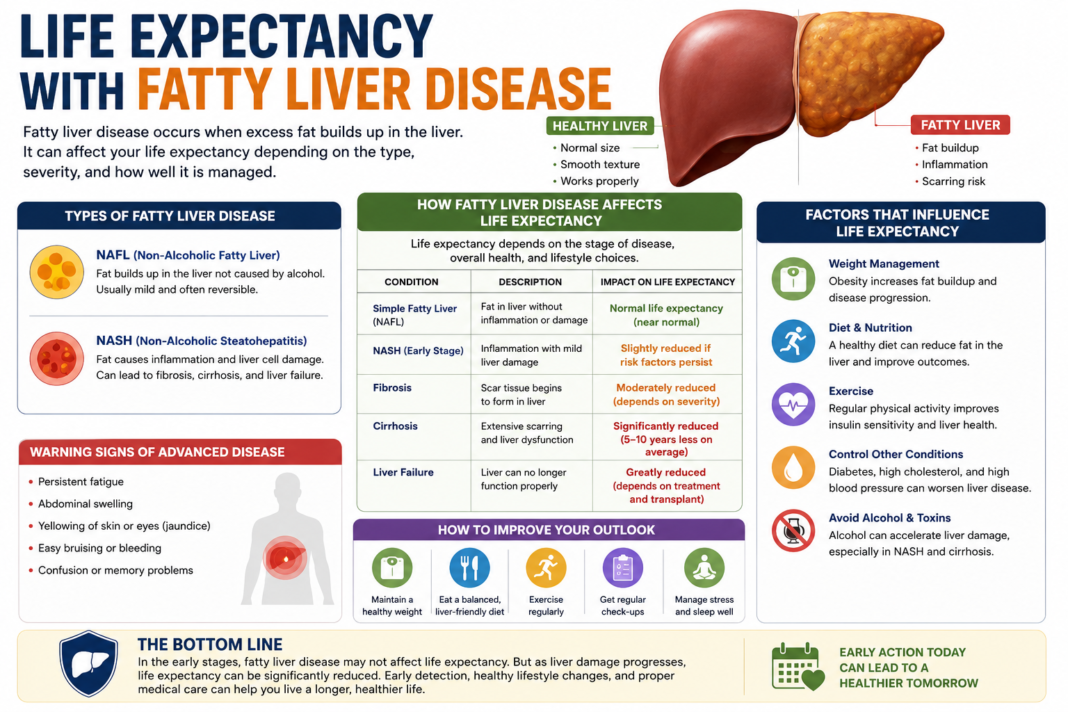

Fatty liver disease is one of the most common liver conditions worldwide, and many people worry about how it may affect their future. The good news is that life expectancy with fatty liver disease is often close to normal when the condition is diagnosed early and managed properly. However, if it progresses to advanced fibrosis or cirrhosis, the risk of serious complications and a shorter lifespan increases.
The outlook depends on several factors, including the stage of liver damage, overall health, and lifestyle habits. By making healthy changes, many people can slow or even reverse early-stage fatty liver disease and improve their long-term health.
What Is Fatty Liver Disease?
Fatty liver disease occurs when excess fat builds up in the liver. Today, doctors increasingly use the term Metabolic Dysfunction-Associated Steatotic Liver Disease (MASLD) instead of the older name Nonalcoholic Fatty Liver Disease (NAFLD). Both terms describe a condition where fat accumulates in the liver without significant alcohol use.
In its early stages, fatty liver disease usually causes no symptoms. If left untreated, it may progress to liver inflammation, scarring (fibrosis), cirrhosis, or even liver failure in some individuals.
Does Fatty Liver Disease Affect Life Expectancy?
The answer depends largely on the severity of liver damage.
People with simple fatty liver and little or no scarring often have a normal life expectancy. The greatest risks arise when fibrosis becomes advanced or cirrhosis develops. In addition, people with fatty liver disease are more likely to have obesity, diabetes, high blood pressure, or high cholesterol, which increase the risk of heart disease—the leading cause of death in many people with this condition.
Early diagnosis and healthy lifestyle changes can significantly improve long-term outcomes.
Life Expectancy by Disease Stage
The stage of liver disease plays the biggest role in determining prognosis.
| Disease Stage | Liver Condition | Typical Outlook | Can It Be Reversed? |
| Simple Fatty Liver (F0) | Fat buildup only | Excellent | Usually |
| Mild Fibrosis (F1) | Minimal scarring | Very Good | Often |
| Moderate Fibrosis (F2) | Moderate scarring | Good | Sometimes |
| Advanced Fibrosis (F3) | Significant scarring | Reduced | Less likely |
| Cirrhosis (F4) | Severe permanent scarring | Depends on complications | Rarely |
This table shows why early detection matters. The earlier fatty liver disease is identified, the better the chance of protecting liver function and maintaining a healthy lifespan.
What Factors Influence Life Expectancy?
Several factors determine life expectancy with fatty liver disease beyond the liver itself.
Fibrosis Stage
The amount of liver scarring is the strongest predictor of long-term survival. More scarring means a higher risk of liver-related complications.
Obesity
Excess body weight contributes to fat buildup in the liver and speeds disease progression.
Type 2 Diabetes
Poorly controlled diabetes increases inflammation and raises the risk of advanced liver disease.
Heart Health
Many people with fatty liver disease develop cardiovascular disease, making blood pressure, cholesterol, and blood sugar control essential.
Alcohol Consumption
Even moderate alcohol intake may worsen liver damage in some individuals and should be discussed with a healthcare provider.
Lifestyle Choices
Regular exercise, healthy eating, quality sleep, and smoking cessation all contribute to better liver health and overall longevity.
Can Fatty Liver Disease Be Reversed?
Yes—especially during the early stages.
Simple fatty liver and mild fibrosis often improve with consistent lifestyle changes. Losing approximately 7% to 10% of body weight, following a balanced diet, and exercising regularly can reduce liver fat and inflammation.
Helpful habits include:
- Eating a Mediterranean-style diet
- Limiting sugary drinks and processed foods
- Exercising at least 150 minutes per week
- Maintaining a healthy weight
- Managing diabetes and cholesterol
- Avoiding unnecessary alcohol
Although advanced fibrosis and cirrhosis are more difficult to reverse, healthy habits can still slow disease progression and reduce complications.
How Fatty Liver Disease Progresses
Fatty liver disease usually develops gradually over many years.
The typical progression follows this pattern:
Healthy liver → Fat accumulation → Liver inflammation → Fibrosis → Advanced fibrosis → Cirrhosis → Liver failure or liver cancer
Not everyone follows this pathway. Many people remain in the early stages for decades, particularly when they adopt healthier lifestyles.
Symptoms That May Indicate Disease Progression
Early fatty liver disease often causes no noticeable symptoms.
As liver damage worsens, symptoms may include:
- Persistent fatigue
- Pain or discomfort in the upper right abdomen
- Swollen legs or abdomen
- Yellowing of the skin or eyes (jaundice)
- Easy bruising
- Mental confusion
- Unexplained weight loss
Anyone experiencing these symptoms should seek prompt medical evaluation.
How Doctors Diagnose Fatty Liver Disease
Doctors use several tests to assess liver health.
Common diagnostic tools include:
- Blood tests to evaluate liver enzymes
- Ultrasound to detect excess liver fat
- FibroScan to measure liver stiffness
- MRI in selected cases
- Liver biopsy when a precise diagnosis is needed
Regular monitoring helps detect progression before serious complications develop.
Practical Ways to Improve Your Long-Term Outlook
Although there is no single cure, healthy daily habits make a significant difference.
Focus on these strategies:
- Maintain a healthy body weight.
- Exercise most days of the week.
- Eat more vegetables, fruits, whole grains, and lean protein.
- Reduce processed foods and added sugars.
- Control blood sugar and blood pressure.
- Take medications exactly as prescribed.
- Attend regular medical checkups.
- Get recommended vaccinations for liver health if advised by your healthcare provider.
Example
Consider two people diagnosed with early fatty liver disease.
The first loses weight, exercises consistently, and manages diabetes. Their liver fat decreases, and disease progression slows.
The second continues unhealthy eating habits and gains weight. Over time, fibrosis may worsen, increasing the risk of cirrhosis and complications.
This example highlights how lifestyle choices can meaningfully influence long-term health.
Common Myths About Fatty Liver Disease
Myth: Only people who drink alcohol develop fatty liver disease.
Fact: Most cases are linked to obesity, insulin resistance, and metabolic health rather than alcohol.
Myth: Fatty liver disease always leads to cirrhosis.
Fact: Many people never develop advanced liver disease, especially with early treatment.
Myth: Thin people cannot have fatty liver disease.
Fact: Individuals with a healthy weight can also develop fatty liver due to genetics or metabolic factors.
Conclusion
For most people, life expectancy with fatty liver disease remains favorable when the condition is detected early and managed effectively. The greatest risks occur after significant liver scarring develops, making early diagnosis and consistent lifestyle improvements essential.
Healthy eating, regular physical activity, weight management, and controlling conditions such as diabetes and high blood pressure can help protect your liver and improve your overall quality of life. If you have concerns about fatty liver disease, speak with a healthcare professional to develop a personalized treatment and monitoring plan.
Frequently Asked Questions
1. Can you live a normal life with fatty liver disease?
Yes. Many people with early-stage fatty liver disease live a normal lifespan when they adopt healthy lifestyle habits and receive appropriate medical care.
2. Does fatty liver disease always reduce life expectancy?
No. Early-stage disease often has little impact on life expectancy. The risk increases mainly with advanced fibrosis or cirrhosis.
3. Is fatty liver disease reversible?
In many cases, yes. Early stages can often improve through weight loss, regular exercise, and a healthy diet.
4. What is the biggest risk associated with fatty liver disease?
Cardiovascular disease is a major health concern, while advanced liver scarring increases the risk of liver failure and liver cancer.
5. How much weight should I lose to improve fatty liver disease?
Losing about 7% to 10% of your body weight is commonly recommended because it can reduce liver fat and inflammation.
6. Can exercise improve life expectancy with fatty liver disease?
Yes. Regular physical activity supports weight management, improves insulin sensitivity, and may slow disease progression.
7. When should I see a doctor?
Seek medical advice if you have persistent fatigue, jaundice, abdominal swelling, or if routine blood tests show abnormal liver function.