
Losing weight naturally isn’t about starving yourself, following restrictive fad diets, or relying on expensive supplements. It’s about creating healthy habits that help your body burn fat while improving your overall well-being. Whether your goal is to fit into your favorite clothes, boost your confidence, or reduce the risk of chronic diseases, natural weight loss is the safest and most sustainable path.
The internet is filled with conflicting advice, making it difficult to know what actually works. One article tells you to eliminate carbohydrates, while another recommends fasting for long hours. The truth is much simpler. Healthy weight loss comes down to eating nutritious foods, staying active, sleeping well, managing stress, and staying consistent over time.
In this guide, you’ll learn how to lose weight naturally using evidence-based strategies that fit into everyday life. These practical tips don’t require expensive programs or miracle products—just small, realistic changes that add up to lasting results.
Quick Answer: How to Lose Weight Naturally
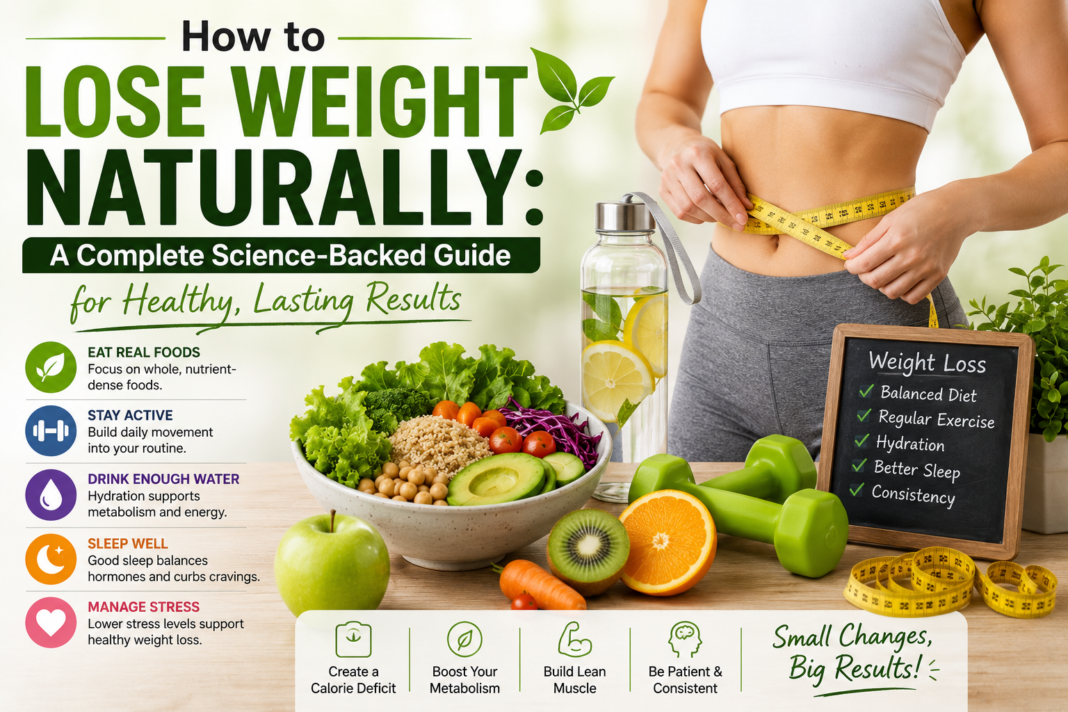
If you’re wondering how to lose weight naturally, focus on eating whole foods, maintaining a moderate calorie deficit, increasing your protein and fiber intake, drinking enough water, exercising regularly, getting quality sleep, and managing stress. These habits support healthy fat loss while helping you maintain muscle, improve energy levels, and build a lifestyle you can stick with.
What Does It Mean to Lose Weight Naturally?
Natural weight loss means reducing body fat through healthy lifestyle changes rather than relying on weight-loss pills, crash diets, detoxes, or surgical procedures. It focuses on long-term health instead of quick but temporary results.
Unlike extreme dieting, natural weight loss allows your body to receive the nutrients it needs while creating a sustainable routine. Instead of cutting entire food groups or drastically reducing calories, you gradually improve your eating habits and physical activity.
The biggest advantage of natural weight loss is that it’s easier to maintain. Healthy habits become part of your lifestyle rather than something you stop after reaching a goal.
Natural Weight Loss vs. Quick-Fix Methods
| Natural Weight Loss | Quick-Fix Methods |
| Balanced nutrition | Crash diets |
| Regular exercise | Diet pills |
| Long-term habits | Detox teas |
| Sustainable results | Temporary weight loss |
| Improves overall health | Often causes rebound weight gain |
How Weight Loss Actually Works
Many people think weight loss is complicated, but the basic principle is straightforward.
Calories In vs. Calories Out
Your body uses calories as energy. If you consume more calories than you burn, the extra energy is stored as fat. If you burn more calories than you consume, your body uses stored fat for energy, leading to weight loss.
This is known as a calorie deficit.
You don’t need to count every calorie forever, but understanding portion sizes and making healthier food choices naturally helps create a calorie deficit without feeling deprived.
Understanding Your Metabolism
Metabolism is the process your body uses to convert food into energy. Some people naturally burn calories faster than others due to factors like age, genetics, muscle mass, and activity level.
While you can’t completely change your metabolism, you can support it by:
- Building muscle through strength training
- Staying physically active
- Eating enough protein
- Getting quality sleep
- Avoiding overly restrictive diets
Small Changes Make a Big Difference
Many people give up because they expect dramatic results in a few weeks. In reality, consistent small improvements are much more effective.
For example, replacing one sugary soda each day with water can save hundreds of calories each week. Pair that with a daily 30-minute walk, and you’ve already created a healthier routine that supports gradual fat loss.
Set Realistic Weight Loss Goals
One of the biggest mistakes people make is setting unrealistic expectations.
Healthy weight loss usually happens gradually. Losing around 1 to 2 pounds (0.5–1 kg) per week is generally considered a safe and sustainable pace for many adults.
Instead of focusing only on the number on the scale, set behavior-based goals.
Better Goals Include:
- Walk for 30 minutes five days each week.
- Eat vegetables with every dinner.
- Drink eight glasses of water daily.
- Prepare healthy lunches at home.
- Sleep at least seven hours each night.
These habits are easier to maintain and naturally lead to weight loss over time.
Eat More Whole, Nutrient-Dense Foods
The quality of your food matters just as much as the quantity.
Whole foods provide vitamins, minerals, fiber, and protein that help keep you satisfied for longer while supporting your overall health.
Instead of processed foods loaded with added sugar and unhealthy fats, choose foods that nourish your body.
Best Foods for Natural Weight Loss
| Food | Why It Helps |
| Eggs | High in protein and filling |
| Greek yogurt | Supports muscle and reduces hunger |
| Oatmeal | Rich in fiber for long-lasting fullness |
| Leafy greens | Low in calories, high in nutrients |
| Salmon | Provides protein and healthy fats |
| Lentils | High in protein and fiber |
| Apples | Naturally sweet and filling |
| Berries | Low in calories and rich in antioxidants |
| Nuts | Healthy fats that satisfy hunger when eaten in moderation |
A colorful plate filled with vegetables, lean protein, whole grains, and healthy fats helps your body function at its best while naturally supporting fat loss.
Increase Your Protein Intake
Protein is one of the most important nutrients for healthy weight loss.
It helps preserve muscle while you’re losing fat, increases feelings of fullness, and requires more energy to digest than carbohydrates or fats.
Adding protein to every meal can help reduce unnecessary snacking and keep your energy levels stable throughout the day.
Excellent Protein Sources
Animal-Based
- Chicken breast
- Turkey
- Fish
- Eggs
- Cottage cheese
- Greek yogurt
Plant-Based
- Lentils
- Chickpeas
- Tofu
- Tempeh
- Black beans
- Edamame
Aim to include a protein source with breakfast, lunch, dinner, and even snacks whenever possible.
Eat More Fiber Every Day
Fiber plays a huge role in natural weight loss because it slows digestion and helps you feel full for longer.
People who eat high-fiber diets often consume fewer calories without even trying.
Good fiber sources include:
- Oats
- Beans
- Lentils
- Apples
- Pears
- Broccoli
- Chia seeds
- Flaxseeds
- Whole grains
Increasing fiber gradually and drinking enough water helps prevent digestive discomfort.
Drink More Water
Water is one of the simplest and most effective tools for healthy weight loss.
Sometimes your body mistakes thirst for hunger, leading you to snack when you actually need hydration.
Drinking water before meals may also help reduce appetite and encourage better portion control.
Easy Hydration Tips
- Start your morning with a glass of water.
- Carry a reusable water bottle.
- Drink water before each meal.
- Replace sugary beverages with water or unsweetened tea.
- Eat water-rich foods like cucumbers, watermelon, and oranges.
Staying hydrated also supports digestion, exercise performance, and overall health.
Exercise for Natural Weight Loss
Exercise isn’t just about burning calories. It improves heart health, strengthens muscles, boosts mood, and makes it easier to maintain weight loss in the long run.
The best workout is one you enjoy and can continue consistently.
Walking
Walking is one of the easiest ways to become more active.
A brisk 30-minute walk most days of the week can burn calories, improve cardiovascular health, and reduce stress.
If you’re just starting, begin with 10–15 minutes daily and gradually increase your time.
Strength Training
Many people think lifting weights is only for building muscle, but it’s also excellent for weight loss.
Strength training helps preserve lean muscle while losing fat, which supports a healthy metabolism.
Begin with simple bodyweight exercises such as:
- Squats
- Push-ups
- Lunges
- Planks
- Glute bridges
Aim for two or three strength-training sessions each week.
Cardio Exercise
Cardio workouts increase your heart rate and help burn calories.
Good options include:
- Cycling
- Swimming
- Jogging
- Dancing
- Hiking
- Jump rope
Choose activities you genuinely enjoy to make exercise part of your routine rather than a chore.
Foods That Help You Feel Full Naturally
Choosing filling foods can make weight loss easier because you’ll naturally eat fewer calories throughout the day.
Top Filling Foods
- Eggs
- Greek yogurt
- Oatmeal
- Potatoes
- Lentils
- Beans
- Cottage cheese
- Apples
- Pears
- Air-popped popcorn
- Chia seeds
- Leafy greens
These foods are rich in protein, fiber, or water content, helping control hunger between meals.
Common Weight Loss Mistakes to Avoid
Even with good intentions, certain habits can slow your progress.
1. Skipping Meals
Skipping meals often leads to excessive hunger later in the day, increasing the risk of overeating.
2. Drinking Your Calories
Sugary coffee drinks, soft drinks, fruit juices, and alcoholic beverages can add hundreds of extra calories without making you feel full.
3. Eating Too Little
Very low-calorie diets may seem effective initially, but they can reduce energy levels, increase hunger, and be difficult to sustain.
4. Ignoring Strength Training
Many people rely only on cardio. Strength training helps preserve muscle mass and supports a healthy metabolism.
5. Expecting Overnight Results
Healthy weight loss takes time. Consistency over months is more important than perfection for a few days.
When Should You See a Doctor?
Natural weight loss works well for many people, but some situations require professional guidance.
Speak with your healthcare provider if:
- You have diabetes, heart disease, or another chronic condition.
- You experience unexplained weight changes.
- You’re pregnant or breastfeeding.
- You’re taking medications that affect your weight.
- You’re struggling to lose weight despite consistent healthy habits.
A healthcare professional can help identify any underlying medical issues and recommend a personalized plan.
Conclusion
Learning how to lose weight naturally isn’t about chasing quick fixes—it’s about building habits that improve your health for years to come. Focus on eating whole, nutritious foods, increasing protein and fiber, staying active, drinking enough water, getting quality sleep, and managing stress.
Remember that lasting results come from consistency, not perfection. Every healthy meal, every walk, and every positive choice moves you closer to your goal. Start with one or two changes today, stay patient with the process, and celebrate every step of your progress.
Frequently Asked Questions
1. Can I lose weight naturally without exercising?
Yes. Creating a calorie deficit through healthy eating can lead to weight loss. However, combining good nutrition with regular exercise improves overall health, preserves muscle, and makes it easier to maintain your results.
2. What foods help with natural weight loss?
Protein-rich foods like eggs, chicken, fish, beans, and Greek yogurt, along with fiber-rich foods such as vegetables, fruits, oats, and whole grains, help you stay full longer.
3. Is walking enough to lose weight?
Yes. A brisk daily walk, combined with healthy eating, can support weight loss, especially for beginners.
4. How much weight can I safely lose in a month?
A healthy and sustainable rate is generally about 4–8 pounds (2–4 kg) per month, depending on your starting weight, diet, and activity level.
5. Does drinking more water help with weight loss?
Water can help control appetite, replace sugary drinks, and support your body’s normal functions, making it easier to maintain healthy habits.
6. Are carbohydrates bad for weight loss?
No. Whole-food carbohydrate sources like oats, brown rice, fruits, and vegetables provide important nutrients and can be part of a balanced weight-loss plan.
7. How long does natural weight loss take?
Everyone is different. Sustainable weight loss is gradual, and consistency over weeks and months produces the best long-term results.