
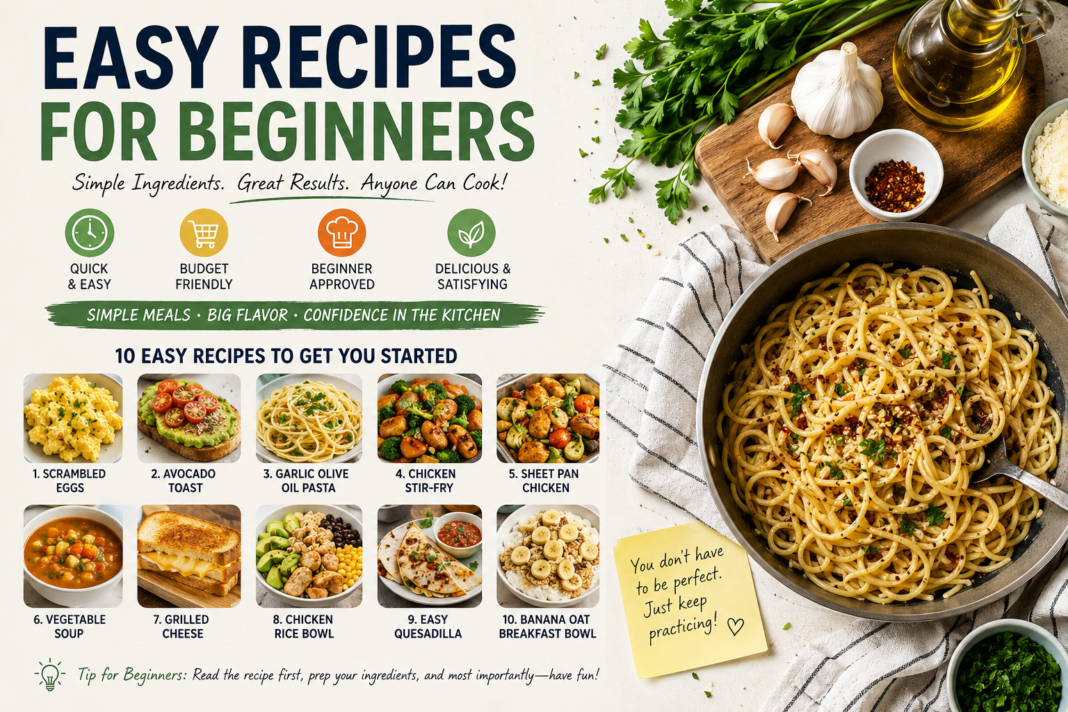

Easy Recipes for Beginners
Learning to cook can feel intimidating at first, but it doesn’t have to be. With the right approach, simple ingredients, and practical techniques, anyone can prepare delicious homemade meals without stress. The key is starting with approachable dishes that build confidence while teaching essential kitchen skills.
This guide explores the best easy recipes for beginners, along with practical cooking advice, ingredient recommendations, and common mistakes to avoid. Whether you’re a student, busy professional, or someone cooking for the first time, these ideas can help you create satisfying meals while developing lifelong culinary skills.
Why Beginner-Friendly Recipes Matter
Many people assume cooking requires advanced skills, expensive ingredients, or specialized equipment. In reality, most home-cooked meals rely on a handful of techniques that can be learned quickly with practice and consistency.
Choosing easy recipes for beginners helps reduce overwhelm while building confidence in the kitchen. Simple dishes teach valuable fundamentals such as chopping vegetables, seasoning food, managing cooking times, and understanding how ingredients work together.
Essential Kitchen Tools for New Cooks
A beginner does not need a professional kitchen setup to create excellent meals. A chef’s knife, cutting board, nonstick skillet, saucepan, baking sheet, and measuring cups can handle most everyday cooking tasks.
Starting with a small collection of reliable tools encourages learning without unnecessary expense. As cooking skills improve, additional equipment can be added based on personal preferences and cooking styles.
Pantry Staples That Make Cooking Easier
A well-stocked pantry makes meal preparation faster and less stressful. Basic ingredients such as rice, pasta, canned beans, olive oil, salt, pepper, garlic powder, and dried herbs can form the foundation of countless meals.
Keeping versatile ingredients on hand allows new cooks to prepare meals without frequent grocery trips. These staples also make it easier to experiment with flavors and develop creativity in the kitchen.
Understanding Basic Cooking Techniques
Cooking becomes significantly easier once a few core techniques are mastered. Sautéing, roasting, boiling, baking, and steaming are among the most useful methods for everyday meal preparation.
Instead of memorizing dozens of recipes, focus on understanding these foundational skills. Once learned, they can be applied to hundreds of different dishes and ingredient combinations.
Comparison of Beginner-Friendly Meal Types
The following table highlights several popular meal categories suitable for new cooks.
| Meal Type | Difficulty | Time Required | Budget-Friendly | Skill Development |
| Pasta Dishes | Easy | 20-30 minutes | High | Boiling, seasoning |
| Stir-Fries | Easy | 15-25 minutes | High | Sautéing, timing |
| Sheet Pan Meals | Easy | 30-45 minutes | High | Roasting |
| Soups | Easy | 30-60 minutes | High | Simmering |
| Salads | Very Easy | 10-15 minutes | High | Knife skills |
| Sandwiches & Wraps | Very Easy | 10 minutes | High | Ingredient pairing |
| Egg-Based Meals | Easy | 10-20 minutes | Very High | Heat control |
Easy Scrambled Eggs for Breakfast
Scrambled eggs are among the most approachable dishes for new cooks. They require minimal ingredients while teaching important lessons about heat control and timing.
Whisk eggs thoroughly, cook them over medium-low heat, and stir gently until soft and fluffy. Add cheese, herbs, or vegetables for extra flavor and nutritional value.
Simple Avocado Toast Variations
Avocado toast remains popular because it is quick, nutritious, and highly customizable. It requires little cooking knowledge while delivering satisfying results.
Mash ripe avocado onto toasted bread and season with salt and pepper. Additional toppings such as tomatoes, eggs, cucumber slices, or smoked salmon can elevate the dish effortlessly.
Beginner-Friendly Pasta with Garlic and Olive Oil
Pasta dishes are among the most dependable easy recipes for beginners because they involve simple ingredients and forgiving cooking methods. They also provide excellent opportunities to practice seasoning and timing.
Cook pasta according to package instructions, then toss it with olive oil, garlic, and parsley. The result is a flavorful meal that demonstrates how a few ingredients can create impressive flavor.
Quick Chicken Stir-Fry
Stir-fries help beginners learn ingredient preparation and efficient cooking. They are adaptable, affordable, and ideal for using vegetables already available at home.
Cook bite-sized chicken pieces in a skillet, then add vegetables such as bell peppers, broccoli, and carrots. Finish with soy sauce and serve over rice for a balanced meal.
One-Pan Roasted Vegetables and Chicken
Sheet pan dinners simplify cooking by reducing both preparation time and cleanup. Everything cooks together, making meal planning far easier for beginners.
Arrange chicken and chopped vegetables on a baking sheet, season with olive oil and spices, then roast until cooked through. The result is a complete meal with minimal effort.
Homemade Vegetable Soup
Soup is forgiving and flexible, making it perfect for beginner cooks. It allows experimentation while teaching the importance of flavor development through simmering.
Combine vegetables, broth, herbs, and seasonings in a large pot. Simmer until tender and adjust flavors gradually to create a comforting homemade dish.
Easy Grilled Cheese Sandwich
The grilled cheese sandwich is a classic comfort food that introduces basic cooking techniques without complexity. Even simple recipes can teach valuable lessons about temperature management.
Cook buttered bread and cheese slowly over medium heat until golden brown. Patience is essential because rushing can burn the bread before the cheese melts properly.
Simple Rice Bowls for Busy Weeknights
Rice bowls are practical because they accommodate various proteins, vegetables, and sauces. They encourage creativity while remaining approachable for inexperienced cooks.
Start with cooked rice and add ingredients such as grilled chicken, beans, vegetables, avocado, or eggs. A simple sauce ties everything together into a complete meal.
Easy Recipes for Beginners Using Five Ingredients or Less
One common misconception is that great food requires lengthy ingredient lists. Many outstanding dishes rely on simplicity and ingredient quality rather than complexity.
Examples include pasta with parmesan, baked potatoes, scrambled eggs, grilled sandwiches, and roasted vegetables. These meals demonstrate how easy recipes for beginners can still deliver satisfying flavor.
Budget-Friendly Cooking for New Home Cooks
Cooking at home is often far more affordable than dining out or ordering takeout. Learning a few dependable recipes can significantly reduce food expenses over time.
Focus on inexpensive ingredients such as rice, beans, eggs, oats, pasta, and seasonal vegetables. These staples provide excellent nutrition while supporting budget-conscious meal planning.
Common Cooking Mistakes Beginners Make
Many new cooks struggle because they use heat that is too high or fail to read recipes completely before starting. These mistakes often lead to uneven cooking and frustration.
Other common issues include under-seasoning food, overcrowding pans, and skipping ingredient preparation. Awareness of these pitfalls can dramatically improve cooking outcomes.
Meal Prep Strategies for Beginners
Meal preparation simplifies daily cooking and reduces decision fatigue throughout the week. Even basic planning can make healthy eating much more manageable.
Prepare ingredients in advance by washing vegetables, cooking grains, and portioning proteins. Having components ready encourages consistent home cooking and faster meal assembly.
Building Confidence Through Repetition
Many people constantly search for new recipes before mastering the basics. While variety is enjoyable, repetition often accelerates skill development more effectively.
Cooking the same dish several times allows beginners to understand timing, texture, and seasoning. Confidence grows naturally as familiar recipes become easier and more predictable.
Healthy Easy Recipes for Beginners
Healthy cooking does not require complicated techniques or specialty ingredients. Simple meals can provide excellent nutrition while remaining enjoyable and satisfying.
Focus on lean proteins, whole grains, fruits, vegetables, and healthy fats. Balanced meals built around these foods support long-term wellness and sustainable eating habits.
How to Season Food Properly
Seasoning is one of the most important skills a cook can learn. Even simple ingredients become more enjoyable when seasoned thoughtfully and consistently.
Taste food throughout the cooking process and make gradual adjustments. Salt, pepper, herbs, citrus juice, and spices can dramatically improve flavor without increasing complexity.
Easy Dinner Ideas for First-Time Cooks
Dinner is often the meal that causes the most anxiety for beginners. Fortunately, many simple options require little preparation and produce reliable results.
Tacos, pasta dishes, stir-fries, baked chicken, rice bowls, and soups are all excellent examples of easy recipes for beginners that can be prepared with confidence.
The Importance of Reading Recipes Before Cooking
Many kitchen mistakes occur because cooks begin preparing food without understanding the entire process. Reading recipes fully helps avoid surprises and improves organization.
Review ingredients, equipment, cooking times, and instructions before starting. This simple habit increases efficiency and reduces stress during meal preparation.
Simple Desserts for Beginner Bakers
Baking can feel intimidating, but many desserts are highly approachable. No-bake treats and basic baked goods offer excellent entry points for new bakers.
Chocolate chip cookies, banana bread, fruit parfaits, and no-bake cheesecake cups provide satisfying results while introducing fundamental baking concepts.
Learning Through Small Successes
Every successful meal creates momentum and motivation. Rather than aiming for perfection, beginners should focus on steady improvement and practical experience.
As skills develop, recipes that once seemed difficult become routine. This gradual progression is one reason easy recipes for beginners are such an effective learning tool.
What Professional Chefs Say About Simplicity
Many respected chefs emphasize mastering fundamentals before pursuing advanced techniques. Strong basics often matter more than elaborate recipes.
As culinary educator Julia Child famously said, “No one is born a great cook, one learns by doing.” This perspective highlights the value of practice, patience, and consistent effort.
Easy Recipes for Beginners and Long-Term Skill Development
Simple recipes do more than provide meals; they establish foundational skills that support future culinary growth. Every stir-fry, soup, and pasta dish teaches techniques applicable to more advanced cooking.
Over time, beginners develop intuition about flavors, textures, and timing. This gradual learning process transforms cooking from a challenge into an enjoyable everyday activity.
Conclusion
Learning to cook does not require professional training or expensive equipment. By focusing on easy recipes for beginners, new cooks can develop confidence, improve essential kitchen skills, and prepare satisfying homemade meals with consistency.
The most successful approach is to start small, practice frequently, and embrace gradual improvement. Simple dishes such as scrambled eggs, pasta, stir-fries, soups, and sheet pan meals provide excellent opportunities to build experience while enjoying delicious food. With patience and repetition, cooking becomes less intimidating and far more rewarding.
FAQ
What are the best easy recipes for beginners?
The best easy recipes for beginners include scrambled eggs, pasta dishes, grilled cheese sandwiches, rice bowls, stir-fries, soups, and sheet pan meals because they require simple techniques and accessible ingredients.
How can I start cooking with no experience?
Start with simple recipes that use few ingredients and basic cooking methods. Focus on learning one technique at a time while practicing regularly.
What kitchen tools do beginners really need?
A chef’s knife, cutting board, skillet, saucepan, baking sheet, measuring cups, and mixing bowl can handle most beginner cooking tasks effectively.
How often should beginners cook to improve?
Cooking several times each week helps reinforce techniques and build confidence. Consistent practice leads to faster improvement than occasional cooking sessions.
Are easy recipes for beginners healthy?
Yes, many easy recipes for beginners can be highly nutritious when built around vegetables, lean proteins, whole grains, and healthy fats.
What is the biggest mistake beginner cooks make?
One of the most common mistakes is cooking with heat that is too high. Moderate heat usually produces better texture, flavor, and overall results.
Can beginners cook meals on a budget?
Absolutely. Affordable ingredients such as rice, beans, eggs, pasta, oats, and seasonal vegetables make it possible to prepare delicious meals without spending a lot of money.
You May Also Read : Shawty Bae Age