
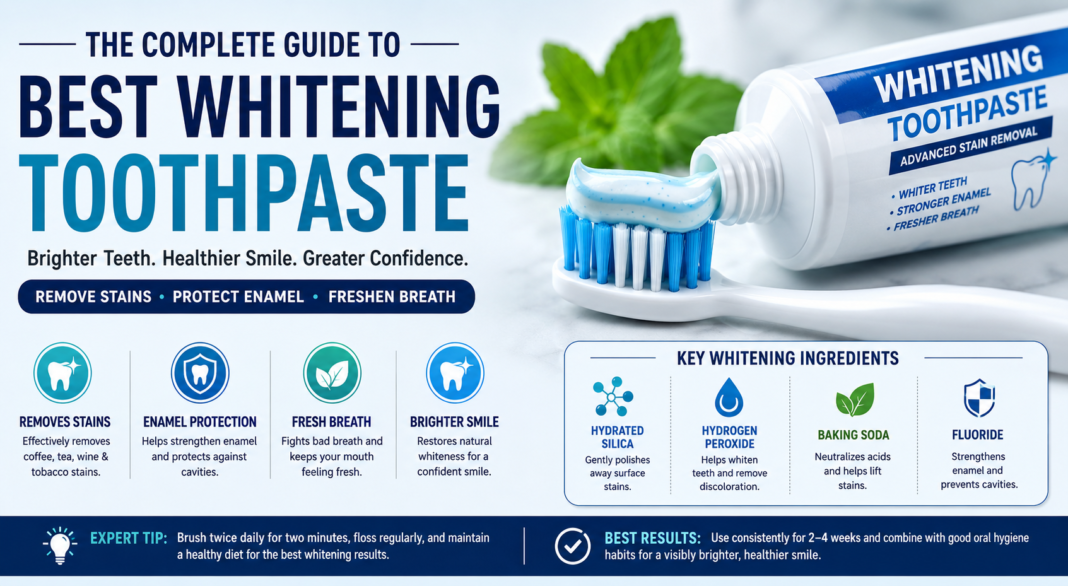

A bright smile is often associated with confidence, good health, and excellent oral hygiene. With countless whitening products available today, finding the best whitening toothpaste can feel overwhelming. Some formulas promise dramatic whitening in just a few days, while others focus on protecting enamel or reducing tooth sensitivity. Understanding what truly works helps you make a smarter decision instead of relying solely on marketing claims.
Whether your teeth have become stained from coffee, tea, wine, tobacco, or simply years of everyday use, the right toothpaste can noticeably improve your smile. The key is choosing a product that safely removes surface stains while supporting tooth enamel and long-term oral health. This guide explains everything you need to know before making your next purchase.
Why Whitening Toothpaste Has Become So Popular
A brighter smile is now easier to achieve than ever before, making whitening toothpaste one of the most popular oral care products worldwide. Many people prefer it because it fits naturally into their daily routine while gradually improving the appearance of stained teeth. Modern formulas combine stain removal technology with oral hygiene benefits, making them practical for everyday use.
Unlike professional whitening treatments that may cost hundreds of dollars, the best whitening toothpaste offers an affordable alternative for maintaining a cleaner, brighter smile. While results are usually more gradual, consistent use often helps reduce discoloration caused by coffee, tea, and common foods while supporting healthy gums and fresh breath through improved dental care.
How Whitening Toothpaste Actually Works
Many people believe whitening toothpaste bleaches teeth in the same way professional dental treatments do, but that is rarely the case. Most products rely on gentle polishing agents that lift surface stains from enamel while preserving the natural structure of the tooth. These ingredients gradually reveal a cleaner and brighter appearance without damaging tooth enamel when used correctly.
Some premium products also include whitening compounds like hydrogen peroxide or carbamide peroxide, although in lower concentrations than professional treatments. These ingredients help lighten minor discoloration while supporting a healthier-looking smile. Choosing the best whitening toothpaste means balancing whitening performance with enamel safety.
Common Causes of Tooth Discoloration
Understanding why teeth become stained helps you choose the right whitening solution. Everyday habits such as drinking coffee, black tea, red wine, or dark-colored soft drinks slowly leave pigments behind that cling to the outer enamel. Over time, these coffee stains and tooth discoloration become more noticeable, especially without regular dental cleaning.
Age also plays an important role. As enamel naturally becomes thinner, the yellowish dentin underneath becomes more visible. Smoking, poor oral hygiene, certain medications, and even genetics contribute to discoloration. The best whitening toothpaste is most effective for treating external stains rather than deep internal color changes.
Ingredients That Matter Most
The effectiveness of whitening toothpaste depends heavily on its ingredients. Mild abrasives such as hydrated silica gently polish away stains without excessively wearing enamel. Baking soda is another common ingredient that helps lift stains while supporting plaque removal and improving overall oral hygiene.
Fluoride remains one of the most important ingredients because whitening should never come at the expense of cavity prevention. A quality toothpaste combines fluoride toothpaste protection with safe whitening ingredients, allowing users to brighten their smile while strengthening enamel and reducing decay.
Choosing the Best Whitening Toothpaste for Sensitive Teeth
Many people avoid whitening products because they worry about discomfort. Fortunately, several manufacturers now produce whitening formulas specifically designed for sensitive teeth. These products contain ingredients that reduce nerve sensitivity while still removing stains gently over time.
The best whitening toothpaste for sensitive users often includes potassium nitrate or stannous fluoride to minimize discomfort during daily brushing. Instead of aggressive whitening, these formulas prioritize gradual improvement while protecting gum health and maintaining comfortable oral care routines.
Is Whitening Toothpaste Safe for Daily Use?
Most dentists agree that quality whitening toothpaste is safe when used as directed. Reputable brands carefully balance polishing agents with protective ingredients, ensuring they remove stains without causing unnecessary enamel wear. Choosing products that emphasize enamel protection and cavity protection helps maintain long-term dental health.
However, excessive brushing or combining multiple whitening products at the same time can increase sensitivity. Using the best whitening toothpaste twice daily with a soft-bristled toothbrush provides consistent whitening while protecting both healthy smile goals and long-term tooth strength.
“The healthiest smile is not necessarily the whitest one. Effective whitening should always preserve enamel while supporting lifelong oral health.”
Benefits Beyond Whiter Teeth
Whitening toothpaste does more than improve appearance. Many premium formulas fight plaque, reduce bacteria, freshen breath, and strengthen enamel at the same time. This combination of cosmetic and preventive care makes whitening toothpaste an attractive choice for people seeking better dental care and improved fresh breath.
Many products also help reduce everyday stains before they become deeply embedded. Regular brushing with the best whitening toothpaste supports cleaner teeth while encouraging consistent oral hygiene habits that benefit your smile for years to come.
Signs You’re Using the Wrong Whitening Toothpaste
Not every whitening toothpaste delivers the same results. If your teeth become increasingly sensitive, your gums feel irritated, or your smile shows little improvement after several weeks, your current product may not be the best choice. Some formulas rely on overly abrasive ingredients that remove stains aggressively but compromise tooth enamel over time.
You should also pay attention to ingredient quality and clinical testing. Products that lack proven whitening ingredients or fluoride may provide cosmetic benefits without supporting long-term dental health. The best whitening toothpaste should improve brightness while maintaining comfort, enamel strength, and overall oral hygiene.
Comparing the Most Common Whitening Ingredients
Not all whitening toothpastes work in the same way. Some rely on polishing technology to remove stains from the outer surface of teeth, while others include mild bleaching ingredients that target discoloration more effectively. Understanding these differences helps you choose the best whitening toothpaste based on your individual needs rather than attractive packaging.
The most effective formulas combine multiple technologies instead of relying on a single ingredient. A balanced blend of hydrogen peroxide and gentle polishing agents can brighten teeth while minimizing enamel wear. Products that also include fluoride provide complete protection against cavities while improving the appearance of your smile.
| Ingredient | Primary Function | Best For | Safe for Daily Use |
| Hydrated Silica | Removes surface stains | Coffee and tea drinkers | Yes |
| Hydrogen Peroxide | Whitens mild discoloration | Brighter smile seekers | Yes (low concentration) |
| Carbamide Peroxide | Gradual whitening | Long-term whitening | Yes (when formulated correctly) |
| Baking Soda | Neutralizes acids and removes stains | Everyday use | Yes |
| Fluoride | Strengthens enamel and prevents cavities | Everyone | Yes |
| Potassium Nitrate | Reduces sensitivity | Sensitive teeth | Yes |
Best Whitening Toothpaste for Coffee Drinkers
Coffee is one of the leading causes of tooth staining because its dark pigments gradually attach to enamel. Daily coffee consumption can leave visible discoloration even when oral hygiene habits are good. Choosing the best whitening toothpaste designed for coffee drinkers helps lift coffee stains before they become permanent.
Look for formulas containing hydrated silica, baking soda, and fluoride. These ingredients gently polish the enamel while protecting it from wear. Combining effective stain removal with regular brushing allows many coffee lovers to maintain a noticeably brighter smile without frequent professional whitening treatments.
Does Whitening Toothpaste Really Work?
Many consumers wonder whether whitening toothpaste actually delivers noticeable results. The answer depends on the type of discoloration. Most quality products effectively remove external stains caused by food, drinks, and tobacco, making teeth appear cleaner and brighter within several weeks of consistent use. The best whitening toothpaste provides gradual improvement rather than instant transformation.
However, whitening toothpaste cannot dramatically change the natural shade of teeth or eliminate deep internal stains. Products containing advanced whitening ingredients may offer slightly stronger results, but expectations should remain realistic. Consistency and proper brushing technique are equally important for achieving visible improvements.
Whitening Toothpaste vs Professional Teeth Whitening
Professional dental whitening treatments use highly concentrated bleaching agents that penetrate deeper into the tooth structure. These treatments often deliver dramatic results in a short period but are considerably more expensive. In comparison, the best whitening toothpaste provides gradual whitening while supporting everyday oral hygiene.
For many people, whitening toothpaste is the better long-term solution because it helps maintain results after professional treatment. Regular use minimizes new surface stains while protecting enamel, making it an affordable and practical addition to a daily dental routine.
Can Whitening Toothpaste Damage Enamel?
This concern is common, especially among first-time buyers. Reputable whitening toothpastes are carefully formulated to clean stains without harming enamel when used according to instructions. Products carrying fluoride and low-abrasion formulas focus on enamel protection while gently polishing away discoloration.
Problems generally arise when users brush too aggressively or choose extremely abrasive products for extended periods. The best whitening toothpaste balances cleaning power with enamel safety, allowing daily use without compromising long-term tooth health or increasing unnecessary sensitivity.
How Long Does It Take to See Results?
Results vary depending on lifestyle habits, the severity of staining, and the specific toothpaste being used. Most people begin noticing small improvements after two to four weeks of consistent brushing. Persistent tooth discoloration caused by coffee or tobacco may require several months of regular use.
Maintaining realistic expectations is essential. The best whitening toothpaste works gradually, continuously removing new stains while preventing future buildup. Daily brushing, flossing, and regular dental cleanings significantly improve overall whitening results alongside good dental care practices.
Mistakes That Slow Whitening Results
Many people unknowingly reduce the effectiveness of whitening toothpaste through poor brushing habits. Brushing too quickly, skipping nighttime brushing, or failing to clean all tooth surfaces limits stain removal. Effective whitening depends on consistent contact between the toothpaste and the teeth for proper plaque removal and cleaning.
Another common mistake is continuing habits that create heavy staining. Drinking coffee, tea, or red wine without rinsing afterward allows pigments to remain on enamel longer. Even the best whitening toothpaste performs better when combined with smart daily habits that reduce coffee stains and protect enamel.
Tips for Maintaining a Whiter Smile
Good oral care extends beyond toothpaste alone. Brushing twice daily, flossing every day, drinking plenty of water, and scheduling professional dental cleanings all contribute to a brighter smile. Combining these habits with the best whitening toothpaste provides long-lasting improvements while supporting gum health.
Diet also matters. Crunchy fruits and vegetables naturally help clean teeth, while limiting sugary drinks reduces plaque buildup. Choosing foods that support healthy smile habits can extend whitening results and reduce future discoloration without additional treatments.
How to Choose the Best Whitening Toothpaste
Choosing the best whitening toothpaste starts with understanding your personal dental needs rather than simply buying the most popular brand. If you have sensitive teeth, prioritize formulas containing potassium nitrate or stannous fluoride. If coffee or tea stains are your biggest concern, look for products designed specifically for effective stain removal using gentle whitening ingredients.
Always read the ingredient label before purchasing. Toothpastes that combine fluoride, hydrated silica, and mild whitening agents offer the best balance between cosmetic improvement and long-term enamel protection. Products carrying approval from recognized dental organizations also provide added confidence in their safety and effectiveness.
Common Myths About Whitening Toothpaste
One of the biggest misconceptions is that whitening toothpaste can produce the same dramatic results as professional bleaching treatments. In reality, most products primarily remove surface stains rather than changing the natural color of your teeth. The best whitening toothpaste improves brightness gradually through consistent daily use.
Another myth is that stronger abrasives always produce better results. Excessively abrasive formulas may actually wear away tooth enamel over time, increasing sensitivity and reducing long-term dental health. Gentle polishing combined with fluoride protection remains the safest approach for maintaining a bright smile.
Daily Routine for Better Whitening Results
Using whitening toothpaste correctly makes a noticeable difference. Dentists generally recommend brushing twice each day for at least two minutes using a soft-bristled toothbrush. This routine gives the active whitening ingredients enough time to lift stains while supporting complete oral hygiene.
Flossing every evening removes plaque between teeth where a toothbrush cannot reach. Following brushing with an alcohol-free mouthwash and limiting sugary snacks throughout the day further supports the effectiveness of the best whitening toothpaste while promoting healthier gums and fresher breath.
Is Charcoal Whitening Toothpaste Worth It?
Charcoal toothpaste has gained popularity because of social media trends and bold marketing claims. While activated charcoal may help remove some external stains, many dental professionals remain cautious because certain products can be overly abrasive. Preserving tooth enamel should always take priority over quick cosmetic improvements.
For most users, traditional whitening formulas containing fluoride and clinically tested polishing agents provide more predictable results. The best whitening toothpaste should brighten teeth without increasing sensitivity or unnecessarily wearing away protective enamel.
Expert Tips for Long-Term Success
A brighter smile is easier to maintain than to restore. Drinking water after coffee, tea, or wine helps wash away staining pigments before they settle on enamel. Pairing these simple habits with the best whitening toothpaste greatly reduces future tooth discoloration and keeps your smile looking healthier.
Regular dental checkups are equally important because professional cleanings remove hardened plaque that toothpaste cannot eliminate. Combining preventive dental care with quality whitening products delivers the most consistent and long-lasting results.
Conclusion
Finding the best whitening toothpaste is about much more than achieving a brighter smile. The ideal product safely removes stains, protects enamel, strengthens teeth, and supports complete oral health. Rather than chasing unrealistic promises, focus on clinically proven ingredients that provide gradual, lasting improvements while maintaining comfort and safety.
Remember that whitening toothpaste works best as part of a complete oral hygiene routine. Brushing twice daily, flossing, eating a balanced diet, and visiting your dentist regularly all contribute to healthier teeth and a more confident smile. With patience and consistency, the right toothpaste can make a visible difference while protecting your smile for years to come.
Frequently Asked Questions
What is the best whitening toothpaste for everyday use?
The best whitening toothpaste for daily use contains fluoride, gentle whitening ingredients, and low-abrasion polishing agents that remove stains while protecting enamel and preventing cavities.
Does whitening toothpaste remove deep stains?
Most whitening toothpaste removes surface stains effectively, but deep internal discoloration usually requires professional whitening treatments for more dramatic improvement.
Is whitening toothpaste safe for sensitive teeth?
Yes. Many versions of the best whitening toothpaste are specially formulated for sensitive teeth, using ingredients that reduce discomfort while gradually whitening teeth.
How long should I use whitening toothpaste before seeing results?
Most users notice visible improvements after two to four weeks of regular brushing. Consistent use of the best whitening toothpaste combined with good oral hygiene habits delivers the best results.
Can whitening toothpaste replace professional whitening?
No. Whitening toothpaste is designed to maintain and gradually improve tooth brightness by removing external stains. Professional whitening remains the better option for severe tooth discoloration.
Does whitening toothpaste damage enamel?
Quality products do not damage enamel when used correctly. The best whitening toothpaste emphasizes enamel protection through balanced formulas that safely remove stains while strengthening teeth.
Which ingredients should I look for in whitening toothpaste?
Look for fluoride, hydrated silica, baking soda, and mild peroxide compounds. These whitening ingredients effectively remove stains while supporting long-term dental care and enamel health.
You May Also Read :Mochi Health