
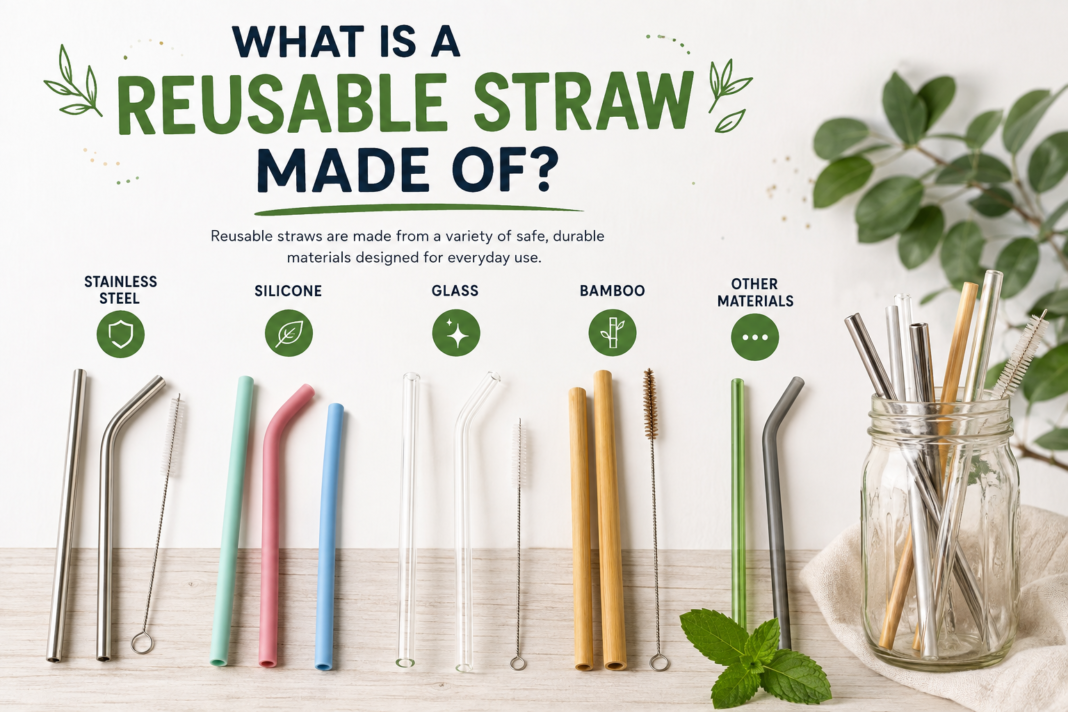

Reusable straws are made from several different materials, with stainless steel, silicone, glass, and bamboo being the most common options. Some reusable straws also contain food-grade plastics or combine materials, such as stainless steel with a silicone tip.
The material matters because it affects how durable, flexible, easy to clean, temperature-resistant, and environmentally practical a straw will be. A stainless steel straw, for example, behaves very differently from a soft silicone straw or a traditional bamboo straw.
If you’re wondering what is a reusable straw made of, the answer depends on the design and intended use. Understanding the differences can help you choose a straw that fits your drinks, lifestyle, cleaning routine, and sustainability goals.
What Is a Reusable Straw Made Of?
Unlike disposable straws, reusable versions are designed to withstand repeated use and cleaning. Manufacturers use materials that can maintain their structure through regular contact with beverages and washing.
The four most recognizable reusable straw materials are stainless steel, silicone, glass, and bamboo. Each has advantages and limitations, so there isn’t one material that is perfect for everyone.
Stainless Steel
Stainless steel is one of the most durable materials used for reusable straws. It is rigid, long-lasting, and generally resistant to staining and odors when properly maintained.
Stainless steel straws are particularly popular for water, iced coffee, juices, and other cold beverages. However, metal can feel noticeably cold or hot depending on the beverage and surrounding temperature. Always follow the manufacturer’s instructions for hot drinks.
Silicone
Silicone reusable straws are flexible and soft compared with metal or glass. This makes them useful for people who prefer a softer mouthpiece and for certain travel or children’s drink containers.
High-quality, food-contact silicone can also be easier to use with oddly shaped cups because it can bend without breaking. The trade-off is that flexible designs may require careful cleaning, particularly around bends or internal sections.
Glass
Glass straws provide a rigid, transparent alternative to metal. One of their biggest practical advantages is visibility: you can inspect the inside of the straw more easily to see whether it has been thoroughly cleaned.
Glass can also be appealing to people who prefer a neutral-tasting drinking surface. However, it is more vulnerable to breaking than stainless steel, so it should be handled and stored carefully.
Bamboo
Bamboo straws are made from a natural plant material and appeal to consumers who want an alternative to metal, glass, or synthetic materials.
They have a distinctive natural appearance and can be useful for certain cold beverages. However, bamboo requires more attention to cleaning and drying because it is a natural material that can be affected by prolonged moisture.
Other Reusable Straw Materials
Not every reusable straw fits into one simple category. Some products use food-grade polymers, while others combine different materials.
For example, a straw may have a stainless steel body with a silicone tip. Collapsible travel straws may also contain several components to make them easier to pack.
When evaluating a reusable straw, check the complete material description rather than assuming the entire product is made from the material advertised on the package.
Reusable Straw Materials Compared
The following table provides a quick overview of the most common options:
| Material | Durability | Flexibility | Cleaning | Main Advantage | Main Drawback | Best For |
| Stainless steel | Excellent | Low | Easy | Long-lasting | Rigid | Everyday use |
| Silicone | Good | High | Easy to moderate | Soft and flexible | May retain odors | Kids and travel |
| Glass | Moderate | Low | Easy to inspect | Transparent | Can break | Home use |
| Bamboo | Moderate | Low | Requires more care | Natural material | Needs thorough drying | Natural-material users |
| Hybrid | Varies | Varies | Product-dependent | Combines materials | More components | Specialized use |
This comparison shows why choosing the best reusable straw material isn’t simply about picking the most popular option. Your beverage, cleaning habits, portability needs, and personal preferences all matter.
How Material Affects Reusable Straw Performance
The material of a reusable straw influences more than its appearance. It can change the way the straw feels, performs, and holds up over time.
Durability
Stainless steel generally offers excellent durability and is less likely to crack or break during everyday use. Glass can last a long time when handled properly but is more vulnerable to accidental drops.
Silicone can tolerate bending and squeezing better than rigid materials. Bamboo has a different maintenance profile because moisture exposure and repeated cleaning can affect its condition.
Flexibility
If you need a straw that bends around a bottle or cup, silicone is usually more suitable than rigid stainless steel or glass.
Flexible straws can also be useful for children and people who find hard mouthpieces uncomfortable. However, flexibility can create additional areas that need careful cleaning.
Taste and Odor
Some people prefer glass or stainless steel because they generally provide a neutral drinking experience when clean and properly maintained.
Silicone may retain odors or flavors in some circumstances, particularly if it isn’t cleaned thoroughly after strong-flavored beverages such as smoothies or flavored drinks.
Temperature
Temperature is another reason material matters. Metal can quickly conduct heat, making a stainless steel straw uncomfortable with some hot beverages.
Glass and silicone products may have different temperature characteristics depending on their construction. Never assume that a reusable straw is suitable for hot drinks simply because it is reusable. Check the manufacturer’s temperature recommendations.
Are Reusable Straws Safe?
Reusable straws can be suitable for regular beverage use when they are made from appropriate food-contact materials, properly manufactured, and correctly maintained.
However, “reusable” by itself does not guarantee that every product has identical quality or safety characteristics. Look at the manufacturer’s material information and intended-use instructions.
A straw should also be inspected regularly. Cracks, significant damage, deteriorating components, or difficult-to-clean areas can be reasons to replace it.
Are Stainless Steel Straws Safe?
Quality stainless steel reusable straws can be a durable option for everyday beverages. Their rigidity is both an advantage and a consideration, particularly around children or when drinking hot liquids.
Check the manufacturer’s specifications, especially if the straw will be used with hot beverages.
Are Silicone Straws Safe?
Silicone straws are valued for their flexibility and soft feel. When choosing one, look for clear information about its intended food-contact use and follow the cleaning instructions provided by the manufacturer.
Are Glass Straws Safe?
Glass straws can provide a clean, transparent drinking surface, but their main consideration is breakage. Choose products specifically designed for beverage use and handle them carefully.
Are Bamboo Straws Safe?
Bamboo requires more maintenance than smooth metal or glass. Thorough cleaning and complete drying are particularly important because the material is naturally porous compared with many manufactured alternatives.
How Do You Clean a Reusable Straw?
Proper cleaning is one of the most important parts of using a reusable straw. The inside can collect beverage residue even when the exterior looks clean.
A simple cleaning routine is:
- Rinse the straw soon after use.
- Use a narrow straw-cleaning brush.
- Wash with dish soap and water.
- Rinse thoroughly.
- Allow the straw to dry completely.
- Store it somewhere clean and dry.
For smoothies, milk-based drinks, or thicker beverages, clean the straw promptly rather than allowing residue to dry inside.
Dishwasher safety varies by material and product design, so check the manufacturer’s instructions before putting a reusable straw in the dishwasher.
Which Reusable Straw Material Is Best?
There is no universal winner because the best reusable straw depends on how you intend to use it.
For durability: Stainless steel is a strong choice for people who want a rigid straw designed for repeated everyday use.
For flexibility: Silicone is useful when you want a straw that bends easily or has a softer mouthpiece.
For visibility: Glass makes it easier to visually inspect the inside of the straw during cleaning.
For a natural material: Bamboo can appeal to people who prefer plant-based products and are willing to provide the necessary maintenance.
For travel: Compact silicone, stainless steel, or hybrid designs can work well depending on portability and cleaning requirements.
For smoothies: Look for a wider-diameter straw designed for thick beverages. Material is important, but diameter can be just as important for practical performance.
Are Reusable Straws Better for the Environment?
Reusable straws can reduce reliance on disposable alternatives, but environmental impact is more complicated than simply labeling a product “eco-friendly.”
A reusable straw has an environmental footprint from manufacturing, transportation, cleaning, and eventual disposal. Its benefit depends partly on how frequently it is reused and how long it remains functional.
For example, a durable straw that is used hundreds of times can serve a very different purpose from a reusable product that is purchased but rarely used.
The best sustainability strategy is generally to choose a durable product you will actually use and maintain rather than buying multiple alternatives simply because they are marketed as environmentally friendly.
Can Reusable Straws Be Recycled or Composted?
End-of-life options vary significantly by material and location.
Stainless steel may be recyclable through appropriate metal-recycling systems. Glass can also be recyclable where local facilities accept the relevant type of glass.
Silicone generally has fewer conventional recycling options, while bamboo may be biodegradable under appropriate conditions. However, the presence of coatings, finishes, adhesives, or other components can change how a product should be discarded.
Always check local recycling or waste-management guidance rather than assuming that a material is accepted simply because it is technically recyclable or biodegradable.
Are Reusable Straws Made of Plastic?
Some reusable straws can contain plastic or other polymer materials. Others are made primarily from stainless steel, glass, silicone, bamboo, or combinations of these materials.
This means reusable does not automatically mean plastic-free.
If avoiding plastic is important to you, check the complete product construction. A stainless steel straw, for example, might still have a silicone tip, plastic packaging, or other components.
Reading the material specifications is more reliable than judging a product based only on its appearance or marketing language.
How to Choose the Right Reusable Straw
Start by considering how you actually drink.
If you mainly drink iced beverages at home, stainless steel or glass may be practical. If you need flexibility for a bottle or travel cup, silicone may be more convenient.
For smoothies, prioritize diameter and cleaning. For children, consider flexibility and the overall design rather than choosing solely based on environmental claims.
Before buying, check:
- Material composition
- Food-contact information
- Straw diameter
- Length
- Temperature recommendations
- Cleaning instructions
- Dishwasher compatibility
- Included cleaning brush
- Replacement parts
- Carrying case or storage system
A well-chosen reusable straw should fit your routine instead of creating extra work.
Common Mistakes People Make With Reusable Straws
One common mistake is choosing a straw based entirely on appearance. Material, diameter, construction, and cleaning requirements can have a much bigger impact on everyday satisfaction.
Another mistake is assuming that every reusable straw is dishwasher safe. Product designs vary, so manufacturer instructions should take priority.
People also sometimes clean only the outside of the straw. Because beverage residue can remain inside, an appropriately sized cleaning brush is useful.
Finally, don’t assume that “reusable” means “plastic-free,” “compostable,” or automatically environmentally superior. These characteristics depend on the specific material, manufacturing process, lifespan, and disposal method.
Conclusion
So, what is a reusable straw made of? Most reusable straws are made from stainless steel, silicone, glass, or bamboo, although some use food-grade polymers or combinations of materials.
The right choice depends on what matters most to you. Stainless steel is known for durability, silicone offers flexibility, glass provides visibility, and bamboo offers a natural-material alternative. Cleaning requirements, temperature limits, beverage type, and end-of-life options should all be considered before choosing one.
Rather than looking for a single “best” reusable straw, choose a well-made product that fits your everyday routine and that you will actually reuse and maintain.
Frequently Asked Questions
What is a reusable straw made of?
Reusable straws are commonly made from stainless steel, silicone, glass, or bamboo. Some also use food-grade polymers or combine materials, such as stainless steel with silicone.
What is the safest material for a reusable straw?
There isn’t one universally safest material. Choose a product intended for food contact, follow its temperature and cleaning instructions, and replace it if it becomes damaged or difficult to clean.
Are reusable straws made of plastic?
Some are. While many reusable straws are made from stainless steel, glass, silicone, or bamboo, certain products contain plastic or polymer components. Check the complete material specification.
Are stainless steel straws better than silicone straws?
It depends on your needs. Stainless steel generally offers rigidity and durability, while silicone provides flexibility and a softer feel. Neither is automatically better for every user.
Are bamboo straws hygienic?
Bamboo straws can be hygienic when properly cleaned and thoroughly dried after use. Because bamboo is a natural material, careful maintenance is particularly important.
Are glass straws better than metal straws?
Glass can be appealing because it is transparent and allows easier visual inspection. Stainless steel is generally more resistant to accidental breakage. The better option depends on where and how you use it.
How long does a reusable straw last?
Lifespan varies according to material, construction, frequency of use, cleaning, and maintenance. A durable reusable straw can remain useful for a long time when properly cared for, but damaged products should be replaced.