
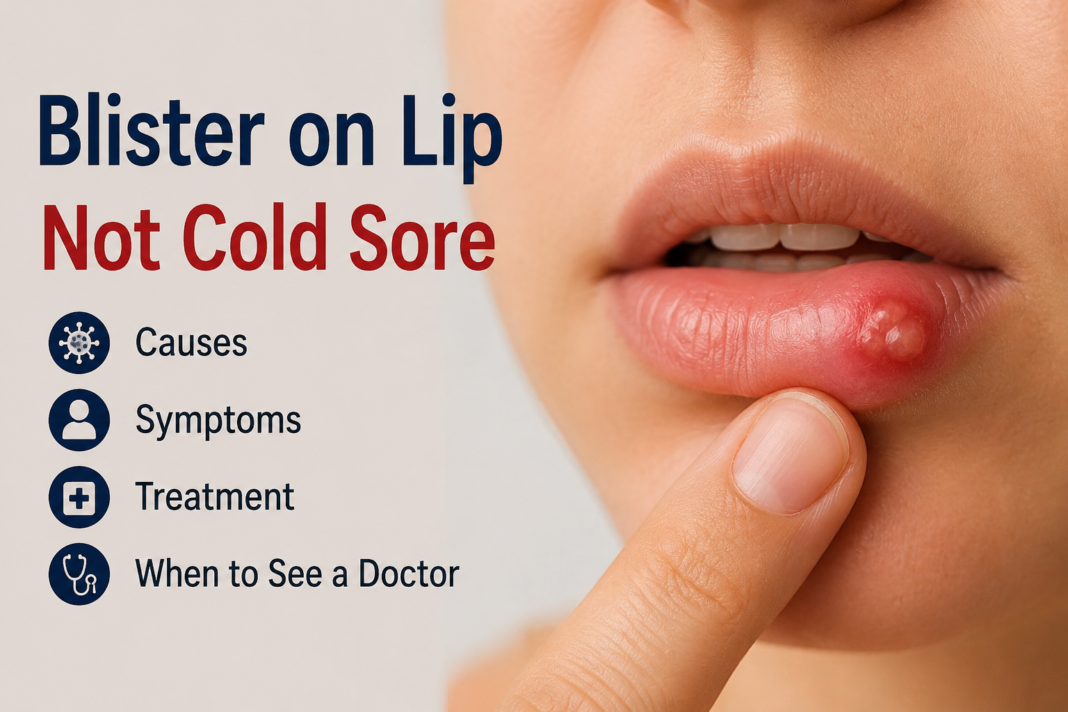

Discovering a blister on your lip can be worrying, especially if you immediately think it’s a cold sore. However, a blister on lip not cold sore is more common than many people realize. While cold sores caused by the herpes simplex virus (HSV) are a well-known cause of lip blisters, several other conditions can produce similar symptoms. Minor injuries, allergic reactions, burns, blocked salivary glands, and bacterial infections are just a few examples.
Identifying the underlying cause is important because treatment depends on the condition. Some blisters heal naturally within a few days, while others may require medical attention. This guide explains the most common causes, symptoms, treatment options, and prevention tips to help you understand what may be causing your lip blister.
Can a Blister on Your Lip Be Something Other Than a Cold Sore?
Yes. Not every lip blister is caused by herpes. Many harmless conditions can create fluid-filled bumps that resemble cold sores but have completely different causes. Unlike cold sores, several of these conditions are not contagious and usually heal without antiviral medication.
If your blister appeared after biting your lip, eating hot food, using a new lip product, or spending too much time in the sun, it may have nothing to do with HSV.
Cold Sore vs. Other Lip Blisters
| Feature | Cold Sore | Blood Blister | Mucocele | Burn Blister | Allergic Reaction |
| Cause | HSV infection | Injury | Blocked salivary gland | Heat injury | Allergens |
| Contagious | Yes | No | No | No | No |
| Pain | Tingling then painful | Mild | Usually painless | Painful | Itchy or burning |
| Appearance | Cluster of tiny blisters | Dark red blister | Clear bump | Fluid-filled blister | Swollen blister or rash |
| Healing Time | 7–14 days | 1–2 weeks | Several days to weeks | About 1 week | A few days |
Common Causes of a Blister on Lip Not Cold Sore
Blood Blister
A blood blister develops when tiny blood vessels break beneath the skin. This usually happens after accidentally biting your lip, dental treatment, or a sports injury.
Symptoms
- Dark red or purple blister
- Mild pain
- Swelling
- Appears shortly after trauma
Most blood blisters heal naturally within one to two weeks. Avoid popping them because this increases the risk of infection.
Mucocele
A mucocele is a harmless cyst that develops when a salivary gland becomes blocked or damaged. It commonly appears inside the lower lip but may extend toward the lip edge.
Symptoms
- Smooth, clear bump
- Soft texture
- Usually painless
- May repeatedly appear and disappear
Small mucoceles often resolve on their own. Larger or recurring cysts should be evaluated by a healthcare professional.
Allergic Reaction
An allergic reaction can cause swelling, redness, and small blisters on the lips. Common triggers include lipstick, lip balm, toothpaste, certain foods, medications, and dental products.
Removing the trigger usually allows symptoms to improve within a few days.
Friction or Trauma
Repeated rubbing or pressure can create a blister on lip not cold sore. Common causes include:
- Lip biting
- Braces
- Dentures
- Sports injuries
- Playing musical instruments
Healing usually occurs naturally if further irritation is avoided.
Sunburn Blister
The lips are especially vulnerable to ultraviolet (UV) damage. Severe sunburn may produce painful blisters along with redness and swelling.
Using SPF lip balm helps reduce the risk of sun-related lip damage.
Burns From Hot Food or Drinks
Hot coffee, tea, soup, or pizza can burn delicate lip tissue.
Symptoms include:
- Immediate pain
- Redness
- Fluid-filled blister
- Sensitivity when eating
Most minor burns heal within a week with supportive care.
Canker Sore
Although canker sores develop inside the mouth, they can occur close to the lip and be mistaken for cold sores.
Unlike cold sores:
- They are not contagious.
- They appear as shallow ulcers rather than clusters of blisters.
- They usually heal within two weeks.
Impetigo
Impetigo is a contagious bacterial skin infection that often causes blisters around the mouth.
Signs include:
- Red sores
- Honey-colored crust
- Mild itching
- Oozing fluid
Medical treatment with antibiotics is usually required.
Symptoms That Help Identify the Cause
The appearance and location of the blister often provide valuable clues.
A cold sore usually begins with tingling before several tiny blisters appear together. A blood blister is typically dark red and develops after an injury. A mucocele is smooth and painless, while allergy-related blisters are often accompanied by itching and swelling.
Pay attention to symptoms such as:
- Pain
- Itching
- Burning
- Swelling
- Clear or bloody fluid
- Crusting
- Fever
- Difficulty eating
Persistent symptoms deserve medical evaluation.
How Doctors Diagnose Lip Blisters
Doctors often diagnose lip blisters through a physical examination and a review of your symptoms.
They may ask:
- When did it start?
- Has it happened before?
- Did you injure your lip?
- Have you used new cosmetic products?
- Do you have other symptoms?
If necessary, additional testing may include viral swabs, bacterial cultures, allergy testing, or a biopsy for persistent lesions.
Treatment Options
Treatment depends on the underlying cause.
For minor injuries, blood blisters, or burns, supportive care is usually enough.
Helpful home remedies include:
- Cold compresses
- Staying hydrated
- Applying petroleum jelly
- Avoiding spicy or acidic foods
- Maintaining good oral hygiene
- Avoiding picking or popping the blister
If the blister results from an allergy, eliminating the trigger is essential.
Bacterial infections may require antibiotics, while confirmed cold sores respond to antiviral medication. Because these treatments differ, obtaining the correct diagnosis is important.
Should You Pop a Lip Blister?
No. Popping a blister increases the chance of infection, delays healing, and may leave a scar.
The blister acts as a natural protective barrier while the skin underneath repairs itself. Allowing it to heal naturally usually produces the best outcome.
Healing Time
Recovery varies depending on the cause.
| Condition | Typical Healing Time |
| Blood blister | 1–2 weeks |
| Burn blister | 5–10 days |
| Mucocele | Days to weeks |
| Allergy | 2–5 days after avoiding trigger |
| Cold sore | 7–14 days |
If your blister lasts longer than two weeks or repeatedly returns, consult a healthcare provider.
When Should You See a Doctor?
Seek medical attention if you notice:
- Blister lasting more than two weeks
- Frequent recurrence
- Severe swelling
- Fever
- Pus
- Persistent bleeding
- Difficulty swallowing
- Rapid enlargement
- Suspicion of oral cancer
Early evaluation helps identify serious conditions and ensures appropriate treatment.
How to Prevent Lip Blisters
Simple lifestyle habits can reduce your risk.
- Wear SPF lip balm outdoors.
- Stay hydrated.
- Avoid biting your lips.
- Use hypoallergenic lip products.
- Practice good oral hygiene.
- Avoid sharing drinks or utensils if a contagious infection is suspected.
- Protect your lips from excessive heat and sun exposure.
These habits support healthy lips and lower the likelihood of future blisters.
Conclusion
A blister on lip not cold sore does not automatically mean you have herpes. Blood blisters, mucoceles, allergic reactions, burns, trauma, and bacterial infections are all possible causes. Understanding the symptoms, appearance, and potential triggers can help you choose the right treatment and know when professional care is needed. While many lip blisters heal on their own, persistent, painful, or recurring lesions should always be evaluated by a healthcare professional to rule out more serious conditions.
Frequently Asked Questions
1. Can a blister on my lip be something other than herpes?
Yes. Injuries, burns, allergies, mucoceles, and bacterial infections commonly cause lip blisters that are unrelated to herpes.
2. Is a blood blister on the lip contagious?
No. Blood blisters result from trauma and cannot spread to other people.
3. How long does a lip blister usually take to heal?
Most minor lip blisters heal within one to two weeks, depending on the cause.
4. Should I pop a blister on my lip?
No. Popping a blister increases the risk of infection and slows the healing process.
5. Can allergies cause lip blisters?
Yes. Certain cosmetics, foods, toothpaste, medications, and dental materials can trigger allergic reactions that lead to lip blisters.
6. When should I worry about a lip blister?
See a healthcare professional if the blister lasts longer than two weeks, frequently returns, becomes severely painful, bleeds persistently, or is associated with fever or significant swelling.