

Introduction
Keeping your software updated is one of the easiest ways to improve performance, security, and overall usability. If you have been searching for information about the ShotScribus software upgrade, you are likely looking for guidance on what an upgrade offers, why it matters, and how to complete the process without running into unexpected issues. Whether you are an individual user or part of a professional team, staying current with software updates ensures you can take advantage of the latest improvements.
A ShotScribus software upgrade is more than just installing a newer version. Modern software updates typically include performance enhancements, security patches, bug fixes, compatibility improvements, and new features designed to improve productivity. Ignoring these updates can result in slower performance, compatibility problems, and increased security risks over time.
This guide explains everything you need to know about the ShotScribus software upgrade process. From understanding its benefits to preparing your system and troubleshooting common problems, you’ll gain a complete overview that helps you update with confidence.
What Is the ShotScribus Software Upgrade?
The ShotScribus software upgrade refers to installing a newer version of the ShotScribus application to replace or improve an existing installation. Software developers regularly release upgrades to ensure their applications remain secure, efficient, and compatible with modern operating systems.
Unlike small updates that simply fix minor bugs, a software upgrade often introduces larger improvements. These may include redesigned interfaces, better workflow tools, improved performance, stronger security, and support for newer hardware and operating systems. As software evolves, upgrades help users continue working without limitations caused by outdated technology.
Many organizations schedule regular software upgrades because they reduce maintenance costs and improve productivity. Individual users benefit as well by enjoying smoother performance, faster processing, and access to features that make daily tasks easier.
Why Upgrading Your Software Is Important
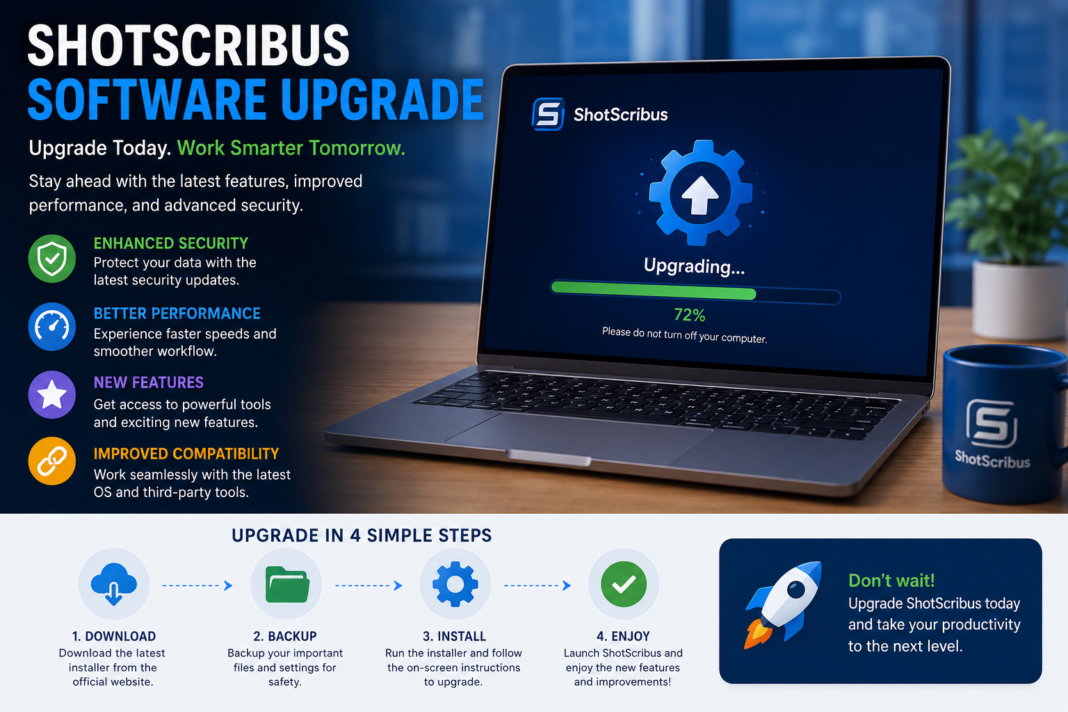
One of the biggest reasons to install a ShotScribus software upgrade is security. Cyber threats evolve constantly, and outdated software often contains vulnerabilities that attackers can exploit. Developers release upgrades specifically to patch these weaknesses and protect user data.
Performance is another major advantage. Older software versions may become slower over time, especially when used with newer operating systems or larger projects. Upgrading often results in faster loading times, smoother navigation, and improved responsiveness throughout the application.
Compatibility also plays an important role. As operating systems and hardware continue to evolve, older software may struggle to function properly. A ShotScribus software upgrade helps ensure compatibility with modern devices, file formats, and third-party applications, reducing workflow interruptions.
Key Features You Can Expect After a ShotScribus Software Upgrade
One noticeable improvement after upgrading is an enhanced user interface. Developers frequently redesign menus, toolbars, and navigation systems to make software easier to use while reducing the number of steps needed to complete common tasks.
Performance improvements are equally valuable. Optimized code, better memory management, and faster processing allow users to work with larger projects more efficiently. These enhancements become especially important for professionals handling complex workloads.
Another common benefit is the addition of new tools and functionality. Depending on the version, users may gain access to automation features, collaboration improvements, expanded export options, or better integration with other software applications. These additions often save time and improve productivity.
How to Prepare Before Upgrading
Preparation is one of the most overlooked parts of any software upgrade. Before installing the latest version, it is wise to create a complete backup of your important files, settings, and project data. This ensures that your work remains protected if anything unexpected occurs during installation.
Next, verify that your computer meets the minimum system requirements. Operating system compatibility, available storage space, processor speed, and RAM all influence how smoothly the upgrade process will proceed. Installing software on unsupported hardware can lead to installation failures or poor performance.
Finally, close unnecessary applications before starting the upgrade. This reduces the chance of software conflicts while freeing up system resources. A stable internet connection is also recommended if the installer needs to download additional files during installation.
Step-by-Step Guide to Completing a ShotScribus Software Upgrade
The first step is downloading the latest available installer from the appropriate source provided by the software developer or your organization’s software management system. Using official installation files helps reduce security risks associated with unofficial downloads.
After downloading the installer, launch the setup program and carefully follow the installation instructions. Most installers automatically detect previous versions and guide users through the upgrade process while preserving existing settings whenever possible.
Once installation is complete, restart your computer if prompted. After reopening ShotScribus, verify that the new version is installed correctly and test your existing projects to ensure everything functions as expected. Taking a few minutes to confirm successful installation helps identify any issues early.
Common Problems During a ShotScribus Software Upgrade
Although upgrades usually complete without issues, users occasionally encounter installation errors. These may occur because of insufficient storage space, antivirus software interference, missing permissions, or corrupted installation files. Reviewing error messages carefully often helps identify the underlying cause.
Compatibility problems can also arise if older plugins or extensions are no longer supported by the latest version. Disabling or updating these add-ons typically resolves many post-upgrade issues without requiring a complete reinstallation.
Some users notice slower performance immediately after upgrading. In many cases, this is temporary while the software rebuilds internal caches or indexes. Restarting the application, installing any available patches, and updating graphics drivers often restores optimal performance.
Tips for a Smooth Upgrade Experience
Always read the release notes before installing a new version. Developers frequently explain new features, known issues, compatibility changes, and recommended installation procedures. This information helps users avoid surprises after upgrading.
Keep regular backups even after completing the ShotScribus software upgrade. While modern software is generally reliable, maintaining recent backups ensures that important projects remain protected against unexpected system failures or accidental data loss.
It is also beneficial to stay current with future updates rather than skipping multiple versions. Smaller, regular upgrades are usually easier to install and less likely to introduce compatibility challenges than jumping several major versions at once.
Best Practices After Completing the Upgrade
After successfully upgrading, spend time exploring the new interface and features. Even experienced users may discover workflow improvements that significantly reduce repetitive tasks and improve overall productivity.
Review your software preferences and configuration settings. Some upgrades introduce additional customization options or reset certain preferences to their default values. Taking a few minutes to personalize these settings creates a more comfortable working environment.
Finally, monitor software performance during the first few days after installation. If any unusual behavior appears, check for follow-up patches or updates released by the developer. Early updates often address minor issues discovered after a major software release.
Conclusion
A ShotScribus software upgrade is an important step toward maintaining a secure, reliable, and efficient working environment. While the upgrade process itself is usually straightforward, proper preparation, backups, and system checks make the experience significantly smoother.
Modern software continues to evolve as user expectations and technology change. By upgrading regularly, users benefit from stronger security, improved compatibility, faster performance, and access to new features that simplify everyday work. These advantages often outweigh the small amount of time required to install the latest version.
Whether you are upgrading for better performance, improved security, or access to new capabilities, approaching the process with careful planning ensures the best possible outcome. Staying current with ShotScribus software upgrades allows you to focus on your work while taking advantage of the latest innovations offered by the software.
Frequently Asked Questions (FAQs)
1. What is a ShotScribus software upgrade?
A ShotScribus software upgrade is the process of installing a newer version of the software to improve its performance, security, compatibility, and overall functionality. Upgrades may also introduce new features and fix existing bugs.
2. Why should I upgrade ShotScribus software?
Upgrading ensures you have the latest security patches, performance improvements, bug fixes, and new features. It also helps maintain compatibility with modern operating systems and hardware.
3. Is it safe to upgrade ShotScribus software?
Yes, it is generally safe to upgrade as long as you use the official installer or update source. It’s also recommended to back up your important files before starting the upgrade.
4. Will I lose my files after upgrading?
In most cases, no. A software upgrade is designed to preserve your existing files and settings. However, creating a backup beforehand is always a smart precaution.
5. How long does a ShotScribus software upgrade take?
The time required depends on your computer’s performance and internet speed. Most upgrades are completed within 10 to 30 minutes.
6. What should I do if the upgrade fails?
If the upgrade fails, restart your computer, check your internet connection, ensure your system meets the software requirements, and try running the installer again. You can also consult the software’s support documentation for additional troubleshooting.
7. Does upgrading improve software performance?
Yes. Most upgrades include performance optimizations that improve speed, stability, and overall responsiveness, especially when working on large or complex projects.
8. Do I need to uninstall the old version before upgrading?
Usually, no. Most software upgrades automatically replace the previous version while keeping your settings and project files intact. Follow the instructions provided by the installer for the best results.
9. How often should I upgrade ShotScribus software?
It’s a good idea to install updates whenever a stable release becomes available. Staying up to date helps keep your system secure and ensures you have access to the latest features and improvements.
10. Can I downgrade if I don’t like the new version?
Whether you can downgrade depends on the software developer’s policies and whether older versions are available. Before upgrading, back up your projects and settings so you can return to a previous version if necessary.
You May Also Read : Andrew Santino Wife