
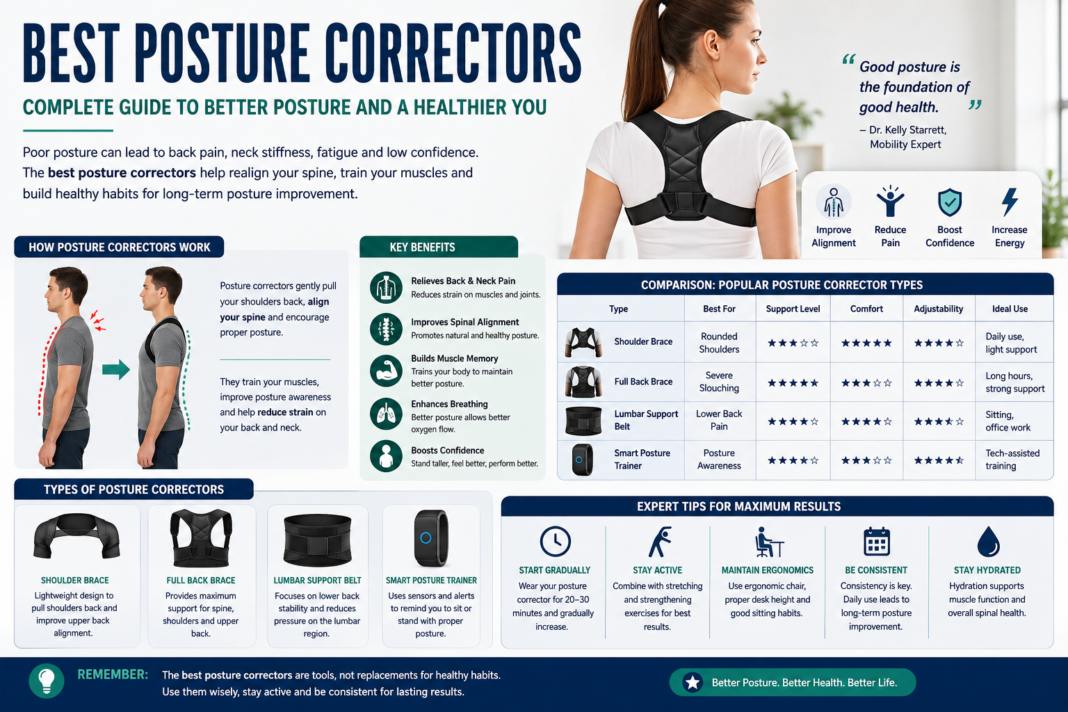

Good posture is more than just standing tall—it directly impacts your spinal health, breathing efficiency, energy levels, and long-term musculoskeletal comfort. In today’s digital-heavy lifestyle, slouching over screens has become the norm, leading to chronic back pain and weakened posture muscles. That’s where posture support solutions come into play.
This guide explores the best posture correctors in depth, helping you understand how they work, who they are for, and how to choose the right one for lasting results.
Understanding Modern Posture Challenges and Their Impact
Modern lifestyles have drastically increased issues like rounded shoulders, forward head posture, and lower back strain. Hours spent sitting at desks or using mobile devices place constant pressure on the spine, gradually weakening postural muscles.
Many individuals unknowingly develop long-term discomfort due to poor ergonomic habits and lack of movement. Over time, this can lead to reduced flexibility, chronic stiffness, and fatigue.
People often turn to the best posture correctors when they start experiencing visible posture imbalances or persistent discomfort. These tools help re-train muscle memory and encourage healthier alignment patterns.
Common contributing factors include weak core muscles, improper sitting positions, and lack of ergonomic awareness. Addressing these early can prevent more serious spinal issues later.
23
How Posture Correctors Work to Realign the Body
Posture correctors function by gently pulling the shoulders back and encouraging the spine to maintain a neutral position. They do not force alignment but instead guide the body into proper posture over time.
Modern designs combine compression, support straps, and breathable materials to enhance comfort while promoting spinal stability. Many users notice gradual improvement in awareness and posture habits.
The best posture correctors are designed to activate muscle memory rather than create dependency. This ensures long-term improvement instead of temporary correction.
They are often used alongside physiotherapy or exercise routines for maximum effectiveness. When used correctly, they support natural posture retraining without restricting movement.
Types of Posture Correctors and Their Functional Differences
There are multiple types of posture support devices, each designed for specific needs such as upper back alignment, lumbar support, or full spinal correction. Choosing the right type depends on your lifestyle and condition severity.
Some are lightweight and wearable under clothing, while others provide structured reinforcement for advanced posture issues. Comfort and adjustability play a major role in effectiveness.
The best posture correctors often combine multiple support mechanisms to address both upper and lower back alignment.
| Type | Target Area | Best For | Key Feature |
| Shoulder Brace | Upper back | Rounded shoulders | Lightweight support |
| Full Back Brace | Spine & shoulders | Severe slouching | Strong structural support |
| Lumbar Support Belt | Lower back | Desk workers | Lower spine stabilization |
| Smart Posture Trainer | Entire posture | Tech-assisted correction | Vibration feedback |
Each type serves a different corrective purpose depending on user needs and comfort levels.
Key Benefits of Using Posture Support Devices
Using posture support tools consistently can significantly improve spinal alignment and reduce discomfort caused by poor sitting habits. Many users report improved confidence and reduced fatigue.
They also help reduce pressure on muscles and ligaments that are overworked due to slouching or incorrect posture patterns.
The best posture correctors not only improve appearance but also enhance breathing capacity and overall body balance.
Over time, users may experience improved focus, reduced back pain, and better physical endurance throughout the day.
Essential Features to Look for Before Choosing a Device
Selecting the right posture support product requires attention to adjustability, material quality, and ergonomic design. A poor-quality device can lead to discomfort or ineffective results.
Breathable fabrics, adjustable straps, and lightweight construction are essential for long-term use and comfort during daily activities.
The best posture correctors also offer gradual tension control, allowing the body to adapt without strain or pressure.
Durability and ease of maintenance should also be considered, especially for individuals planning to wear the device for extended periods.
Practical Applications and Use Cases for Different Lifestyles
Posture support tools are not one-size-fits-all. Office workers, athletes, students, and elderly individuals may require different levels of support and flexibility.
For example, desk workers benefit from lightweight braces that reduce slouching, while fitness enthusiasts may use stronger support systems during recovery.
The best posture correctors adapt to various lifestyles without restricting movement or comfort.
Understanding daily activity levels helps in selecting a device that integrates seamlessly into routine use without discomfort or interruption.
Common Mistakes People Make When Using Posture Devices
One of the biggest mistakes users make is wearing posture devices for too long, which can lead to muscle dependency instead of strengthening.
Another common issue is choosing the wrong size or type, which reduces effectiveness and may cause discomfort or irritation.
The best posture correctors are most effective when used as part of a balanced routine, not as a permanent substitute for muscle development.
Ignoring exercise and relying solely on external support often slows down long-term progress and reduces overall benefits.
Table: Comparison of Popular Posture Correction Approaches
Different approaches to posture improvement offer varying levels of support, cost, and long-term effectiveness.
| Approach | Cost Level | Effectiveness | Ease of Use | Long-Term Benefit |
| Posture Exercises | Low | High | Moderate | Very High |
| Ergonomic Chairs | High | Moderate | Easy | High |
| Wearable Braces | Medium | High | Easy | Moderate |
| Smart Devices | High | Very High | Easy | High |
Each approach complements the others, and combining them often delivers the best results for spinal alignment and posture correction.
Expert Tips for Wearing and Maximizing Results
Consistency is key when using posture support tools. Short, regular sessions are more effective than prolonged usage that strains muscles.
It is recommended to gradually increase wearing time to allow the body to adapt naturally and avoid discomfort.
The best posture correctors work best when paired with awareness exercises and regular stretching routines.
Maintaining proper hydration and movement throughout the day also enhances overall spinal health and recovery.
Exercises That Enhance Posture Correction Results
Strengthening core and back muscles significantly improves the effectiveness of posture correction devices. Exercises like planks, wall angels, and shoulder retractions are highly beneficial.
Stretching tight chest muscles also helps counteract forward shoulder posture caused by prolonged sitting.
The best posture correctors provide external support, but exercises ensure internal muscle strength and long-term stability.
Combining both approaches leads to faster improvements and more sustainable posture correction results.
Myths and Misconceptions About Posture Correction
A common myth is that posture devices can permanently fix posture without any effort. In reality, they are supportive tools, not permanent solutions.
Another misconception is that they weaken muscles. When used correctly, they actually help retrain muscle memory and improve awareness.
The best posture correctors are designed to assist, not replace, natural movement and strength development.
Understanding their role prevents misuse and ensures better long-term results.
Long-Term Expectations and Realistic Results
Posture improvement is a gradual process that requires consistency, patience, and lifestyle adjustments. Visible changes often take weeks or months depending on severity.
Users may initially experience mild discomfort as their muscles adapt to new alignment patterns.
The best posture correctors help speed up this adaptation process by reinforcing correct positioning throughout daily activities.
Over time, users typically notice reduced pain, improved posture awareness, and better physical balance.
Conclusion: Building Better Posture for a Healthier Future
Improving posture is one of the most valuable investments you can make in your long-term health. From reducing back pain to enhancing confidence, the benefits are both physical and psychological.
The best posture correctors act as powerful tools in this journey, helping guide your body toward healthier alignment while you build stronger habits.
With the right combination of support, exercise, and awareness, lasting posture improvement is entirely achievable.
Frequently Asked Questions
What are the best posture correctors for daily use?
The best posture correctors for daily use are lightweight shoulder braces or adjustable ergonomic supports that can be worn comfortably during work or study without restricting movement.
How long should I wear a posture corrector each day?
The best posture correctors should typically be worn for short intervals, gradually increasing usage as your muscles adapt to avoid dependency and encourage natural strength.
Can posture correctors fix back pain permanently?
The best posture correctors can help reduce back pain, but long-term relief depends on strengthening muscles and improving daily posture habits.
Are posture correctors safe for long-term use?
Yes, when used correctly, the best posture correctors are safe, but they should always be combined with exercise and not relied on exclusively.
Do posture correctors really improve posture?
Yes, consistent use of the best posture correctors helps train muscles and improve awareness, leading to better posture over time when paired with healthy habits.
You May Also Read : High Volume Low Calorie Foods