
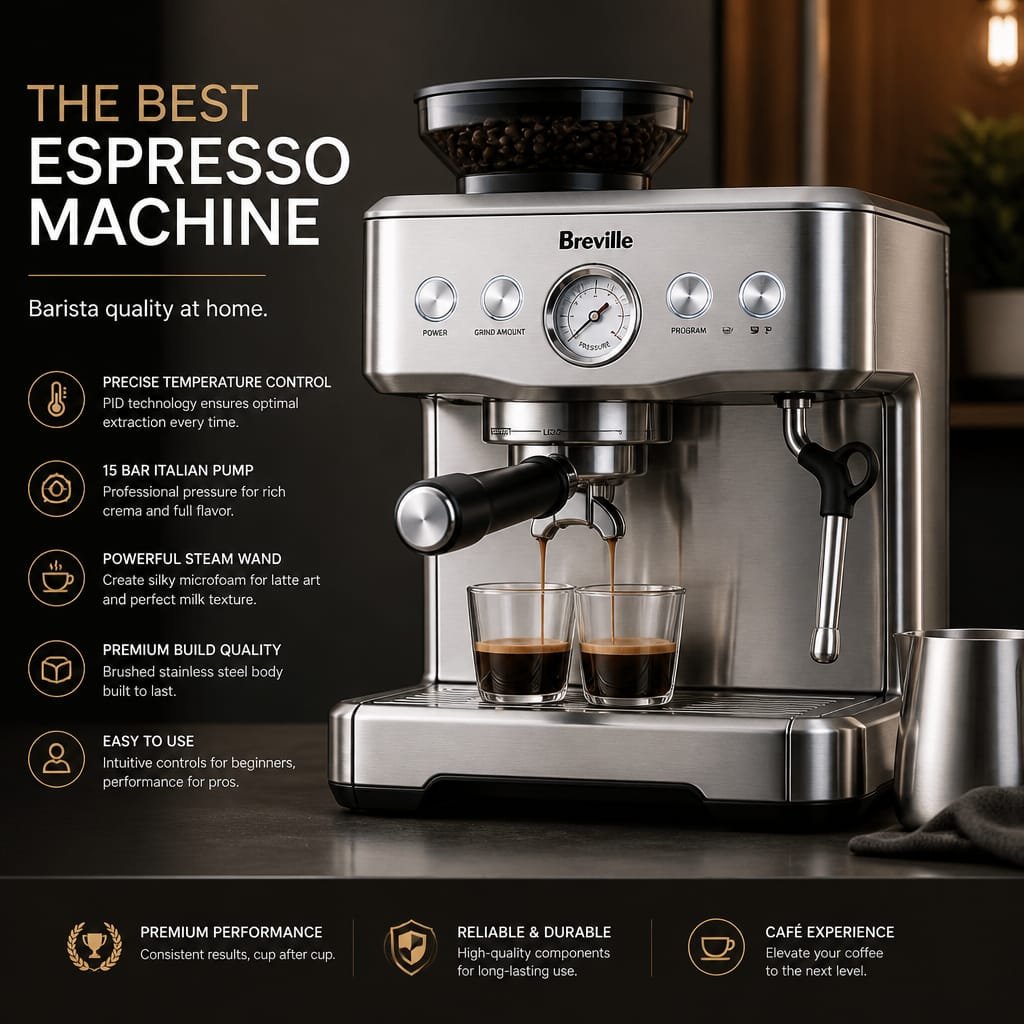

For many coffee enthusiasts, creating café-quality espresso at home is more than a convenience—it is a daily ritual. The aroma of freshly ground beans, the rich crema, and the satisfaction of pulling a perfect shot can transform an ordinary morning into something special.
Finding the best espresso machine can feel overwhelming because today’s market includes everything from simple pod-based systems to sophisticated semi-automatic and fully automatic machines. Features, price points, maintenance requirements, and brewing capabilities vary dramatically. This comprehensive guide explains everything you need to know to confidently choose the right machine for your lifestyle, budget, and coffee preferences.
Why More People Are Investing in Home Espresso Machines
The popularity of specialty coffee continues to grow, and consumers increasingly want premium coffee experiences without daily café visits. A quality espresso machine allows users to enjoy professional-level beverages while reducing long-term coffee expenses.
Modern machines are also easier to use than ever before. Advanced temperature control systems, integrated grinders, automatic milk frothers, and intuitive touchscreens have made home espresso preparation accessible to beginners while still offering customization for experienced coffee enthusiasts.
What Makes the Best Espresso Machine Stand Out
The defining characteristic of the best espresso machine is consistency. Great machines maintain stable water temperature, deliver proper pressure, and produce repeatable results shot after shot. Consistency is what separates exceptional espresso from average coffee.
Beyond performance, durability and usability matter significantly. A machine that produces excellent espresso but requires constant repairs or complicated maintenance can quickly become frustrating. The ideal choice balances performance, reliability, convenience, and value.
Understanding the Different Types of Espresso Machines
Espresso machines generally fall into several categories: manual, semi-automatic, automatic, super-automatic, and capsule-based systems. Each serves different users with unique preferences and skill levels.
Manual and semi-automatic machines appeal to enthusiasts who enjoy controlling every aspect of extraction. Automatic and super-automatic machines prioritize convenience, handling many brewing variables automatically while still producing impressive results.
Semi-Automatic Espresso Machines
Many coffee experts consider semi-automatic models the sweet spot between control and convenience. These machines allow users to adjust grind size, dose, tamp pressure, and extraction timing while automating water pressure delivery.
A semi-automatic system is often the preferred choice for people seeking the best espresso machine experience because it offers substantial control without requiring professional barista training. The learning curve is manageable, and the rewards are significant.
Fully Automatic and Super-Automatic Machines
Fully automatic machines simplify brewing by controlling extraction time and water delivery. Users can achieve reliable results with minimal intervention, making them ideal for busy households.
Super-automatic machines go even further by grinding beans, tamping coffee, brewing espresso, and often frothing milk automatically. They provide exceptional convenience while reducing the skill required to make espresso-based drinks.
Key Features to Look For When Buying
Not all features are equally important. Understanding which specifications genuinely affect coffee quality can help buyers avoid paying for unnecessary extras.
Temperature stability, pressure consistency, grinder quality, milk frothing capabilities, and ease of maintenance are among the most critical considerations. These factors directly influence espresso flavor, texture, and overall user satisfaction.
The Importance of Temperature Control
Espresso extraction depends heavily on water temperature. Even small fluctuations can impact sweetness, acidity, bitterness, and body. Machines with advanced temperature management systems generally produce superior results.
Many premium models use PID controllers, which continuously regulate brewing temperature. This technology helps maintain precision and consistency, allowing users to fine-tune extraction according to different coffee beans.
Why Pressure Matters in Espresso Brewing
Traditional espresso extraction occurs at approximately nine bars of pressure. While marketing materials often highlight higher pressure ratings, actual brewing quality depends more on pressure stability than maximum pressure capability.
The best espresso machine maintains optimal extraction pressure throughout the brewing process. Stable pressure promotes balanced flavor development and contributes to the rich crema associated with quality espresso.
Integrated Grinders vs Separate Grinders
Freshly ground coffee dramatically improves espresso quality. Because coffee begins losing aromatic compounds shortly after grinding, freshness is a major factor in flavor.
Machines with integrated grinders offer convenience and save counter space. However, dedicated standalone grinders often provide greater grind consistency and adjustment flexibility, particularly for advanced users seeking maximum control.
Milk Frothing Systems Explained
Milk-based beverages such as cappuccinos, lattes, flat whites, and macchiatos require effective milk texturing capabilities. The quality of the steam system influences texture, sweetness, and presentation.
Traditional steam wands offer maximum control and can produce silky microfoam suitable for latte art. Automatic frothing systems prioritize convenience and consistency, making them attractive for beginners and busy households.
Espresso Machine Comparison Table
| Machine Type | User Skill Level | Convenience | Customization | Maintenance | Typical Price Range |
| Manual | Advanced | Low | Very High | Moderate | $$ – $$$$ |
| Semi-Automatic | Beginner to Advanced | Medium | High | Moderate | $$ – $$$$ |
| Automatic | Beginner to Intermediate | High | Medium | Moderate | $$$ – $$$$ |
| Super-Automatic | Beginner | Very High | Low to Medium | Low to Moderate | $$$ – $$$$$ |
| Capsule-Based | Beginner | Extremely High | Low | Low | $ – $$$ |
This comparison highlights the trade-offs between convenience and control. The right choice depends largely on individual priorities rather than a universal definition of perfection.
Best Espresso Machine for Beginners
Beginners benefit most from machines that reduce complexity without sacrificing quality. Features such as programmable shot volumes, clear controls, and automated milk systems can significantly improve the learning experience.
The best espresso machine for newcomers often includes guided workflows and forgiving extraction systems. These features build confidence while helping users develop foundational espresso skills.
Best Espresso Machine for Enthusiasts
Coffee enthusiasts typically prioritize customization and precision. They enjoy experimenting with variables such as grind size, extraction ratio, water temperature, and pre-infusion timing.
Machines designed for enthusiasts often include professional-grade components, commercial-style portafilters, and extensive adjustment capabilities. These features enable users to maximize flavor potential from specialty coffee beans.
Best Espresso Machine for Small Kitchens
Counter space is a major concern in many homes and apartments. Compact espresso machines provide impressive performance while minimizing footprint requirements.
Modern compact designs frequently include integrated grinders and streamlined layouts. These space-saving innovations allow users to enjoy high-quality espresso without sacrificing valuable kitchen real estate.
Budget Considerations and Long-Term Value
Price alone should not determine purchasing decisions. A more expensive machine may deliver better reliability, improved coffee quality, and lower long-term ownership costs.
When evaluating value, consider expected lifespan, warranty coverage, repair availability, maintenance expenses, and daily usage frequency. A machine used multiple times daily may justify a larger initial investment.
Common Mistakes Buyers Make
Many shoppers focus excessively on appearance or marketing claims while overlooking fundamental performance factors. Attractive design matters, but brewing consistency should remain the primary priority.
Another common mistake is underestimating grinder importance. Even the best espresso machine cannot compensate for poorly ground coffee. The grinder often influences espresso quality as much as the machine itself.
How Coffee Beans Affect Espresso Quality
The quality of coffee beans significantly impacts brewing results. Freshly roasted specialty coffee typically produces richer flavors, greater sweetness, and more complex aromas than stale or low-quality alternatives.
Different roast levels also affect extraction behavior. Light roasts may require finer grinding and careful temperature management, while darker roasts tend to extract more easily and produce bolder flavor profiles.
Water Quality and Its Impact on Espresso
Water constitutes the majority of an espresso shot, making water quality a crucial yet frequently overlooked factor. Poor water can negatively affect flavor and contribute to mineral buildup inside the machine.
Using filtered water helps protect internal components while improving taste clarity. Balanced mineral content supports optimal extraction and enhances flavor development across various coffee styles.
Maintenance Requirements Every Owner Should Know
Regular maintenance preserves performance, extends lifespan, and ensures consistently excellent coffee. Cleaning schedules vary by machine type, but all espresso machines require routine care.
Daily rinsing, periodic descaling, group head cleaning, and milk system maintenance prevent common issues. Machines that receive proper care typically deliver more reliable performance and better-tasting espresso.
Smart Features and Modern Innovations
Today’s espresso machines increasingly incorporate digital technologies. Touchscreen interfaces, smartphone connectivity, programmable profiles, and automated diagnostics are becoming more common across multiple price tiers.
While smart features can enhance convenience, they should complement—not replace—core brewing performance. Excellent espresso fundamentals remain more important than technological novelty.
The Growing Trend of Specialty Coffee at Home
Home coffee culture has evolved dramatically over the past decade. Consumers are becoming more knowledgeable about extraction, origin characteristics, processing methods, and brewing science.
As a result, manufacturers continue developing machines that offer professional-level performance for residential users. This trend has expanded access to high-quality espresso while driving innovation throughout the industry.
How to Evaluate Espresso Quality
A properly extracted espresso balances sweetness, acidity, bitterness, and body. The flavor should feel harmonious rather than dominated by a single characteristic.
Visual indicators matter as well. Rich crema, consistent color, and smooth flow during extraction often suggest proper brewing conditions. However, taste remains the ultimate measure of espresso quality.
Expert Advice for First-Time Buyers
New buyers should focus on reliability, ease of use, and consistent performance rather than chasing advanced features immediately. Developing technique is easier with dependable equipment.
As coffee professionals often emphasize: “Consistency beats complexity every time.” A machine that reliably produces excellent espresso is typically more valuable than one packed with features that complicate daily use.
Finding the Best Espresso Machine for Your Lifestyle
The ideal machine depends on individual habits, preferences, and expectations. A busy professional may prioritize automation, while a hobbyist may prefer extensive customization options.
The best espresso machine is ultimately the one that aligns with how you actually make coffee each day. Matching machine capabilities to real-world routines leads to greater satisfaction and long-term enjoyment.
Conclusion
Choosing the best espresso machine involves balancing performance, convenience, budget, maintenance requirements, and personal preferences. No single machine fits every user, but understanding the core principles of espresso brewing makes the selection process much easier.
Whether you prefer a compact beginner-friendly model, a versatile semi-automatic machine, or a fully automated system, focusing on temperature stability, pressure consistency, grinder quality, and long-term reliability will help you make a smart investment. With the right machine and quality coffee beans, creating café-level espresso at home becomes both achievable and rewarding.
FAQ
What is the best espresso machine for beginners?
The best espresso machine for beginners is typically a user-friendly semi-automatic or automatic model with programmable settings, reliable temperature control, and simple maintenance requirements.
How much should I spend on an espresso machine?
A quality best espresso machine candidate can range from a few hundred dollars to several thousand. Most home users find excellent value in mid-range models that balance performance and affordability.
Do I need a grinder with an espresso machine?
Yes. Fresh grinding significantly improves espresso quality. Even the best espresso machine performs better when paired with a high-quality burr grinder.
Are super-automatic espresso machines worth it?
For users who prioritize convenience, super-automatic machines can be an excellent investment. They automate most steps while still producing high-quality espresso beverages.
How long does an espresso machine last?
A well-maintained best espresso machine can last anywhere from five to fifteen years or more, depending on build quality, usage frequency, and maintenance practices.
What features matter most when choosing an espresso machine?
Temperature stability, pressure consistency, grinder quality, milk frothing capability, durability, and ease of maintenance are among the most important features to evaluate.
Can an espresso machine save money compared to buying coffee shops drinks?
Yes. Frequent coffee drinkers often recover the cost of a quality espresso machine over time by reducing daily café purchases while enjoying greater convenience at home.
You May Also Read : Charcoal or Pellet Grill