
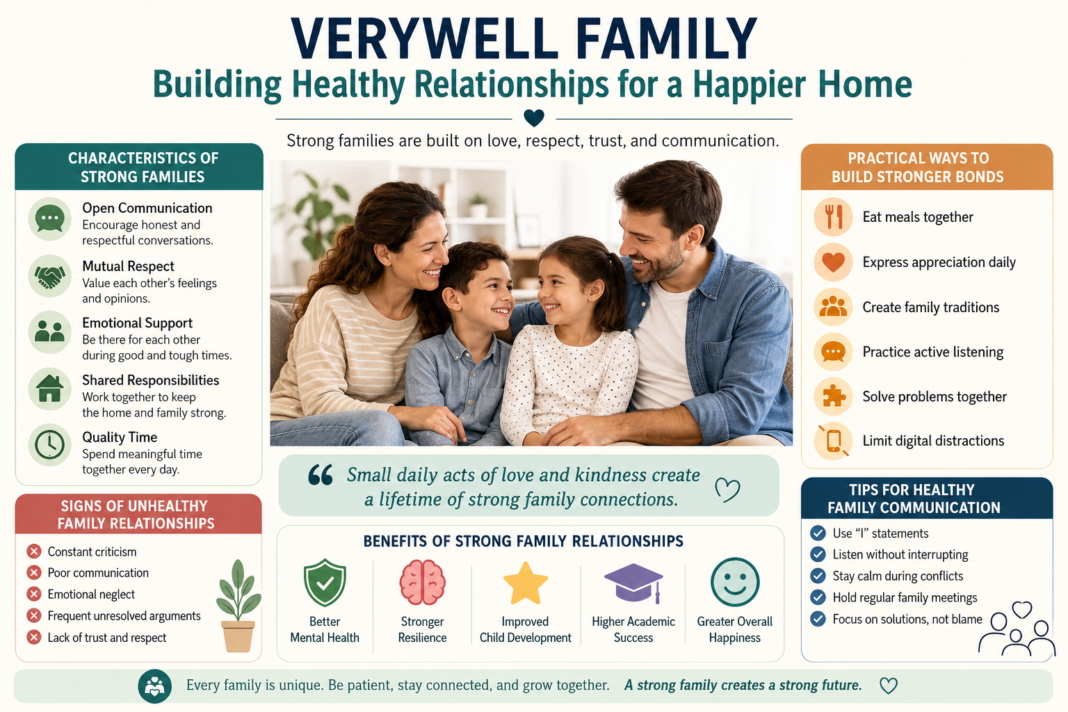

Healthy family relationships are the foundation of emotional well-being, personal growth, and lifelong resilience. Whether you’re raising young children, supporting teenagers, or strengthening bonds with extended family members, creating a positive home environment benefits everyone. Many people searching for Verywell Family resources want practical, evidence-based advice that helps them improve communication, resolve conflicts, and foster stronger connections.
A healthy family doesn’t mean a perfect family. Every household experiences disagreements, stress, and challenges. What sets strong families apart is how they work through those moments—with empathy, respect, and consistent support. This guide explores proven strategies to build healthier relationships, nurture emotional well-being, and create a home where every family member feels valued.
What Is a Healthy Family Relationship?
A healthy family relationship is built on trust, mutual respect, open communication, and emotional support. Family members feel safe expressing their thoughts and emotions without fear of judgment or criticism.
Strong families understand that disagreements are natural. Instead of avoiding conflict, they address issues respectfully and work together to find solutions.
Why Healthy Family Relationships Matter
Healthy relationships at home contribute to:
- Better mental and emotional health
- Reduced stress and anxiety
- Greater self-confidence in children
- Stronger resilience during difficult times
- Improved communication skills
- Higher overall life satisfaction
Research consistently shows that supportive family environments help children develop healthy emotional regulation while also improving adults’ psychological well-being.
Characteristics of Strong Families
Healthy families share several important qualities that strengthen their relationships over time.
Open Communication
Family members openly discuss their feelings, concerns, and achievements. Honest conversations reduce misunderstandings and encourage trust.
Mutual Respect
Everyone deserves to feel heard and appreciated regardless of age. Respecting different opinions creates a positive atmosphere where each family member feels valued.
Emotional Support
Strong families celebrate successes while offering encouragement during difficult moments.
Shared Responsibilities
Working together on household tasks teaches teamwork, accountability, and cooperation.
Quality Time
Regular family activities help strengthen emotional bonds and create lasting memories.
| Healthy Family Trait | Why It Matters | Everyday Example |
| Trust | Builds emotional security | Keeping promises |
| Communication | Prevents misunderstandings | Daily family conversations |
| Respect | Encourages confidence | Listening without interrupting |
| Emotional Support | Strengthens resilience | Comforting each other during setbacks |
| Quality Time | Creates stronger bonds | Weekly family game night |
Signs of Unhealthy Family Relationships
Recognizing unhealthy patterns is the first step toward positive change.
Common warning signs include:
- Constant criticism
- Poor communication
- Emotional neglect
- Frequent unresolved arguments
- Lack of trust
- Controlling behavior
- Ignoring personal boundaries
- Limited emotional support
Healthy vs. Unhealthy Family Dynamics
| Healthy Family | Unhealthy Family |
| Honest communication | Frequent arguments |
| Mutual respect | Constant criticism |
| Emotional support | Emotional distance |
| Healthy boundaries | Controlling behavior |
| Shared problem-solving | Blaming others |
Even long-standing unhealthy habits can improve through consistent effort, patience, and, when necessary, professional guidance.
Benefits of Strong Family Bonds
Positive family relationships influence nearly every aspect of life.
Better Emotional Health
Feeling accepted and supported reduces anxiety, stress, and feelings of isolation.
Improved Child Development
Children raised in nurturing environments often develop stronger self-esteem, empathy, and social skills.
Greater Resilience
Families that communicate effectively are better equipped to handle unexpected challenges such as financial difficulties, illness, or major life transitions.
Stronger Academic and Career Success
Supportive families often encourage healthy habits, goal setting, and lifelong learning, contributing to greater confidence both in school and the workplace.
Common Challenges Modern Families Face
Today’s families face unique pressures that previous generations experienced differently.
Busy Schedules
Between work, school, extracurricular activities, and household responsibilities, meaningful family time often becomes limited.
Example: A family that schedules one technology-free dinner every evening often experiences more meaningful conversations than families who rarely eat together.
Technology and Screen Time
Digital devices connect us but can also reduce face-to-face interaction if not managed thoughtfully.
Financial Stress
Budget concerns may increase tension and misunderstandings. Honest communication about finances helps reduce unnecessary conflict.
Parenting Differences
Parents may disagree on discipline, routines, or expectations. Discussing parenting strategies privately helps present a united approach.
Blended and Multigenerational Families
Different family structures bring unique strengths while requiring flexibility, patience, and understanding.
Practical Ways to Build Stronger Family Relationships
Small daily habits often produce the biggest long-term improvements.
Prioritize Family Meals
Sharing meals creates natural opportunities for conversation and connection.
Practice Active Listening
Give full attention when someone is speaking. Avoid interrupting or immediately offering solutions.
Create Family Traditions
Simple traditions strengthen emotional bonds.
Ideas include:
- Friday movie nights
- Sunday breakfasts
- Holiday baking
- Monthly outdoor adventures
Express Appreciation Daily
Small compliments and expressions of gratitude help family members feel valued.
Solve Problems Together
Instead of assigning blame, encourage collaborative problem-solving.
Schedule One-on-One Time
Children and partners benefit from individual attention, even if it’s only 20 minutes each week.
Limit Digital Distractions
Create screen-free periods during meals and important conversations.
Effective Family Communication Strategies
Healthy communication prevents many conflicts before they escalate.
Use “I” Statements
Instead of saying:
“You never listen.”
Try:
“I feel unheard when I’m interrupted.”
This approach reduces defensiveness and encourages productive discussions.
Hold Family Meetings
Weekly meetings provide an opportunity to discuss schedules, celebrate achievements, and address concerns together.
Stay Calm During Conflict
Taking a short break before continuing a difficult conversation often leads to better outcomes.
Focus on Solutions
Rather than dwelling on mistakes, ask:
“What can we do differently next time?”
Supporting Children’s Emotional Development
Children thrive when they feel emotionally safe.
Parents can encourage healthy development by:
- Validating emotions
- Teaching empathy
- Encouraging independence
- Praising effort instead of perfection
- Helping children solve problems independently
- Modeling respectful behavior
Children learn emotional intelligence by observing the adults around them.
Parenting Styles and Their Impact
Different parenting approaches influence children’s confidence, behavior, and emotional development.
| Parenting Style | Characteristics | Possible Outcomes |
| Authoritative | Supportive with clear expectations | Confidence and responsibility |
| Authoritarian | Strict with limited flexibility | Fear or rebellion |
| Permissive | Warm but few rules | Difficulty with boundaries |
| Uninvolved | Limited guidance | Emotional and behavioral challenges |
Experts generally recommend an authoritative parenting style because it balances warmth with appropriate structure.
Building Strong Relationships Across Different Family Types
Every family is unique.
Healthy relationship strategies apply to:
Single-Parent Families
Consistency, communication, and reliable routines help children feel secure.
Blended Families
Building trust takes time. Respect existing relationships while creating new family traditions.
Adoptive Families
Patience, open communication, and emotional support strengthen attachment and trust.
Multigenerational Homes
Clear expectations and mutual respect help reduce misunderstandings between generations.
Technology and Family Relationships
Technology offers many benefits, including staying connected with loved ones who live far away. However, excessive screen time can interfere with meaningful conversations.
Healthy digital habits include:
- No phones during meals
- Screen-free bedtime routines
- Family outdoor activities
- Shared technology rules
- Monitoring children’s online safety appropriately
Finding balance is more important than eliminating technology altogether.
When Should Families Seek Professional Help?
Sometimes additional support can make a meaningful difference.
Consider speaking with a licensed family therapist if you experience:
- Persistent communication problems
- Ongoing conflict
- Significant life transitions
- Family trauma
- Anxiety or depression affecting relationships
- Serious behavioral concerns in children
Seeking professional guidance is a proactive step toward healthier relationships—not a sign of failure.
Expert Tips for Long-Term Family Success
Strong families aren’t built overnight. They grow through consistent daily choices.
Keep these principles in mind:
- Focus on progress rather than perfection.
- Celebrate small victories together.
- Apologize sincerely when mistakes happen.
- Respect individual personalities.
- Maintain healthy boundaries.
- Continue learning and growing as a family.
Even small acts of kindness repeated consistently create lasting positive change.
Conclusion
Building a healthy family takes intention, patience, and consistent effort—not perfection. By practicing open communication, showing empathy, spending quality time together, and supporting one another through life’s challenges, families can create stronger emotional bonds that last for generations.
Whether you’re looking for trusted verywellfamily-style parenting guidance, communication strategies, or relationship advice, remember that meaningful change often begins with small daily habits. Every conversation, shared meal, and act of kindness contributes to a healthier, happier home where everyone can thrive.
Frequently Asked Questions
What makes a healthy family relationship?
Healthy family relationships are built on trust, communication, respect, emotional support, and shared responsibilities.
How can families improve communication?
Practice active listening, use respectful language, schedule regular family discussions, and address disagreements calmly.
How much quality time should families spend together?
There is no perfect amount, but consistent, meaningful interaction—even 20 to 30 minutes daily—can strengthen relationships.
How does technology affect family relationships?
Technology can improve communication when used thoughtfully, but excessive screen time may reduce face-to-face interaction and emotional connection.
What are common signs of unhealthy family dynamics?
Frequent criticism, unresolved conflict, emotional neglect, controlling behavior, and poor communication are common warning signs.
Can family relationships improve after years of conflict?
Yes. With patience, honest communication, and sometimes professional support, many families rebuild trust and strengthen their relationships over time.