
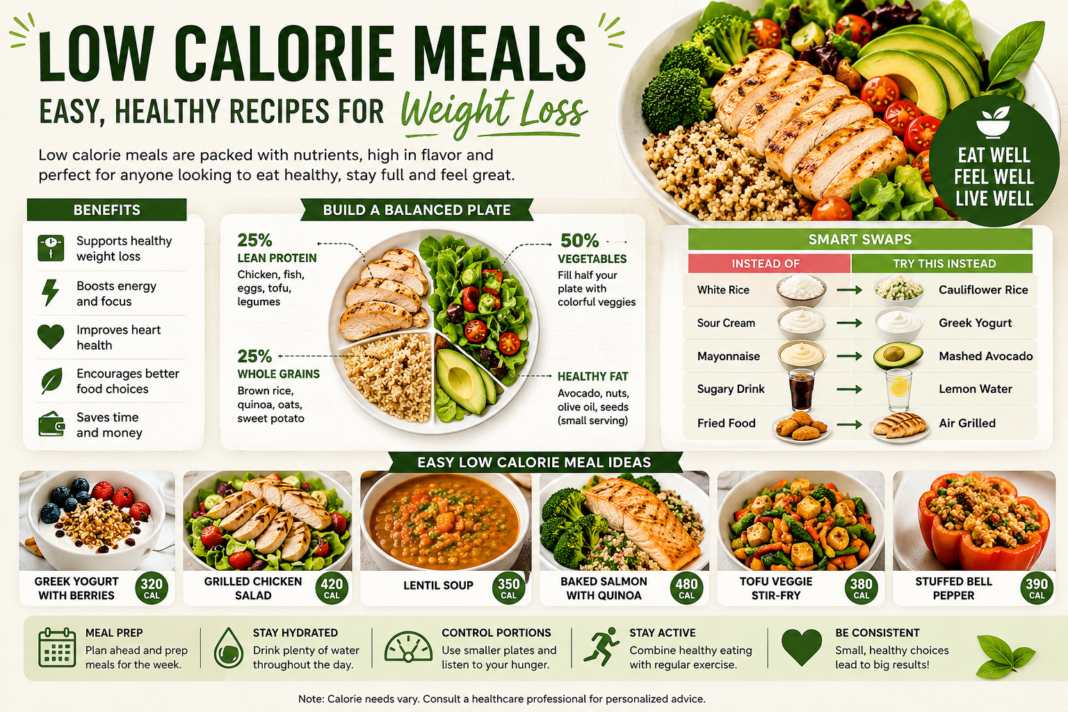

Eating healthy doesn’t mean sacrificing flavor or feeling hungry. The best low calorie meals are packed with lean protein, fiber-rich vegetables, healthy fats, and whole grains that keep you satisfied while supporting your wellness goals. Whether you’re trying to lose weight, maintain a healthy lifestyle, or simply enjoy nutritious home-cooked food, choosing balanced meals can make a big difference.
In this guide, you’ll learn what qualifies as a low-calorie meal, how to build balanced plates, the best ingredients to use, and plenty of delicious meal ideas. You’ll also find practical meal prep tips, a comparison table, and answers to common questions to help you make healthier choices with confidence.
What Are Low Calorie Meals?
A low-calorie meal typically contains enough nutrients to keep you energized without exceeding your daily calorie needs. While individual requirements vary based on age, activity level, and health goals, many nutrition professionals consider the following calorie ranges a practical guideline.
| Meal | Recommended Calories |
| Breakfast | 250–400 |
| Lunch | 350–500 |
| Dinner | 400–600 |
| Snack | 100–200 |
The goal isn’t simply eating fewer calories—it’s choosing nutrient-dense foods that provide vitamins, minerals, protein, and fiber.
Benefits of Eating Low Calorie Meals
Making low calorie meals part of your routine offers several benefits beyond weight management.
- Supports healthy weight loss when combined with a balanced lifestyle
- Helps improve portion control
- Encourages eating more vegetables and lean proteins
- Can reduce intake of processed foods
- Helps maintain steady energy throughout the day
- Makes weekly meal planning easier
- Often saves money by cooking more meals at home
How to Build a Balanced Low Calorie Meal
A nutritious meal should include all major food groups in the right proportions.
Fill Half Your Plate with Vegetables
Vegetables are naturally low in calories while providing fiber and essential nutrients. Great choices include broccoli, spinach, zucchini, cauliflower, mushrooms, cucumbers, and bell peppers.
Choose Lean Protein
Protein helps keep you full for longer and supports muscle maintenance.
Healthy options include:
- Chicken breast
- Turkey
- Eggs
- Salmon
- Tuna
- Shrimp
- Tofu
- Greek yogurt
- Lentils
Add Smart Carbohydrates
Complex carbohydrates provide long-lasting energy.
Examples include:
- Brown rice
- Quinoa
- Sweet potatoes
- Oats
- Whole-grain pasta
Include Healthy Fats
Small portions of healthy fats improve flavor and satisfaction.
Choose:
- Olive oil
- Avocados
- Almonds
- Walnuts
- Chia seeds
Best Foods for Low Calorie Meals
Choosing nutrient-dense ingredients makes healthy cooking easier.
Lean Proteins
- Chicken breast
- Turkey breast
- White fish
- Shrimp
- Eggs
- Cottage cheese
- Tofu
Low-Calorie Vegetables
- Spinach
- Broccoli
- Lettuce
- Cauliflower
- Green beans
- Cabbage
- Zucchini
- Asparagus
Healthy Carbohydrates
- Brown rice
- Quinoa
- Sweet potatoes
- Whole oats
- Barley
Healthy Fats
- Olive oil
- Nuts
- Seeds
- Avocado
Easy Low Calorie Meal Ideas
These simple recipes are satisfying, nutritious, and perfect for busy days.
Breakfast Ideas
- Greek yogurt with berries and chia seeds
- Vegetable omelet with spinach and tomatoes
- Overnight oats with fresh fruit
- Cottage cheese with pineapple
- Banana oatmeal pancakes
Lunch Ideas
- Grilled chicken salad
- Turkey lettuce wraps
- Lentil soup
- Tuna quinoa bowl
- Chickpea vegetable salad
Dinner Ideas
- Lemon garlic baked salmon with broccoli
- Grilled chicken with roasted vegetables
- Turkey chili
- Shrimp stir-fry
- Stuffed bell peppers
- Vegetable curry with cauliflower rice
Vegetarian Options
- Black bean tacos
- Vegetable stir-fry
- Lentil curry
- Spinach mushroom pasta
- Chickpea Buddha bowl
Healthy Ingredient Swaps
Small substitutions can significantly reduce calories without sacrificing taste.
| Instead Of | Try This Instead |
| White rice | Cauliflower rice |
| Sour cream | Plain Greek yogurt |
| Heavy cream | Low-fat milk |
| Mayonnaise | Mashed avocado |
| Potato chips | Air-popped popcorn |
| Sugary soda | Sparkling water with lemon |
These swaps are simple ways to enjoy flavorful low calorie meals every day.
Meal Prep Tips for Success
Preparing meals ahead of time makes healthy eating much easier.
- Cook proteins in batches.
- Roast several vegetables at once.
- Portion meals into containers.
- Freeze extra servings for busy days.
- Keep healthy snacks ready in the refrigerator.
For example, grilling several chicken breasts, cooking quinoa, and roasting mixed vegetables on Sunday can provide multiple lunches and dinners throughout the week.
Common Mistakes to Avoid
Many people unknowingly make mistakes that reduce the effectiveness of a healthy eating plan.
Avoid these common habits:
- Skipping meals
- Eating too little protein
- Drinking sugary beverages
- Ignoring portion sizes
- Eliminating all healthy fats
- Relying on processed “diet” foods
Instead, focus on balanced nutrition rather than simply counting calories.
How to Stay Full While Eating Fewer Calories
Feeling satisfied is one of the keys to long-term success.
Try these strategies:
- Eat protein with every meal.
- Choose high-fiber vegetables.
- Drink enough water throughout the day.
- Eat slowly and mindfully.
- Include healthy fats in moderation.
- Choose whole foods over highly processed snacks.
These habits make low calorie meals more enjoyable and sustainable.
Sample One-Day Low Calorie Meal Plan
| Meal | Example |
| Breakfast | Greek yogurt with berries and oats |
| Snack | Apple with almonds |
| Lunch | Grilled chicken salad with olive oil dressing |
| Snack | Baby carrots and hummus |
| Dinner | Baked salmon with broccoli and quinoa |
This balanced meal plan provides plenty of nutrients while helping maintain a reasonable calorie intake.
Conclusion
Healthy eating doesn’t have to be complicated. By focusing on lean proteins, colorful vegetables, whole grains, and healthy fats, you can create delicious low calorie meals that satisfy your appetite while supporting your health goals. Small changes, such as smarter ingredient swaps and consistent meal prep, can lead to lasting results. Start with a few simple recipes, build balanced plates, and make healthy eating a sustainable part of your everyday routine.
Frequently Asked Questions
What is considered a low calorie meal?
Most balanced low-calorie meals contain approximately 350 to 600 calories, depending on the meal and your daily calorie needs.
Can low calorie meals help with weight loss?
Yes. Eating nutritious meals that fit within your daily calorie goals can support healthy weight loss when combined with regular physical activity.
Are low calorie meals filling?
Absolutely. Meals rich in protein, fiber, and healthy fats are often more satisfying than highly processed foods with similar calorie counts.
What protein is best for low calorie meals?
Chicken breast, turkey, fish, shrimp, eggs, tofu, and Greek yogurt are excellent choices because they provide high-quality protein with relatively few calories.
Can I meal prep low calorie meals?
Yes. Preparing meals in advance saves time, reduces food waste, and makes it easier to stick to healthy eating habits during busy weeks.
Which vegetables are lowest in calories?
Spinach, lettuce, cucumber, broccoli, zucchini, cauliflower, mushrooms, and cabbage are among the best low-calorie vegetables.