
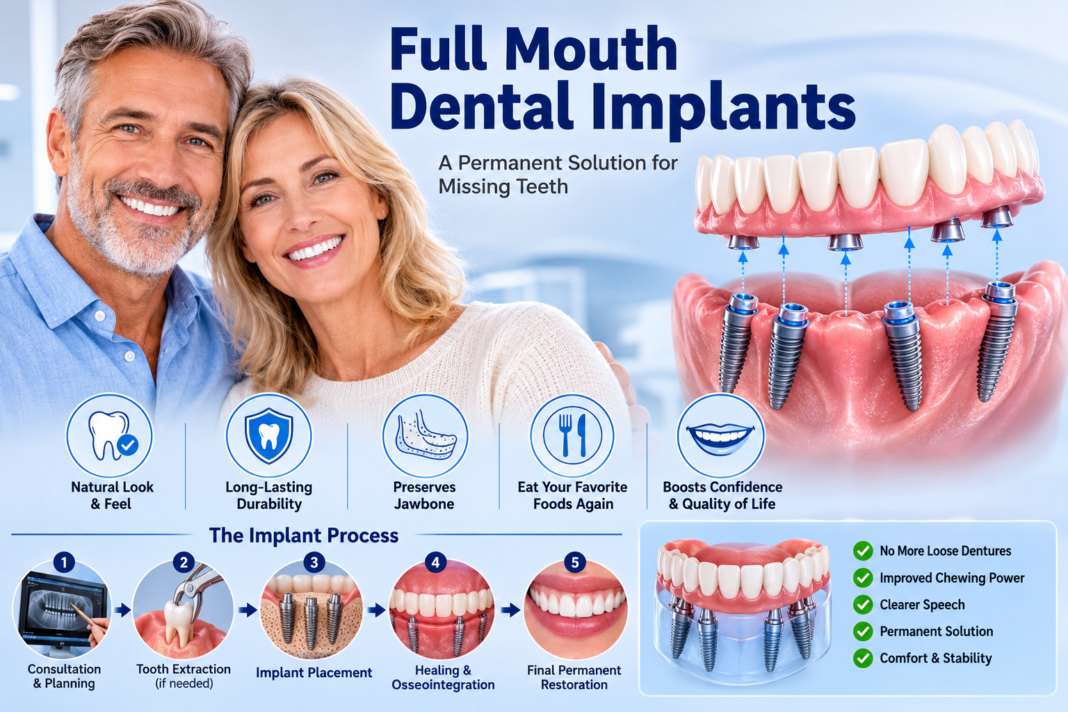

Missing most or all of your teeth can affect much more than your smile. It can make eating difficult, change the way you speak, impact your facial appearance, and reduce your confidence. While traditional dentures have helped millions of people, many now prefer a more permanent and natural-looking solution: full mouth dental implants.
Unlike removable dentures, full mouth dental implants are securely anchored into the jawbone using dental implants, providing exceptional stability, improved chewing ability, and long-term oral health benefits. Whether you’re replacing an entire upper arch, lower arch, or both, this treatment is designed to restore both function and appearance.
In this comprehensive guide, you’ll learn how full mouth dental implants work, who qualifies for treatment, the different implant options available, what to expect during the procedure, and how recovery progresses. By the end, you’ll have a clear understanding of whether this life-changing dental solution may be right for you.
What Are Full Mouth Dental Implants?
Full mouth dental implants are a permanent tooth replacement solution for people who have lost most or all of their natural teeth. Instead of replacing each tooth with an individual implant, several strategically placed implants support a full arch of custom-made replacement teeth.
The implants themselves are small titanium or zirconia posts that are surgically placed into the jawbone. Over time, they fuse with the bone through a natural process called osseointegration, creating a stable foundation for the final prosthetic teeth.
Unlike traditional dentures that rest on the gums, full mouth dental implants function much like natural teeth, allowing patients to eat, speak, and smile with confidence.
How Full Mouth Dental Implants Work
A complete implant-supported restoration consists of three key components:
- Dental Implants: Artificial tooth roots placed into the jawbone.
- Abutments: Connectors that attach the implants to the prosthetic teeth.
- Custom Prosthesis: A fixed bridge or full arch of replacement teeth designed to match your natural smile.
Together, these components create a durable and secure restoration that feels more natural than removable dentures.
How They Differ from Traditional Dentures
Many patients compare full mouth dental implants with conventional dentures before making a decision.
| Feature | Full Mouth Dental Implants | Traditional Dentures |
| Stability | Fixed in place | Can shift or slip |
| Comfort | Feels similar to natural teeth | May cause sore spots |
| Chewing Ability | Strong bite force | Limited chewing efficiency |
| Jawbone Preservation | Helps reduce bone loss | Does not prevent bone loss |
| Lifespan | Can last decades with proper care | Typically replaced every 5–10 years |
| Daily Maintenance | Brush and floss like natural teeth | Remove for cleaning |
For many people, implants provide greater comfort, better function, and improved confidence in daily life.
Who Is a Good Candidate for Full Mouth Dental Implants?
Not everyone is an ideal candidate immediately, but many people can become eligible with proper treatment planning.
Ideal Candidates
You may be a suitable candidate if you:
- Have multiple missing or severely damaged teeth.
- Wear dentures and want a fixed alternative.
- Have healthy gums or are willing to treat gum disease.
- Have adequate jawbone density or qualify for bone grafting.
- Are in good general health.
- Maintain good oral hygiene habits.
Who May Need Additional Treatment First?
Some patients require preliminary procedures before implant placement, including:
- Treatment for advanced gum disease
- Tooth extractions
- Bone grafting to rebuild the jawbone
- Sinus lift procedures (for some upper jaw cases)
- Management of uncontrolled medical conditions, such as diabetes
Smoking can also increase the risk of implant complications. Dentists often recommend quitting or significantly reducing smoking before and after surgery to improve healing.
Quick Self-Assessment Checklist
Ask yourself the following questions:
- Are you missing most or all of your teeth?
- Do your dentures move while eating or speaking?
- Are several teeth beyond repair?
- Do you want a more stable, long-term solution?
- Are you committed to maintaining good oral hygiene?
If you answered “yes” to most of these questions, scheduling a consultation with an implant dentist is the next logical step.
Types of Full Mouth Dental Implant Solutions
Not every patient requires the same treatment. The best option depends on your oral health, bone density, budget, and treatment goals.
All-on-4 Dental Implants
All-on-4 uses four strategically positioned implants to support a complete arch of replacement teeth.
Advantages
- Fewer implants required
- Often avoids extensive bone grafting
- Faster treatment for many patients
- Cost-effective compared to placing individual implants
This option is commonly recommended for patients with moderate bone loss.
All-on-6 Dental Implants
All-on-6 follows the same concept but uses six implants instead of four.
Benefits
- Additional stability
- Better distribution of chewing forces
- Suitable for patients with higher bite pressure
- May improve long-term durability
Dentists may recommend All-on-6 for younger patients or those with sufficient jawbone volume.
Implant-Supported Dentures
Unlike traditional dentures, implant-supported dentures attach securely to implants.
They may be:
- Removable for cleaning
- Fixed permanently by the dentist
This option provides significantly greater stability than conventional dentures while remaining more affordable than some fixed bridge solutions.
Individual Implant Restorations
For patients who have lost many teeth but still retain several healthy ones, dentists may recommend multiple individual implants rather than a full-arch restoration.
This customized approach preserves healthy natural teeth whenever possible.
Comparing Your Options
| Treatment | Number of Implants | Stability | Best For |
| All-on-4 | 4 | Excellent | Moderate bone loss |
| All-on-6 | 6 | Outstanding | Greater stability and long-term support |
| Implant-Supported Dentures | 2–6 | Very Good | Patients seeking improved denture retention |
| Individual Implants | Varies | Excellent | Patients with some healthy remaining teeth |
Your implant dentist will evaluate your oral health and recommend the solution that best matches your clinical needs and lifestyle.
Benefits of Full Mouth Dental Implants
One of the biggest reasons patients choose full mouth dental implants is the significant improvement in quality of life they can provide.
Natural Appearance
Modern implant restorations are carefully designed to match the shape, color, and proportions of natural teeth, creating a realistic smile.
Improved Chewing Ability
Unlike loose dentures, implants remain firmly in place, allowing you to enjoy a wider variety of foods, including firmer fruits, vegetables, and proteins.
Clearer Speech
Poorly fitting dentures can shift during conversation, affecting pronunciation. Fixed implants provide greater stability, making speech feel more natural.
Jawbone Preservation
When teeth are missing, the jawbone gradually shrinks because it no longer receives stimulation from tooth roots. Dental implants help maintain bone density by stimulating the jaw during chewing.
Better Facial Support
Bone loss can cause facial muscles to sag over time, creating an older appearance. Implant-supported restorations help maintain facial structure and support.
Long-Term Solution
With proper oral hygiene and routine dental visits, dental implants can last for decades, making them one of the most durable tooth replacement options available.
Increased Confidence
Many patients report feeling more comfortable smiling, speaking, and eating in social situations after receiving full mouth dental implants.
Step-by-Step Full Mouth Dental Implant Procedure
Understanding the treatment process can help reduce anxiety and set realistic expectations.
Initial Consultation
Your journey begins with a comprehensive dental examination.
The dentist may perform:
- A full oral examination
- Digital X-rays
- 3D CBCT imaging
- Bite analysis
- Medical history review
This information helps determine whether implants are appropriate and allows the dentist to create a personalized treatment plan.
Treatment Planning
Using advanced digital imaging, your dentist identifies the ideal implant positions while considering bone quality, nerve locations, and aesthetic goals.
Every treatment plan is customized based on the patient’s anatomy and desired outcome.
Tooth Extractions (If Necessary)
If damaged or failing teeth remain, they are typically removed before implant placement. In some cases, extractions and implant surgery can occur during the same appointment.
Bone Grafting (When Needed)
Patients with insufficient jawbone may require bone grafting to create a stronger foundation for implants. Healing from grafting can take several months before implant placement proceeds.
Implant Placement Surgery
During surgery:
- Local anesthesia or sedation is administered.
- Small openings are created in the jawbone.
- Dental implants are carefully inserted.
- The gums are closed around the implants.
Depending on the treatment plan, temporary teeth may be attached on the same day or after an initial healing period.
Healing and Osseointegration
Over the next several months, the implants gradually fuse with the jawbone in a process known as osseointegration.
This biological bonding creates exceptional strength and stability, allowing the implants to function much like natural tooth roots.
Recovery Timeline and Healing Process
Healing after full mouth dental implants varies from person to person, depending on factors such as overall health, bone quality, and whether bone grafting was required. Understanding the recovery stages can help you prepare for a smoother experience.
First 24 Hours
Immediately after surgery, it is normal to experience:
- Mild bleeding
- Swelling
- Minor discomfort
- Jaw stiffness
Recommended Care
- Rest as much as possible.
- Apply ice packs to reduce swelling.
- Take prescribed medications as directed.
- Avoid smoking and alcohol.
- Stick to cool, soft foods.
First Week
During the first week, swelling and tenderness gradually decrease. Most patients begin feeling noticeably better after three to five days.
You should:
- Maintain gentle oral hygiene.
- Rinse with a prescribed mouthwash if recommended.
- Avoid strenuous exercise.
- Eat soft foods that require minimal chewing.
Weeks 2–6
The gums continue healing while the implants begin bonding with the jawbone. Although you may feel comfortable, the implants are still integrating beneath the surface.
Continue:
- Following your dentist’s instructions.
- Attending follow-up appointments.
- Avoiding hard or sticky foods.
Months 3–6
For many patients, osseointegration is complete within three to six months. Once the implants are stable, the dentist attaches the final custom restoration.
At this stage, patients usually regain:
- Strong chewing ability
- Improved speech
- Greater comfort
- A natural-looking smile
Recovery Timeline
| Recovery Stage | What to Expect | Recommended Care |
| First 24 Hours | Swelling, mild bleeding | Rest, ice packs, soft foods |
| Week 1 | Reduced discomfort | Gentle cleaning, medication |
| Weeks 2–6 | Gum healing | Soft diet, follow-up visits |
| Months 3–6 | Implant integration | Final restoration placement |
Does the Procedure Hurt?
One of the most common questions about full mouth dental implants is whether the procedure is painful.
During surgery, local anesthesia or dental sedation keeps you comfortable. Most patients report feeling pressure rather than pain.
After surgery, discomfort is typically manageable with prescribed or over-the-counter pain medication. Many patients compare the recovery to having multiple teeth extracted.
Most soreness improves significantly within the first week.
How Much Do Full Mouth Dental Implants Cost?
The cost of full mouth dental implants varies widely because every patient’s treatment plan is unique.
Several factors influence the total investment, including:
- Number of implants required
- Implant system used
- Bone grafting or sinus lift procedures
- Type of final restoration
- Sedation or anesthesia
- Dentist’s expertise
- Geographic location
Rather than focusing solely on upfront cost, many patients consider the long-term value. While implants generally require a larger initial investment than traditional dentures, they often last much longer and may reduce future replacement costs.
Does Insurance Cover Full Mouth Dental Implants?
Coverage depends on your insurance provider and policy.
Some plans may contribute toward:
- Tooth extractions
- Diagnostic imaging
- Crowns or prosthetic teeth
Many dental practices also offer financing options or payment plans to help make treatment more affordable.
Risks, Complications, and Success Rates
Like any surgical procedure, full mouth dental implants carry some risks, although serious complications are uncommon when treatment is performed by an experienced implant dentist.
Potential risks include:
- Infection
- Implant failure
- Nerve irritation
- Sinus complications (upper jaw)
- Delayed healing
- Peri-implantitis (inflammation around implants)
Certain factors, such as smoking, uncontrolled diabetes, and poor oral hygiene, can increase the likelihood of complications.
Fortunately, dental implants have a high long-term success rate when patients follow professional care recommendations and maintain regular dental checkups.
How Long Do Full Mouth Dental Implants Last?
One of the biggest advantages of full mouth dental implants is their durability.
The implants themselves can often last for decades with proper care. The prosthetic bridge or restoration may eventually require maintenance or replacement due to normal wear, but regular professional care can significantly extend its lifespan.
Factors that influence longevity include:
- Daily oral hygiene
- Smoking habits
- Teeth grinding
- Routine dental examinations
- Overall health
Good maintenance is the key to protecting your investment.
Caring for Full Mouth Dental Implants
Although implants cannot develop cavities, the surrounding gums and bone still require careful attention.
Daily care should include:
- Brushing twice a day with a soft-bristled toothbrush
- Cleaning beneath the bridge using floss designed for implants or a water flosser
- Using interdental brushes if recommended
- Attending routine dental cleanings
- Avoiding tobacco products
Daily Implant Care Checklist
- ✔ Brush morning and night
- ✔ Clean around implants thoroughly
- ✔ Use recommended oral hygiene tools
- ✔ Visit your dentist regularly
- ✔ Report any swelling or discomfort promptly
Consistent care helps preserve both the implants and the surrounding tissues.
Conclusion
Full mouth dental implants offer a reliable, long-lasting solution for people seeking to restore an entire smile. Compared with removable dentures, they provide greater stability, improved chewing ability, clearer speech, and better support for long-term oral health.
While the treatment process requires careful planning and a commitment to proper aftercare, many patients find the lasting comfort, confidence, and function well worth the investment. Because every case is unique, the best first step is to schedule a consultation with a qualified implant dentist who can evaluate your oral health and recommend the most appropriate treatment plan.
Frequently Asked Questions
1. How many implants are needed for a full mouth?
Most full-arch restorations use four to six implants per arch, although the exact number depends on your individual treatment plan.
2. How long does the entire process take?
Treatment can take several months, especially if extractions or bone grafting are required. Some patients qualify for immediate temporary teeth.
3. Are full mouth dental implants permanent?
The implants are designed to be a long-term solution. The prosthetic teeth may eventually require maintenance or replacement due to normal wear.
4. Can smokers get full mouth dental implants?
Yes, but smoking increases the risk of complications and implant failure. Quitting or reducing smoking improves treatment outcomes.
5. Will I have teeth while the implants heal?
Many patients receive temporary teeth during the healing phase, depending on their treatment plan.
6. How do I clean full mouth dental implants?
Brush twice daily, clean beneath the restoration using specialized floss or a water flosser, and attend regular professional cleanings.