
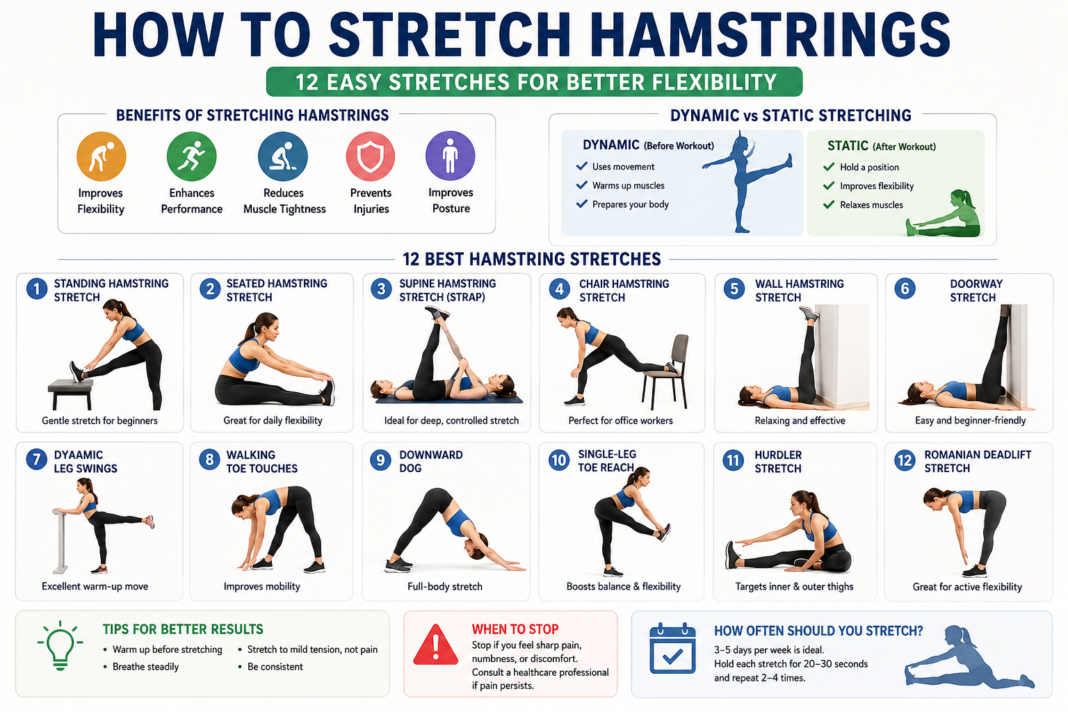

Tight hamstrings are a common problem for office workers, runners, athletes, and anyone who spends long hours sitting. Learning how to stretch hamstrings correctly can improve flexibility, reduce muscle stiffness, enhance athletic performance, and make everyday movements more comfortable.
However, simply bending over to touch your toes isn’t always the best approach. Proper stretching technique helps you gain flexibility safely while reducing the risk of muscle strain.
In this guide, you’ll learn why hamstrings become tight, the best stretches for different fitness levels, common mistakes to avoid, and a simple daily routine you can follow to improve mobility.
What Are the Hamstrings?
The hamstrings are a group of three muscles located at the back of your thigh. They connect your pelvis to your lower leg and help you:
- Bend your knee
- Extend your hip
- Walk and run efficiently
- Jump and squat
- Maintain balance and posture
When these muscles become tight, even simple activities like climbing stairs or bending down can feel uncomfortable.
Why Do Hamstrings Become Tight?
Several everyday habits contribute to hamstring tightness:
- Sitting for long periods
- Skipping warm-ups before exercise
- Overtraining
- Poor flexibility
- Muscle imbalances
- Aging and reduced activity
Fortunately, regular stretching can gradually restore flexibility and improve your range of motion.
Benefits of Stretching Your Hamstrings
Consistent hamstring stretching offers more than just flexibility.
Benefits include:
- Improved mobility
- Better posture
- Increased range of motion
- Reduced muscle stiffness
- Improved athletic performance
- Easier walking and bending
- Lower risk of muscle strains
- Better movement quality during workouts
Remember that stretching supports healthy movement but isn’t a substitute for medical treatment if you have a serious injury.
Dynamic vs. Static Hamstring Stretching
Choosing the right type of stretch depends on when you’re exercising.
| Dynamic Stretching | Static Stretching |
| Best before workouts | Best after exercise |
| Uses controlled movement | Hold one position |
| Warms muscles | Improves flexibility |
| Helps prepare for activity | Helps reduce muscle tightness |
For the best results, use dynamic stretches before exercise and static stretches afterward.
How to Stretch Hamstrings Correctly
Proper technique is essential if you want lasting flexibility improvements.
Follow these simple guidelines:
- Warm up for 5–10 minutes before stretching.
- Hinge from your hips instead of rounding your back.
- Keep your movements slow and controlled.
- Stretch until you feel gentle tension—not pain.
- Breathe normally throughout the stretch.
- Hold each stretch for 20–30 seconds.
- Repeat each stretch two or three times.
Consistency matters much more than forcing a deeper stretch.
12 Best Hamstring Stretches
1. Standing Hamstring Stretch
Place one heel on a low step, keep your back straight, and lean forward from your hips.
Best for: Beginners
2. Seated Hamstring Stretch
Sit with one leg extended and gently lean toward your foot while keeping your spine neutral.
Best for: Daily flexibility
3. Supine Hamstring Stretch with a Strap
Lie on your back, loop a towel or strap around your foot, and slowly pull your leg upward.
Best for: Gentle stretching
4. Chair Hamstring Stretch
Rest one heel on a chair and lean forward slightly.
Best for: Office workers
5. Wall Hamstring Stretch
Lie beside a wall with one leg extended upward against it.
Best for: Deep relaxation
6. Doorway Stretch
Raise one leg against a doorway while lying on the floor.
Best for: Controlled flexibility
7. Dynamic Leg Swings
Swing one leg forward and backward in a smooth motion.
Best for: Warm-ups
8. Walking Toe Touches
Walk forward while gently reaching toward your toes with each step.
Best for: Pre-workout mobility
9. Downward Dog
Lift your hips while pressing your heels toward the floor.
Best for: Full-body flexibility
10. Single-Leg Toe Reach
Balance on one leg while reaching toward the opposite foot.
Best for: Balance and flexibility
11. Hurdler Stretch
Sit with one leg straight and the other bent inward before leaning forward.
Best for: Intermediate flexibility
12. Bodyweight Romanian Deadlift Stretch
Practice a hip hinge while keeping your spine neutral.
Best for: Active mobility
Best Hamstring Stretches for Different Needs
Different people benefit from different stretching styles.
| Goal | Recommended Stretch |
| Beginners | Standing Stretch |
| Office Workers | Chair Stretch |
| Runners | Dynamic Leg Swings |
| Seniors | Strap Stretch |
| Athletes | Romanian Deadlift Stretch |
| Post-Workout Recovery | Seated Stretch |
Choosing stretches that match your lifestyle helps you stay consistent.
A Simple 5-Minute Daily Routine
Try this quick routine every day:
- Dynamic Leg Swings – 1 minute
- Standing Stretch – 1 minute
- Strap Stretch – 1 minute
- Wall Stretch – 1 minute
- Seated Stretch – 1 minute
Following this routine regularly can gradually improve flexibility over several weeks.
Common Hamstring Stretching Mistakes
Avoid these common errors:
- Stretching cold muscles
- Rounding your back
- Bouncing during stretches
- Locking your knees
- Holding your breath
- Stretching through sharp pain
- Being inconsistent
Correct technique is safer and more effective than pushing too hard.
How Often Should You Stretch Hamstrings?
For most healthy adults:
- Stretch 3–5 days per week.
- Hold each stretch for 20–30 seconds.
- Perform 2–4 repetitions.
- Stretch daily if flexibility is your primary goal.
Many people notice small improvements within two to four weeks of consistent practice.
Stretching vs. Strengthening
Stretching improves flexibility, but strengthening keeps muscles healthy and resilient.
| Stretching | Strengthening |
| Increases flexibility | Builds muscle stability |
| Improves range of motion | Supports joints |
| Reduces stiffness | Improves athletic performance |
Combining both approaches often produces the best long-term results.
When Should You Stop Stretching?
While mild tension is normal, stop immediately if you experience:
- Sharp pain
- Sudden popping sensations
- Significant swelling
- Severe bruising
- Numbness or tingling
If symptoms persist, consult a qualified healthcare professional for evaluation.
Expert Tips for Better Results
To maximize flexibility:
- Stretch after a light warm-up.
- Practice consistently instead of stretching aggressively.
- Stay hydrated.
- Pair stretching with lower-body strength exercises.
- Focus on proper breathing.
- Gradually increase flexibility over time.
Small improvements made consistently are more effective than occasional intense stretching sessions.
Conclusion
Learning how to stretch hamstrings properly can make everyday movement easier, improve flexibility, and support better physical performance. By combining dynamic warm-ups, static stretches, and consistent practice, you can gradually reduce muscle tightness and increase your range of motion. Focus on proper technique, avoid overstretching, and build stretching into your regular fitness routine for lasting results.
Frequently Asked Questions
1. How long should I hold a hamstring stretch?
Hold each stretch for 20 to 30 seconds and repeat it two to four times.
2. Is it safe to stretch hamstrings every day?
Yes. Gentle daily stretching is generally safe for healthy individuals and can improve flexibility over time.
3. Should stretching hurt?
No. You should feel mild tension, not sharp or severe pain.
4. Is it better to stretch before or after exercise?
Use dynamic stretches before exercise and static stretches after workouts.
5. Why are my hamstrings always tight?
Common causes include prolonged sitting, limited mobility, muscle imbalances, and insufficient stretching.
6. How long does it take to improve hamstring flexibility?
With regular practice, many people notice improvements within two to four weeks, though results vary.