
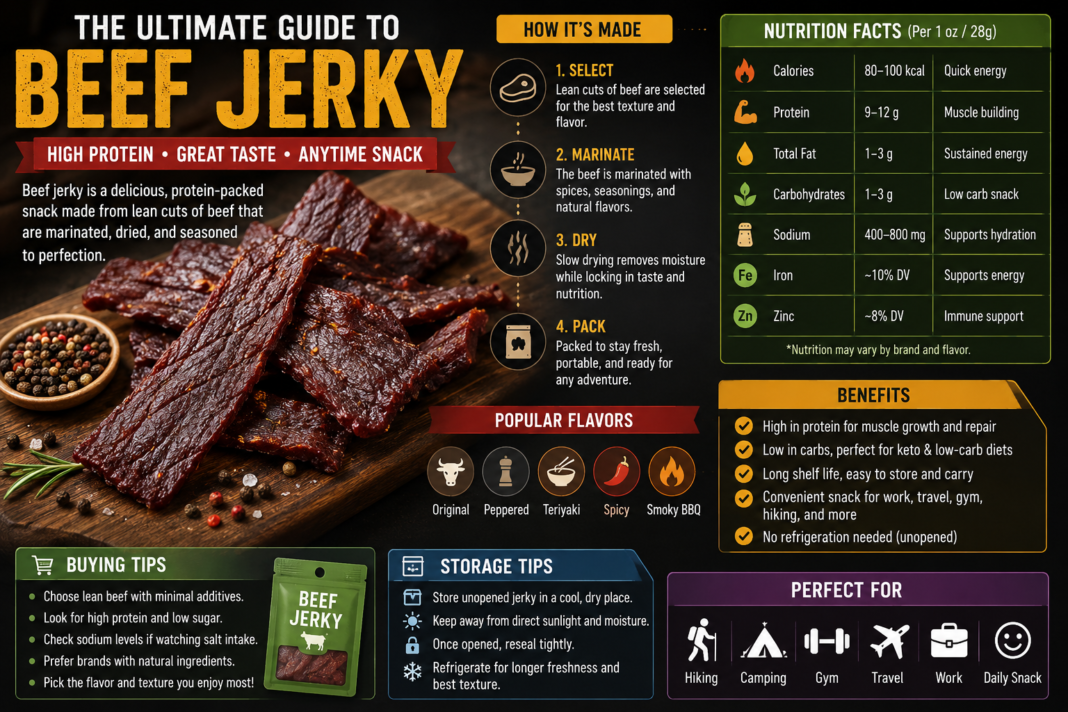

Beef jerky has become one of the most popular protein snacks worldwide, loved for its convenience, flavor, and long shelf life. Whether you’re hiking, working, or just looking for a high-protein snack, beef jerky offers a practical solution that fits modern lifestyles.
In this comprehensive guide, we’ll break down everything you need to know about beef jerky, from how it’s made to its nutritional value and buying strategies.
What Beef Jerky Really Is and Why It’s So Popular
Beef jerky is a dried meat snack made by removing moisture from lean cuts of beef, preserving flavor and extending shelf life. It is widely known for its chewy texture and concentrated taste, making it a go-to option for protein on the move.
The popularity of beef jerky continues to rise due to its portability and high protein density. Many people also appreciate its role as a healthier alternative to processed snacks.
The History and Evolution of Beef Jerky
The origins of beef jerky trace back to ancient civilizations that used drying techniques to preserve meat for long journeys and survival. Indigenous cultures in the Americas played a key role in developing early versions of what we now know as beef jerky.
Over time, beef jerky evolved from a survival food into a mainstream commercial snack. Modern production techniques have refined its taste, texture, and variety, making it widely available in supermarkets worldwide.
How Beef Jerky Is Made in Modern Production
The production of beef jerky begins with selecting lean cuts of meat, which are then trimmed and sliced into thin strips. These strips are marinated with spices, salt, and flavorings before undergoing dehydration.
Drying methods such as air drying, smoking, or dehydrating machines remove moisture while preserving flavor. This process ensures that beef jerky remains shelf-stable and safe for long-term consumption.
Nutritional Profile and What Makes It a Protein Powerhouse
Beef jerky is known for its high protein content, making it a favorite among athletes and fitness enthusiasts. It is low in carbohydrates and provides essential nutrients like iron and zinc.
However, sodium levels can vary depending on preparation methods. Understanding the nutritional balance helps consumers make informed choices when selecting beef jerky products.
| Nutrient (per 1 oz serving) | Average Amount | Benefit |
| Protein | 9–12g | Muscle support |
| Fat | 1–3g | Energy source |
| Sodium | 400–800mg | Flavor & preservation |
| Iron | 10% DV | Oxygen transport |
| Zinc | 8% DV | Immune support |
This breakdown shows why beef jerky is often considered a compact yet nutrient-rich snack option.
Health Benefits and Potential Concerns You Should Know
One of the biggest advantages of beef jerky is its high protein density, which supports muscle recovery and satiety. It is especially useful for people following low-carb or keto lifestyles.
However, moderation is important due to sodium and preservative content in some varieties. Choosing natural or low-sodium beef jerky options can help reduce potential health concerns.
Role in Fitness, Keto, and High-Protein Diets
Beef jerky plays a significant role in high-protein diets, especially for individuals focused on muscle gain and fat loss. Its macronutrient profile supports sustained energy and satiety between meals.
For ketogenic and low-carb diets, it provides an ideal snack option due to its minimal carbohydrate content. Many keto followers incorporate beef jerky into meal plans for convenient protein intake.
Athletes and gym-goers often rely on jerky for post-workout recovery due to its amino acid content. It helps support muscle repair without requiring preparation or refrigeration.
Endurance athletes also appreciate its portability during long training sessions or outdoor activities. It delivers quick nutrition without the bulk of traditional meals.
Popular Types and Flavor Variations of Beef Jerky
Beef jerky comes in a wide variety of flavors, ranging from classic black pepper to teriyaki, spicy chili, and smoky barbecue. Each flavor profile offers a different taste experience.
Some premium brands also offer organic, grass-fed, or sugar-free beef jerky. These variations cater to different dietary preferences and lifestyle needs.
Smart Buying Guide for Choosing Quality Beef Jerky
When purchasing beef jerky, ingredient quality should be your top priority. Look for products with minimal additives and clear labeling.
Texture, flavor, and protein content also play a key role in selection. High-quality beef jerky should be firm but not overly dry or brittle.
| Factor | What to Look For | Why It Matters |
| Ingredients | Simple, natural | Healthier option |
| Protein content | High (9g+) | Better nutrition |
| Sodium level | Moderate or low | Heart health |
| Flavor source | Natural spices | Better taste |
| Texture | Balanced chewiness | Quality indicator |
This guide helps ensure you choose the best beef jerky for your needs without compromising on quality.
Consumer Misconceptions and Common Myths About Beef Jerky
One common misconception is that all beef jerky is unhealthy due to high sodium content. While some varieties are high in salt, many low-sodium options are now widely available.
Another myth is that jerky is heavily processed and low in nutrition. In reality, high-quality versions retain significant protein and essential minerals.
Some consumers believe jerky is only suitable for outdoor activities, but it has become a mainstream snack. It is now commonly used in offices, gyms, and travel routines.
There is also confusion around preservatives, with many assuming all jerky contains artificial chemicals. However, natural and organic varieties use minimal processing and clean ingredients.
Proper Storage and Shelf Life Best Practices
Beef jerky is valued for its long shelf life, making it a reliable snack for travel and emergencies. When stored properly in airtight packaging, it can last several months.
To maintain freshness, keep beef jerky in a cool, dry place away from direct sunlight. Once opened, refrigeration can help preserve its texture and flavor.
Homemade Beef Jerky and How It’s Prepared at Home
Making beef jerky at home allows full control over ingredients, flavor, and sodium levels. It typically involves slicing lean beef, marinating it, and dehydrating it in an oven or food dehydrator.
Home preparation also allows experimentation with spices and marinades, creating unique flavor profiles tailored to personal preference.
“Homemade jerky gives you control over flavor and nutrition, making it a healthier alternative to many store-bought options.”
Market Trends and the Future of Beef Jerky Industry
The beef jerky market has expanded significantly due to rising demand for high-protein snacks. Consumers are increasingly seeking clean-label, organic, and sustainably sourced options.
Innovation in flavors and packaging is also shaping the future of beef jerky, with brands focusing on health-conscious and eco-friendly production methods.
Global Market Growth and Industry Expansion Trends
The global snack industry has seen a strong rise in demand for protein-rich foods, with beef jerky playing a key role. Health-conscious consumers are driving this growth across multiple regions.
Emerging markets are also contributing to increased production and consumption, especially in Asia and Europe. This expansion has encouraged brands to diversify flavors and packaging formats.
E-commerce has further accelerated growth by making specialty jerky brands more accessible. Subscription models and online stores are reshaping how consumers purchase protein snacks.
Sustainability trends are influencing production methods, with companies focusing on ethically sourced beef and eco-friendly packaging. This shift reflects changing consumer values in the food industry.
Conclusion
Beef jerky continues to stand out as a versatile, protein-rich snack that fits modern dietary needs and active lifestyles. Its long history, nutritional benefits, and evolving flavors make it a staple in global snack culture.
As demand grows, beef jerky is expected to become even more refined, healthier, and diverse, offering something for every type of consumer.
\
Frequently Asked Questions About Beef Jerky
What is beef jerky made from?
Beef jerky is made from lean cuts of beef that are trimmed, seasoned, and dried to remove moisture while preserving flavor and nutrition.
Is beef jerky a healthy snack?
Beef jerky can be a healthy snack when consumed in moderation, especially when choosing low-sodium and natural ingredient options.
How long does beef jerky last?
Properly stored beef jerky can last several months unopened, and a few weeks once opened if refrigerated.
Can beef jerky help with fitness goals?
Yes, beef jerky is high in protein, making it useful for muscle recovery and supporting fitness and weight management goals.
What should I look for when buying beef jerky?
Look for high protein content, simple ingredients, and moderate sodium levels to ensure you get quality beef jerky.
Is homemade beef jerky better than store-bought?
Homemade beef jerky allows better control over ingredients and nutrition, making it a preferred option for health-conscious individuals.
You May Also Read : Mr Beast Chocolate