
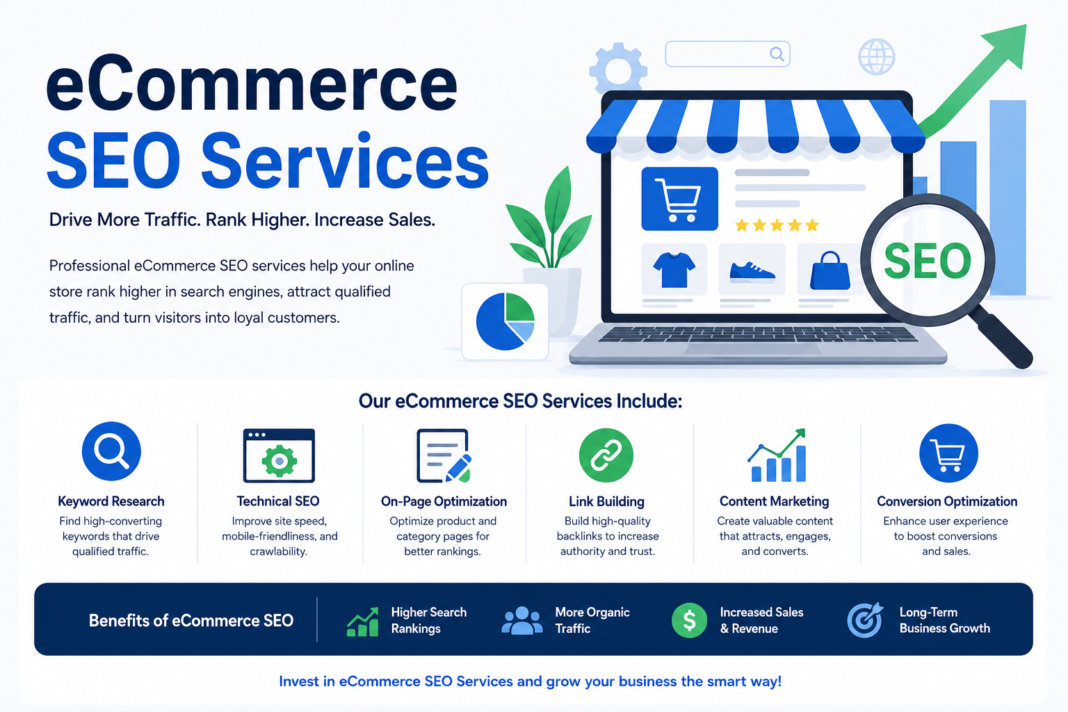

eCommerce SEO Services
Running an online store is more competitive than ever. Thousands of businesses compete for the same customers, making it increasingly difficult to appear on the first page of search engines. While paid advertising can generate immediate visibility, sustainable growth comes from building strong organic search performance. That’s where eCommerce SEO Services become an essential investment for businesses that want long-term success. By optimizing every aspect of an online store, businesses can attract highly qualified visitors who are actively searching for their products through organic search and search engine rankings.
Whether you’re launching a new online shop or managing an established eCommerce brand, a well-executed SEO strategy improves visibility, increases qualified traffic, and boosts conversions. Professional optimization goes beyond adding keywords to product pages. It involves technical improvements, content development, user experience enhancements, structured data, and strategic link building. Together, these efforts create a website that both customers and search engines trust through stronger website optimization and digital marketing strategy.
Why eCommerce SEO Services Matter
Modern consumers rely heavily on search engines before making purchasing decisions. When your products appear prominently for relevant searches, your business gains valuable exposure without paying for every click. Investing in eCommerce SEO Services helps online retailers build consistent traffic while lowering long-term customer acquisition costs through better keyword targeting and online visibility.
Unlike temporary advertising campaigns, SEO continues delivering value long after optimization work has been completed. Higher rankings increase brand credibility, encourage customer trust, and generate qualified visitors with genuine purchase intent. Businesses that consistently improve their websites often enjoy sustainable growth driven by search intent and organic traffic.
Understanding How eCommerce SEO Works
Search engine optimization for online stores combines technical improvements, high-quality content, keyword research, and website usability into one comprehensive strategy. Every category page, product page, blog article, and technical element contributes to search performance through effective technical SEO and content optimization.
Search engines evaluate hundreds of ranking signals before deciding which pages deserve top positions. Factors such as loading speed, mobile responsiveness, structured data, content quality, internal linking, and backlinks all influence rankings. Successful online stores optimize every layer of their websites using site architecture and user experience.
The Core Components of Professional eCommerce SEO Services
Professional SEO agencies typically provide a complete strategy rather than isolated optimizations. Each component strengthens another, creating long-term organic growth that compounds over time with better SEO audit and competitive analysis.
Instead of chasing algorithm updates, experienced SEO specialists focus on building websites that genuinely help users. Search engines increasingly reward stores that deliver excellent shopping experiences, useful information, and technically sound websites supported by Google algorithms and customer engagement.
Keyword Research That Drives Revenue
Keyword research is the foundation of every successful SEO campaign. Rather than targeting only high-volume search terms, experienced professionals identify keywords with strong buying intent that are more likely to convert into sales through commercial intent and long-tail keywords.
For example, someone searching for “running shoes” may simply be browsing, while someone searching for “best waterproof trail running shoes for men” is much closer to making a purchase. Effective keyword targeting helps businesses attract visitors who already know what they want using buyer intent and conversion optimization.
Product Page Optimization
Every product page should function as both a sales page and an SEO asset. Strong product optimization includes compelling titles, descriptive copy, optimized images, structured data, FAQs, and persuasive calls to action enhanced with product descriptions and schema markup.
Many online stores make the mistake of copying manufacturer descriptions across hundreds of products. Unique product content helps search engines understand page relevance while providing customers with valuable purchasing information through duplicate content prevention and on-page SEO.
Category Page Optimization
Category pages often generate significantly more organic traffic than individual product pages because they target broader search queries. Optimized categories organize products logically while offering valuable informational content using category optimization and internal linking.
Instead of displaying only products, effective category pages include descriptive introductions, buying advice, filters, FAQs, and supporting content that helps customers make informed decisions. This additional context improves both user engagement and search rankings through content hierarchy and navigation structure.
Technical SEO for Online Stores
Technical optimization ensures search engines can efficiently crawl, index, and understand every important page on your website. Without strong technical foundations, even excellent content may struggle to rank through effective crawlability and indexability.
Professional technical SEO addresses page speed, XML sitemaps, canonical tags, duplicate URLs, broken links, HTTPS security, structured data implementation, and mobile performance. These improvements create a healthier website that performs better across search engines using Core Web Vitals and website performance.
Mobile SEO Optimization
Today’s shoppers increasingly browse and purchase products using smartphones. Google also evaluates websites primarily through mobile-first indexing, making mobile optimization essential for online success with mobile-first indexing and responsive design.
A responsive website should load quickly, display products clearly, provide easy navigation, and simplify checkout experiences across every screen size. Better mobile usability contributes directly to stronger rankings and higher conversion rates using mobile usability and page experience.
Site Speed and Performance
Website speed influences user satisfaction, search rankings, and sales performance. Research consistently shows that even small loading delays can reduce conversions and increase bounce rates through improved page speed optimization and website loading time.
Professional SEO teams optimize images, compress files, minimize unnecessary scripts, implement browser caching, and improve server response times. Faster websites encourage visitors to browse more products while sending positive quality signals to search engines through image optimization and browser caching.
Content Marketing for eCommerce Growth
Content marketing extends beyond blogging. It creates valuable resources that answer customer questions before they purchase, helping businesses attract visitors throughout every stage of the buying journey using content marketing and informational keywords.
Buying guides, comparison articles, product tutorials, seasonal recommendations, maintenance tips, and educational resources all strengthen topical authority. This additional content also supports internal linking opportunities that benefit important commercial pages through topic clusters and evergreen content.
The Importance of Internal Linking
Internal links help search engines discover pages while distributing authority across an online store. Strategic linking also guides customers toward related products, complementary categories, and helpful resources using link equity and website navigation.
For example, a product page can naturally connect to buying guides, related accessories, FAQs, and similar products. These connections improve usability while strengthening SEO signals across the entire website through anchor text and content relevance.
Structured Data and Rich Results
Structured data helps search engines understand products, prices, availability, ratings, reviews, and frequently asked questions. This information increases the likelihood of earning enhanced search listings through rich snippets and structured data.
Rich search results often receive higher click-through rates because they provide additional information before users even visit the website. Product stars, pricing, availability, and review counts improve visibility within crowded search results using SERP features and product schema.
Link Building for Authority
Backlinks remain one of Google’s strongest ranking signals. High-quality links from trusted, relevant websites demonstrate credibility and increase domain authority over time through link building and domain authority.
Successful link acquisition focuses on earning genuine mentions through valuable content, partnerships, digital PR, guest contributions, and industry resources rather than low-quality link schemes. Sustainable authority always outperforms short-term tactics using digital PR and authority building.
Common SEO Challenges for eCommerce Websites
Online stores face unique SEO challenges compared to informational websites. Thousands of products, multiple categories, faceted navigation, duplicate URLs, seasonal inventory, and discontinued products require careful management using faceted navigation and canonical URLs.
Without a structured optimization strategy, these issues can confuse search engines and dilute ranking potential. Professional eCommerce SEO Services help businesses overcome technical obstacles while maintaining a scalable website architecture supported by index management and SEO scalability.
Comparison of DIY SEO vs Professional eCommerce SEO Services
| Feature | DIY SEO | Professional eCommerce SEO Services |
| Keyword Research | Basic tools and limited experience | Advanced research focused on revenue-driving keywords |
| Technical SEO | Often overlooked | Comprehensive technical optimization |
| Content Strategy | Inconsistent | Data-driven content planning |
| Product Optimization | Manual updates | Scalable optimization processes |
| Link Building | Limited outreach | Professional authority-building campaigns |
| Analytics | Basic reporting | Advanced performance tracking and insights |
| Long-Term Growth | Slower progress | Sustainable, measurable improvements |
| ROI | Variable | Higher potential through strategic execution |
“SEO is not about gaming search engines—it’s about creating the best possible experience for the people using them.”
This principle is especially true for online retailers. Search engines continue rewarding websites that prioritize customer satisfaction, useful content, technical excellence, and seamless shopping experiences supported by customer satisfaction and search quality.
Measuring the Success of eCommerce SEO Services
Measuring SEO performance requires more than checking keyword rankings. While visibility is important, successful online stores focus on metrics that directly affect revenue, including organic traffic, conversion rate, average order value, and customer acquisition cost. Professional eCommerce SEO Services use detailed reporting to identify opportunities and continuously improve campaigns through Google Analytics and SEO reporting.
A comprehensive reporting strategy also evaluates click-through rate, bounce rate, engagement time, indexed pages, and revenue generated from organic search. These insights help businesses understand which optimizations produce the strongest return on investment while supporting smarter decisions through performance metrics and conversion tracking.
Local SEO for eCommerce Brands
Although many online retailers serve customers nationwide or globally, local SEO can still provide a significant advantage. Businesses with physical stores, warehouses, or regional services can attract nearby customers searching for products available in their area using local SEO and Google Business Profile.
Optimizing location pages, collecting customer reviews, maintaining consistent business information, and creating localized content all contribute to stronger regional visibility. Even digital-first brands can benefit from targeting geographic search intent where demand exists through local search rankings and customer reviews.
International SEO for Global Growth
Expanding into international markets requires more than translating product pages. Search engines need clear signals about language, region, and localized content to deliver the right pages to the right audiences through international SEO and hreflang tags.
Professional SEO strategies include localized keyword research, regional content optimization, currency considerations, and country-specific URL structures. These improvements help businesses build trust while reaching customers across multiple markets through multilingual content and global search visibility.
Voice Search and Emerging Search Trends
Voice assistants have changed how many consumers search for products online. Instead of typing short phrases, users often ask complete questions, creating new opportunities for websites that provide natural, conversational answers through voice search optimization and conversational keywords.
Optimizing FAQ sections, improving page speed, and creating content that answers specific customer questions increases the likelihood of appearing in voice search results. As search technology evolves, businesses that adapt early often gain a competitive advantage through natural language processing and featured snippets.
Artificial Intelligence and the Future of SEO
Artificial intelligence is transforming search by improving how engines understand user intent, content quality, and website relevance. Rather than replacing SEO, AI makes high-quality optimization even more important because search systems increasingly reward genuinely helpful content through AI-powered search and search intent analysis.
Businesses should view AI as a tool that supports research, automation, and data analysis while maintaining a strong focus on originality and customer value. Professional eCommerce SEO Services combine technology with human expertise to create strategies that remain effective despite algorithm changes through content quality and machine learning.
Choosing the Right eCommerce SEO Partner
Selecting an SEO provider should involve more than comparing prices. Businesses benefit most from agencies that demonstrate transparency, industry experience, measurable results, and a clear understanding of eCommerce platforms and customer behavior through SEO strategy and industry expertise.
A reliable partner explains recommendations, provides regular reporting, and focuses on sustainable growth rather than unrealistic ranking promises. Long-term collaboration often produces better outcomes because SEO success builds gradually through continuous improvement using long-term growth and organic marketing.
Common Mistakes That Hurt eCommerce SEO
Many online stores unknowingly damage their search performance through duplicate product descriptions, thin content, broken links, poor navigation, or slow loading pages. These issues reduce user satisfaction while making it more difficult for search engines to evaluate website quality through duplicate pages and technical issues.
Another frequent mistake is focusing exclusively on rankings while ignoring conversions and customer experience. Successful SEO balances visibility with usability so that increased traffic also translates into meaningful business growth through conversion rate optimization and website usability.
Practical Tips for Long-Term SEO Success
Sustainable SEO success comes from consistent improvement rather than one-time optimization. Businesses should regularly update content, monitor technical health, publish valuable resources, and refine keyword strategies based on changing customer behavior through content updates and technical maintenance.
Building authority also requires patience. As trust grows through quality content, strong backlinks, and positive user experiences, search visibility typically improves over time. Businesses that remain committed to continuous optimization often outperform competitors that rely solely on paid advertising through brand authority and organic growth.
Conclusion
Successful online stores are built on more than attractive products and competitive pricing. They depend on visibility, trust, and the ability to connect with customers at the exact moment they are searching for solutions. eCommerce SEO Services provide the framework that helps businesses improve rankings, increase qualified traffic, and generate sustainable revenue without relying entirely on paid advertising through search visibility and digital growth.
As search engines continue evolving, businesses that invest in technical excellence, valuable content, user-focused experiences, and strategic optimization will remain well positioned for long-term success. Whether you’re managing a small online shop or a large enterprise marketplace, professional eCommerce SEO Services can become one of the highest-return investments in your digital marketing strategy through online sales and business scalability.
FAQ
What are eCommerce SEO Services?
eCommerce SEO Services are professional optimization solutions designed to improve an online store’s visibility in search engines, attract qualified visitors, and increase sales through organic traffic and search engine optimization.
How long does eCommerce SEO take to show results?
Most businesses begin seeing measurable improvements within three to six months, although timelines vary depending on competition, website condition, and strategy. Consistent eCommerce SEO Services deliver stronger long-term growth through keyword rankings and website authority.
Why are product pages important for SEO?
Optimized product pages help search engines understand what you sell while providing customers with useful information that supports purchasing decisions. Strong eCommerce SEO Services improve these pages using product optimization and user experience.
Can small businesses benefit from eCommerce SEO Services?
Yes. Small businesses often compete effectively by targeting niche keywords, creating valuable content, and optimizing technical performance. Professional eCommerce SEO Services help maximize visibility through long-tail keywords and competitive analysis.
Is SEO better than paid advertising?
SEO and paid advertising work best together. While advertising generates immediate traffic, eCommerce SEO Services build lasting organic visibility that continues delivering value over time through organic marketing and return on investment.
How often should an eCommerce website be optimized?
SEO should be an ongoing process. Regular technical audits, content updates, keyword refinement, and performance monitoring help maintain rankings and adapt to search engine changes through SEO audits and continuous optimization.
You May Also Read : BeforeItsNews